Why spend twenty thousand dollars on a total rebuild when a few strategic boards are the only things standing between you and a safe summer? In Hillsboro, the relentless Oregon rain doesn't just wet your wood; it actively searches for any weakness to start the rot. If you've noticed a soft spot underfoot or a board that looks darker than the rest, you aren't alone. Many local homeowners worry about their kids or pets tripping on a failing plank, but they often hesitate to start a deck plank replacement Hillsboro project because they aren't sure how to match the material or if they need a permit.
It's frustrating to see your outdoor space deteriorate, but you don't have to settle for a shaky deck. We understand the value of a sturdy, reliable home and the pride that comes with a job well done. This guide will teach you how to identify failing timber, source the right cedar or pressure-treated lumber, and execute a repair that lasts. We will walk through the practical steps to swap out rotting planks and explain the local building codes you need to follow. You'll finish this article with the confidence to restore your deck's safety and beauty without breaking the bank.
Key Takeaways
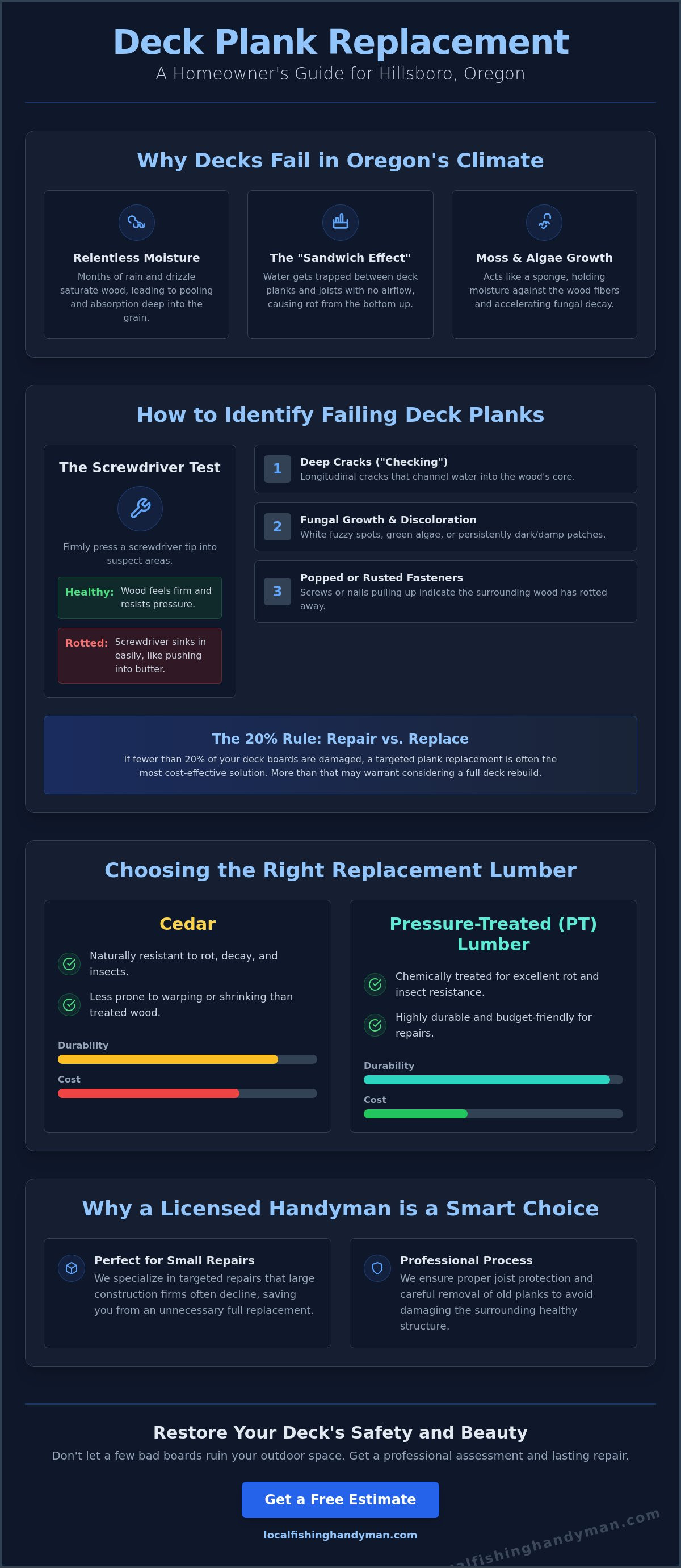
- Understand how Hillsboro's high humidity and seasonal rain create the perfect environment for wood rot and moss growth.
- Learn how to use the "Screwdriver Test" to find hidden soft spots and identify which boards need immediate attention.
- Compare the durability and cost of Cedar versus Pressure-Treated lumber to make the best choice for your PNW home.
- Follow a professional process for deck plank replacement Hillsboro that protects your joists and avoids damaging healthy boards.
- See why working with a licensed local handyman is the smart way to handle small repairs that big construction firms often decline.
Why Deck Planks Fail in Hillsboro: The Oregon Moisture Factor
Living in the Sunset Corridor means dealing with months of steady, soaking drizzle. When this water hits a horizontal surface like your deck, it doesn't just disappear. It pools in the grain and sits in the gaps between boards. This constant exposure is the primary reason homeowners eventually need deck plank replacement Hillsboro. Oregon's weather creates a specific set of problems that can rot even the best-built structures over time. If you find yourself looking for deck plank replacement Hillsboro because a board snapped, it's usually because the moisture won the battle against the wood.
The "sandwich effect" is one of the biggest problems we see in local yards. Water gets trapped between the bottom of the deck plank and the top of the joist. Because there's no airflow in that tight space, the wood stays damp for weeks on end. This leads to rot from the bottom up. It's often hard to see the damage until a board actually feels soft underfoot. In newer South Hillsboro subdivisions, we see many low-clearance decks built just inches above the soil. Without enough space for air to circulate underneath, the rising ground moisture keeps the wood wet year-round. It's a recipe for premature failure in homes that are only a few years old.
The Role of Moss and Algae in Wood Decay
Moss is more than just a green stain on your boards. It acts like a wet sponge, holding moisture directly against the wood fibers. This constant dampness softens the timber and allows fungal spores to take root. While many people think surface mold is the main issue, the real danger is deep-seated decay. Fungi eat the cellulose in the wood, leaving it brittle and unsafe. Understanding Wood preservation techniques helps, but even pressure-treated wood has its limits when buried under a layer of organic growth. Regular cleaning is the best way to prevent this biological process from starting before it destroys the wood.
Micro-Climates: Orenco Station vs. Jackson School Road
Hillsboro's geography creates distinct micro-climates that affect how long your deck lasts. In older neighborhoods like Orenco Station or those along Jackson School Road, mature tree canopies are common. These trees drop leaves and needles that trap moisture on deck surfaces and in the cracks. Conversely, in newer communities like Reed’s Crossing, the challenge is airflow. Compact lots and tall fences can block the wind, which prevents decks from drying out after a storm. If you live near the Jackson Bottom Wetlands, the flat topography and high water table mean the air is naturally more humid. This extra moisture in the air slows down evaporation, giving rot a head start on your outdoor living space.
Identifying Rot: When to Replace a Deck Board
You don't need expensive equipment to spot trouble on your deck. Grab a flathead screwdriver and walk the length of your outdoor space. This "Screwdriver Test" is the most reliable way to start your deck plank replacement Hillsboro inspection. Push the tip of the tool into any area that looks dark, damp, or overly weathered. Healthy wood will resist the pressure and feel firm. If the screwdriver sinks easily into the grain like it's hitting soft butter, the wood fibers have broken down. This board is no longer structurally sound and needs to be swapped out.
Visual cues often tell the story before you even touch the timber. Look for "checking," which are deep cracks that run along the length of the board. These cracks act as small gutters, funneling rain into the heart of the wood where it can't dry out. You might also see fungal growth, white fuzzy spots, or dark green algae. These are clear signs of active decay. Experts at the USDA provide excellent resources for Identifying wood deck deterioration, noting that persistent discoloration is a major red flag for homeowners.
Don't ignore the metal hardware holding your deck together. Take a close look at your screws or nails. If they are pulling up or "popping" out of the wood, it's rarely just a loose fastener. Usually, the wood around the screw has rotted away, leaving nothing for the metal to grip. Rusted fasteners are another bad sign. Rust weakens the metal and stains the surrounding wood, which can actually speed up the decay process. If you notice screws that won't stay down, it's time to consider professional deck repairs to secure the structure before someone trips.
The "Repair vs. Replace" Decision Framework
A common rule of thumb is the 20% rule. If fewer than 20% of your boards are soft or damaged, individual deck plank replacement Hillsboro is a very cost-effective fix. It prevents the rot from jumping to healthy boards. However, if more than a quarter of the surface is failing, you might need to resurface the entire deck. Always inspect the joists once you remove a bad board. If the frame underneath is solid, a simple plank swap will save you thousands of dollars compared to a full rebuild.
Safety Hazards You Shouldn’t Ignore
Splintering wood is a major hazard for kids and pets playing outside. Oregon's wet-dry cycles cause wood to peel and lift, creating sharp edges that catch on bare feet. Pay extra attention to boards near stairs, landings, or handrails. A soft board in a high-traffic area is a serious injury risk. It's much better to replace one or two priority boards today than to deal with a structural failure during a family gathering. Staying on top of these small repairs keeps your home safe and maintains your property value.
Choosing the Right Replacement Lumber for Oregon Decks
Picking the right wood is the most critical step for your deck plank replacement Hillsboro project. While some large companies might push for expensive exotic hardwoods, most local decks are built with two dependable options: Cedar or Pressure-Treated lumber. Using these materials keeps your repair budget under control and makes sure the new boards blend in with your existing structure. We always recommend sourcing local Oregon timber. It's better for the environment and the wood is already used to our damp Pacific Northwest climate.
One common mistake we see is the "mismatch" problem. You must match the thickness of your existing boards exactly. Most modern decks use 5/4 (five-quarter) radius-edge decking, which is about one inch thick. If you accidentally buy standard two-inch thick lumber, you'll have a ledge that people will trip over. Measure twice before you buy. It's a small detail that makes a huge difference in the safety and look of your repair. A seamless transition between old and new wood is the mark of a quality job.
Western Red Cedar: Pros and Cons
Western Red Cedar is a classic choice for Hillsboro homes. It has natural tannins that repel common wood-boring insects and resist rot without heavy chemicals. It's a beautiful wood, but it isn't "set it and forget it." Cedar still needs a quality sealer to stay healthy. Over time, it will age to a silver-gray patina if left untreated. If you want to keep the original color, you'll need to stain it every few years to keep the moisture out.
Pressure-Treated Lumber: The Practical Choice
Pressure-Treated (PT) Hem-Fir is the workhorse of Oregon decks. Modern treatments like ACQ or CA-C make it very resistant to fungal decay. It's the best choice for any wood that stays close to the damp ground. Just keep in mind that PT lumber comes from the store with a high moisture content. You can't stain it right away. You'll need to let the wood "breathe" and dry out for a few months. Once it's dry, a good coat of stain will protect it for years to come.
The Professional Deck Plank Replacement Process
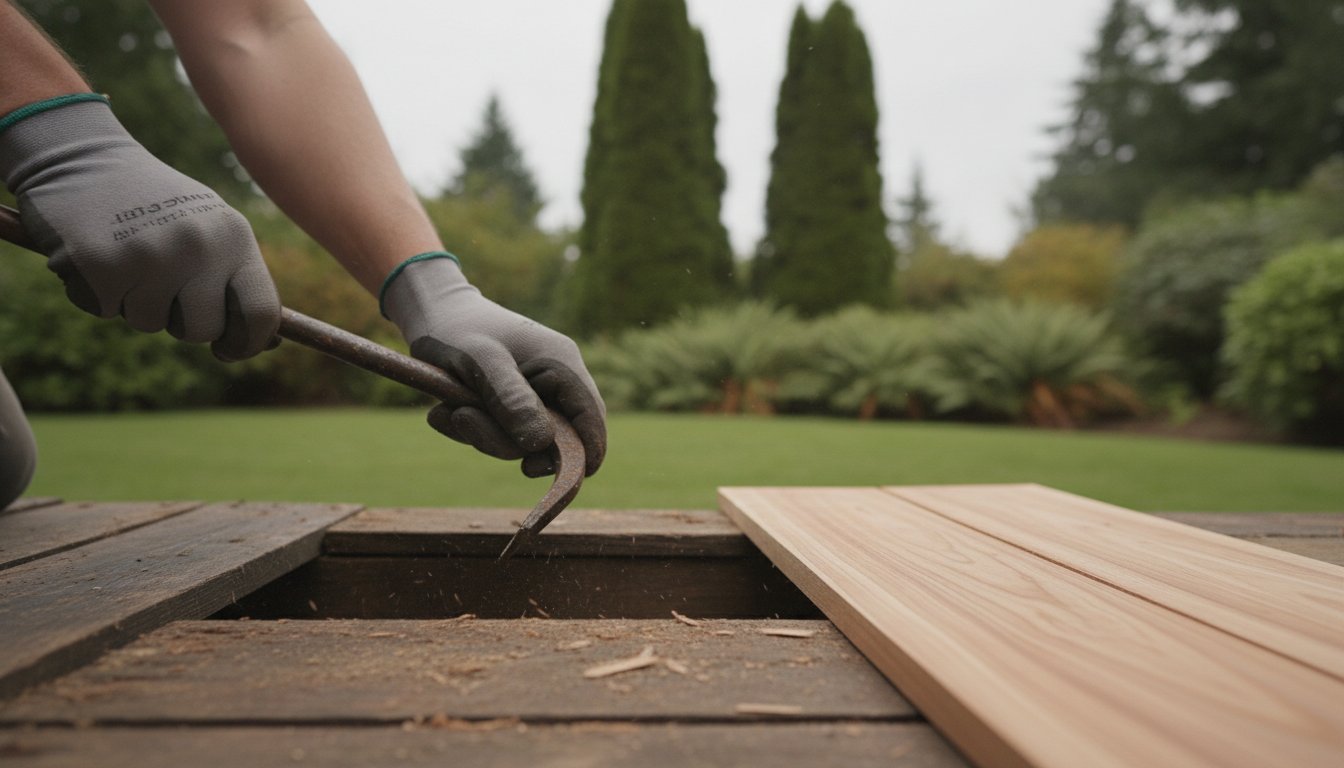
Performing a clean removal is the first step in a successful deck plank replacement Hillsboro project. You don't want to scar the healthy boards surrounding the damaged one. We typically use a cat’s paw or a specialized screw extractor to remove the old fasteners. If the screws are too rusted to pull, we carefully cut the board into smaller sections between the joists. This allows us to lift the pieces out without prying against the good wood. It's a methodical process that keeps the rest of your deck looking untouched.
Once the old wood is gone, we focus on the exposed joist. This is the part of the frame that was trapped in the "sandwich effect" we mentioned earlier. We scrape away any old debris, moss, or dirt that has collected on the surface. If the joist is solid but damp, it needs to be cleaned and dried before the new board goes down. For homeowners who want to avoid future rot, we always recommend installing a moisture barrier. You can schedule a deck repair consultation to have a professional assess your joist health before the new planks are installed.
Precision cutting is what separates a DIY job from a professional repair. We leave a gap of 1/8 to 1/4 inch between the boards. This space is vital for drainage and allows the wood to expand and contract as the Hillsboro weather shifts from winter soak to summer heat. Without this gap, water will pool and start the rot process all over again. We also use 305 or 316-grade stainless steel screws. These are the gold standard for Oregon weather because they won't corrode or leave ugly black streaks on your new lumber.
Prepping the Joists for Longevity
Before the new board is fastened, we treat the top of the joist with a liquid wood preservative. This adds an extra layer of protection to the most vulnerable part of the frame. We then apply joist flashing tape, also known as Butyl tape, to the top of the beam. Joist flashing tape is a moisture barrier that seals around screw penetrations to prevent water from entering the joist through the screw holes. This simple step is the best way to ensure your deck frame lasts for another twenty years.
Fastening and Finishing
When it's time to secure the new wood, we always pre-drill the ends of the boards. Cedar and even some pressure-treated woods are prone to splitting if you drive a screw too close to the edge. Pre-drilling prevents this damage and ensures a tight, clean fit. While hidden fasteners look great on new builds, face-screwing is often more practical for a repair to match the existing pattern. Finally, we apply a touch-up finish to the new plank. This helps the fresh wood blend in with the weathered sections of your deck for a uniform look.
Why Hire a Licensed Hillsboro Handyman for Deck Repairs?
Finding a contractor for a small project can be a challenge. Most large construction firms in Washington County aren't interested in swapping out a few rotting boards; they want the $20,000 full-scale rebuilds. This leaves many homeowners stuck with a dangerous deck while they wait for a call back that never comes. Choosing a local craftsman for your deck plank replacement Hillsboro is the most efficient way to get your outdoor space back in shape. Local Fishing Handyman LLC focuses on practical repairs that extend the life of your current deck rather than trying to sell you a new one you don't need.
Safety and legal protection should always be your top priority. In Oregon, it's vital to work with a provider who is licensed, bonded, and insured. This protects you from liability and ensures the work meets state standards. You can check the status of any contractor through the Oregon Construction Contractors Board. Local Fishing Handyman LLC maintains our registration under CCB#254463, which gives our clients peace of mind that we're a legitimate, professional business. We take pride in doing honest work that stands up to the damp Hillsboro climate.
Handyman vs. Specialist Contractor
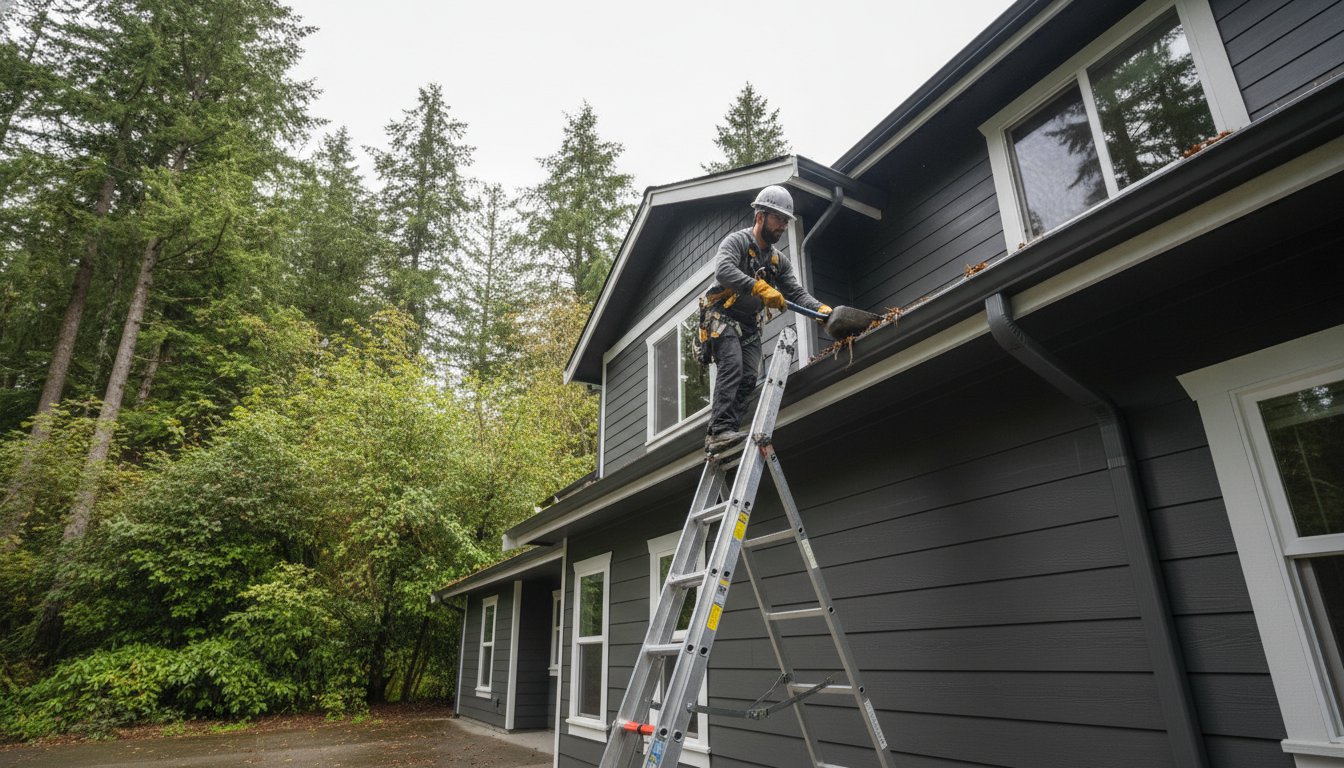
A multi-skilled handyman is often the best choice for exterior maintenance. While we're replacing your deck planks, we might spot a loose piece of siding or a gutter that's overflowing and causing the rot in the first place. We can handle those repairs during the same visit. You'll also benefit from direct communication. You aren't talking to a middleman or a sales rep; you're speaking with the person who will actually be on your deck with a saw and a drill. This ensures nothing gets lost in translation and the job is done exactly as promised.
Get Your Hillsboro Deck Ready for Summer
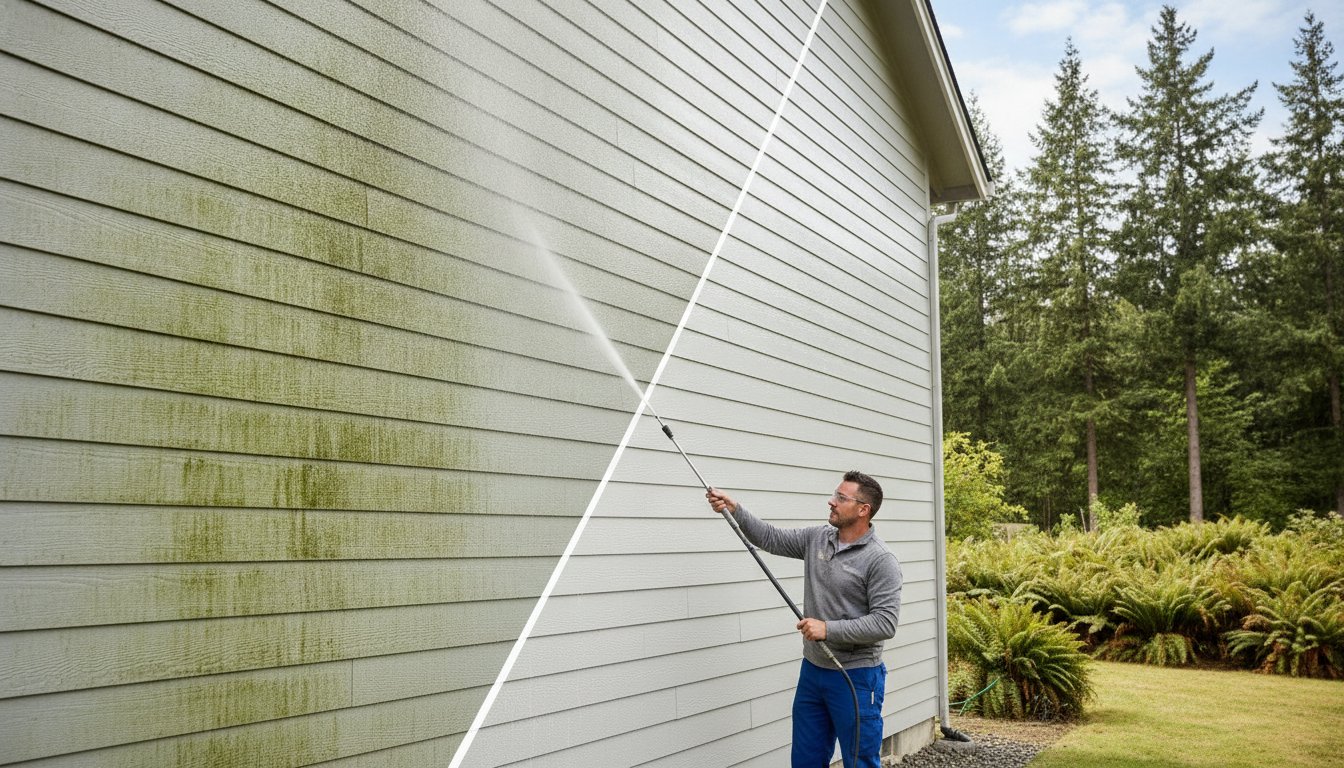
Timing is everything when it comes to wood repairs. You want to finish your deck work before the summer barbecue season starts and while the weather is dry enough for the wood to settle. Many of our neighbors find it helpful to bundle services for a total home refresh. Local Fishing Handyman LLC can replace your damaged boards and then perform a softwash cleaning to remove moss and algae from the rest of the structure. If you're ready to fix those soft spots, you can Contact Local Fishing Handyman LLC for a deck repair estimate and get your home ready for the sunshine.
Restore the Safety and Durability of Your Hillsboro Deck
Maintaining a safe outdoor space doesn't have to mean a complete, expensive rebuild. By identifying rot early and using high-quality materials like Western Red Cedar or pressure-treated lumber, you can keep your structure sturdy for years to come. Remember that protecting your joists with flashing tape and using the right stainless steel fasteners are the best ways to combat our local Oregon moisture. These practical repairs save you money and ensure your deck is ready for every family gathering without the worry of structural failure.
If you're ready to fix those soft spots but want the peace of mind that comes with professional workmanship, we're just a call away. At Local Fishing Handyman, we take pride in providing reliable, no-nonsense service to our neighbors. We are fully Licensed, Bonded, and Insured (CCB#254463) and specialize in the unique maintenance challenges of the Pacific Northwest. You can Request a Deck Repair Estimate from Local Fishing Handyman to start your deck plank replacement Hillsboro project today. Let's get your deck back in top shape so you can enjoy the summer sunshine with confidence.
Frequently Asked Questions
How much does it cost to replace a single deck board in Hillsboro?
The total cost depends on the wood species and the condition of your existing hardware. Cedar typically costs more per foot than pressure-treated options. If your current screws are rusted and difficult to extract, the labor time will increase. Most homeowners find that replacing a few boards is a very cost-effective alternative to a full resurface, especially when you use high-quality stainless steel fasteners to prevent future rot.
Do I need a permit to replace deck planks in Oregon?
In Hillsboro, you only need a building permit if your deck is more than 30 inches above the ground. This is a standard Oregon regulation. If your repair requires a permit, the city applies a minimum fee plus a 12% state surcharge. For simple deck plank replacement Hillsboro projects on low-level decks, a permit is usually not required, but you should always verify your specific neighborhood's HOA rules before starting.
Can I replace my wood deck boards with composite ones?
You can switch to composite, but you must check your joist spacing first. Composite planks are more flexible than wood and often require joists to be spaced 12 inches apart. Most older wood decks in our area use 16-inch spacing. If your joists are too far apart, the composite boards will sag and become a trip hazard. It's usually more practical to stick with wood for small, targeted repairs.
How do I stop my deck joists from rotting under the planks?
Applying butyl flashing tape to the top of your joists is the best way to prevent rot. This tape creates a moisture barrier that seals around the screw holes, stopping water from entering the frame. You should also clean away any moss or organic debris that has collected on the beams. These simple steps stop the "sandwich effect" and can help your deck foundation last for another twenty years.
Should I stain my new deck boards immediately after replacement?
Don't stain pressure-treated wood right away because it needs time to dry out. It often takes several months for the factory moisture to evaporate so the wood can accept a sealer. If you stain it too early, the finish will simply peel off. Western Red Cedar is different; it can usually be stained after a few weeks of dry weather. Always perform a "water bead test" to see if the wood is ready.
Is a handyman allowed to do structural deck repairs in Hillsboro?
A licensed handyman is perfect for deck plank replacement Hillsboro and general maintenance tasks. Under Oregon CCB regulations, handymen can perform repairs and maintenance that don't involve major alterations to the home's structure. Working with a licensed, bonded, and insured pro ensures the job is done correctly and protects your property. It's the most efficient choice for the small repair jobs that big contractors often skip.
How can I tell if my deck is safe to walk on?
Check for boards that bounce or fasteners that are popping up out of the wood. You can use the "Screwdriver Test" to probe any dark or discolored spots; if the tip sinks in easily, the wood is rotting. You should also inspect the stairs and handrails for any wobbling. If the main structure feels shaky or you see significant fungal growth on the joists, it's time to call for a professional safety inspection.
What is the best wood for a deck in the Pacific Northwest?
Western Red Cedar and Pressure-Treated Hem-Fir are the most reliable choices for our climate. Cedar has natural tannins that resist rot and insects, making it a local favorite for its beauty and durability. Pressure-treated lumber is a rugged, budget-friendly option that is specifically treated to handle Oregon's high moisture levels. Both materials will last a long time if you keep them clean and apply a quality sealer every few years.