In the Pacific Northwest, your fence isn't just a boundary; it's a constant target for relentless moisture and hungry moss. You might think a sturdy cedar perimeter is a "set it and forget it" project, but the Oregon elements can quickly turn a beautiful investment into a sagging, green-stained eyesore. Mastering specific fence maintenance tips for Oregon homeowners is the only way to keep your property line secure and rot-free throughout the rainy season. It's a battle against biology, and your fence is on the front lines.
We know how discouraging it is to see your gate hinges sticking or your posts leaning because the soil never quite dries out. You want a sturdy, reliable fence that boosts your curb appeal rather than dragging it down. This article provides the actionable strategies you need to defend your wood against rot and algae. We'll walk through essential DIY cleaning steps, moisture management techniques, and how to identify when you need professional fence repairs to save your perimeter from the PNW weather.
Key Takeaways
- Understand how Oregon's 40+ inches of annual rainfall and freeze-thaw cycles impact wood fiber saturation and post stability.
- Master essential fence maintenance tips for Oregon homeowners, including the "wiggle test" to evaluate post-stability in saturated soil.
- Discover the benefits of soft washing over high-pressure washing to eliminate moss and algae without shredding your wood's surface.
- Learn practical strategies for gate surgery and picket replacement to extend your fence's life without the expense of a full replacement.
- Identify when to bring in a licensed professional to handle complex structural repairs and ensure your perimeter remains secure.
Why Oregon's Climate is Your Fence's Biggest Enemy
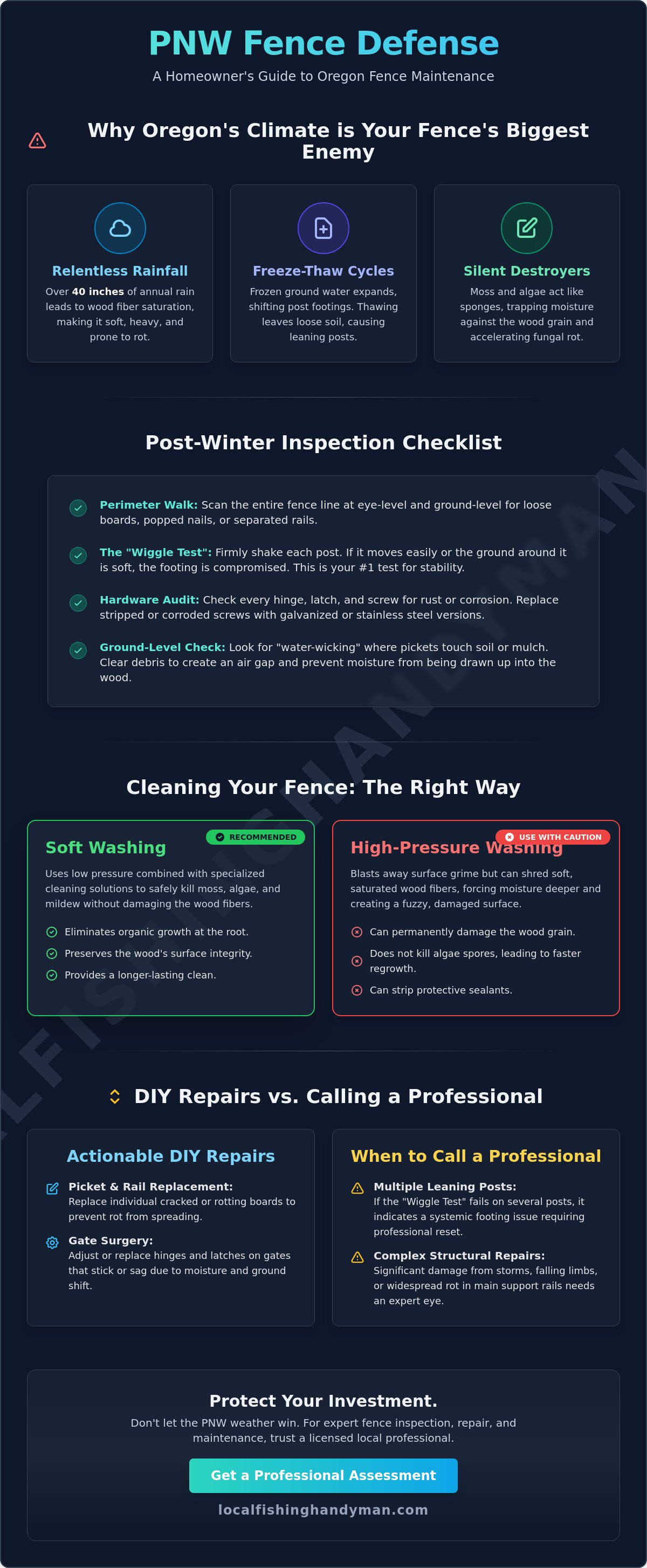
Oregon's weather is famous for its persistence. While the lush greenery is a point of pride, the 40 plus inches of annual rainfall in the region creates a grueling environment for outdoor wood structures. When wood stays wet for months at a time, it reaches a state of fiber saturation. At this point, the cells of the wood are completely full of water, making the material heavy, soft, and prone to structural failure. This constant dampness is the primary reason why following specific fence maintenance tips for Oregon homeowners is a necessity rather than a suggestion.
The trouble doesn't stop with the rain. In the Oregon valleys, we experience frequent freeze-thaw cycles throughout the winter. Water seeps into the soil surrounding your fence posts and then expands as it freezes. This expansion exerts massive pressure on the post footings, often shifting them out of alignment. When the ground finally thaws, it leaves behind loose soil and gaps that allow even more water to pool around the base of the wood. This mechanical stress is a leading cause of leaning fences and wobbly gates across the state.
Moss and algae are the silent partners in this destruction. They aren't just an aesthetic issue for different types of fences; they act like living sponges. These organisms trap moisture directly against the wood grain, preventing it from drying out even during a rare sunny afternoon. This creates a perfect breeding ground for fungal spores. High humidity levels in the Pacific Northwest accelerate this process, leading to rapid wood rot that can compromise an entire section of fencing in just a few seasons.
The PNW Moisture Trap
Constant dampness often leads to "soft rot" in common fencing materials like cedar and pine. This type of decay is deceptive because the wood might look solid on the outside while the internal cellulose is breaking down. Most Oregon fences rot from the ground up. The bottom rail and the base of the pickets stay in contact with wet grass and saturated earth, drawing moisture upward through capillary action. In the Willamette Valley, you'll frequently see thick carpets of green moss that cling to the north-facing side of fences, where sunlight rarely reaches to provide a drying effect.
Wind and Storm Impact on Oregon Fences
Winter windstorms put immense pressure on your perimeter. When the soil is already saturated, it loses its ability to grip the fence posts firmly. A strong gust can easily tip a fence that would have stood perfectly fine in dry summer dirt. Overhanging Douglas Fir or Maple branches add another layer of risk. Falling debris can crack rails or knock pickets loose, creating entry points for moisture. You should also consider your property's micro-climate. A fence tucked in a shady, wind-blocked corner of your yard will stay wet much longer than one exposed to the breeze, requiring more frequent fence maintenance tips for Oregon homeowners to stay ahead of the rot.
The Essential Post-Winter Fence Inspection Checklist
Once the winter storms subside, you need to get outside and assess the damage. A systematic perimeter walk is the first step in effective fence maintenance tips for Oregon homeowners. Start at one corner and move slowly along the line, looking for changes at both eye level and ground level. You're looking for boards that have popped loose or rails that have pulled away from the posts. Catching these small gaps now prevents the wind from catching them later and causing more expensive damage.
The "Wiggle Test" is your best tool for evaluating post stability in our saturated PNW soil. Grab each post firmly and give it a solid shake. If the post moves easily or the ground around it squishes, the footing has likely been compromised by the freeze-thaw cycles mentioned earlier. This is a common issue in Oregon valleys where drainage is often poor and soil stays soft until late spring.
Don't forget to perform a hardware audit. Check every hinge, latch, and screw for signs of rust or corrosion. Salt air in coastal areas or simple constant rain inland can eat through cheap hardware quickly. If you find screws that are backing out, they might be stripped due to wood saturation. Replace them with galvanized or stainless steel versions to prevent future failure and staining on the wood.
Identifying "water-wicking" is critical at the ground level. Look for areas where pickets or kickboards are touching the soil or mulch. Wood acts like a straw, pulling moisture up from the earth through the end grain. If you see dark staining or soft spots at the bottom of your boards, you need to clear away the debris or trim the wood to create a gap. If the damage is already done, you might need professional fence repairs to swap out the failing sections before the rot spreads.
Structural Integrity Checks
Spotting a leaning post early can save you from a total collapse. Use a level or a simple string line to check if sections are bowing or tilting. A straight line doesn't lie. Pay close attention to the kickboard or bottom rail. Since these are closest to the ground, they often show the first signs of advanced decay. If you can poke a screwdriver into the wood more than a quarter inch, the structural integrity is gone. Research shows that proper fence planning and construction helps prevent these issues, but consistent maintenance is what keeps them at bay.
Surface and Cosmetic Evaluation
It's important to distinguish between surface silvering and deep structural rot. Silvering is a natural reaction to UV exposure and is usually just cosmetic. Deep rot, however, feels spongy and looks crumbly. You can test your sealant with the "Water Bead Test." Splash a little water on the wood. If it beads up, your protection is still holding. If it soaks in immediately, it's time for a fresh coat of stain. Finally, look for pest entry points. Carpenter ants love the damp, soft wood found in neglected Oregon fences. Watch for small holes or piles of frass that look like sawdust.
Cleaning and Protecting Your Fence: Soft Wash vs. Pressure Wash
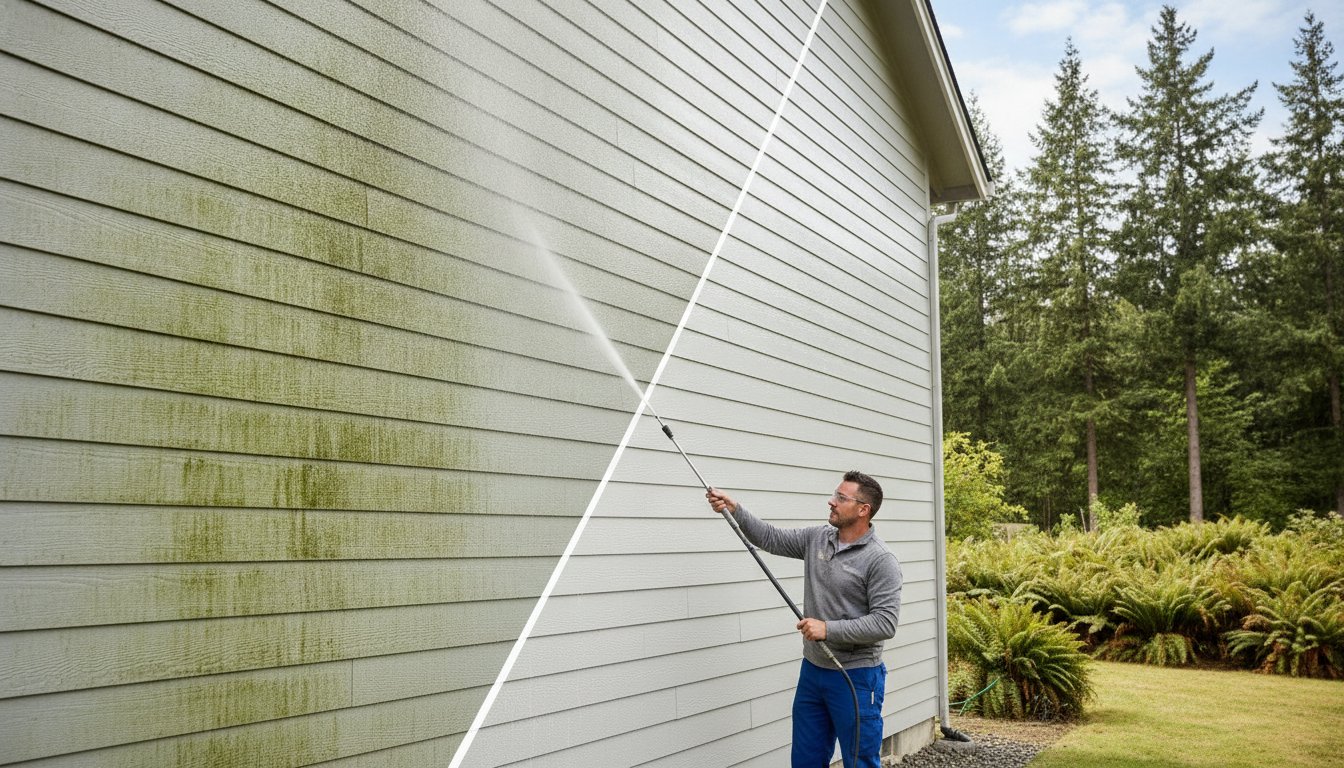
Cleaning your fence is about more than just looks; it's about removing the biological growth that eats away at the wood fibers. Many people reach for a high-pressure power washer as their first line of defense. While it provides instant gratification, it often causes permanent damage to cedar and pine. High-pressure streams can easily blow out the wood grain, creating a "fuzzed" surface. These tiny splinters increase the wood's surface area, which means it absorbs even more moisture during the next Oregon rainstorm. This cycle of damage is exactly what you want to avoid when following fence maintenance tips for Oregon homeowners.
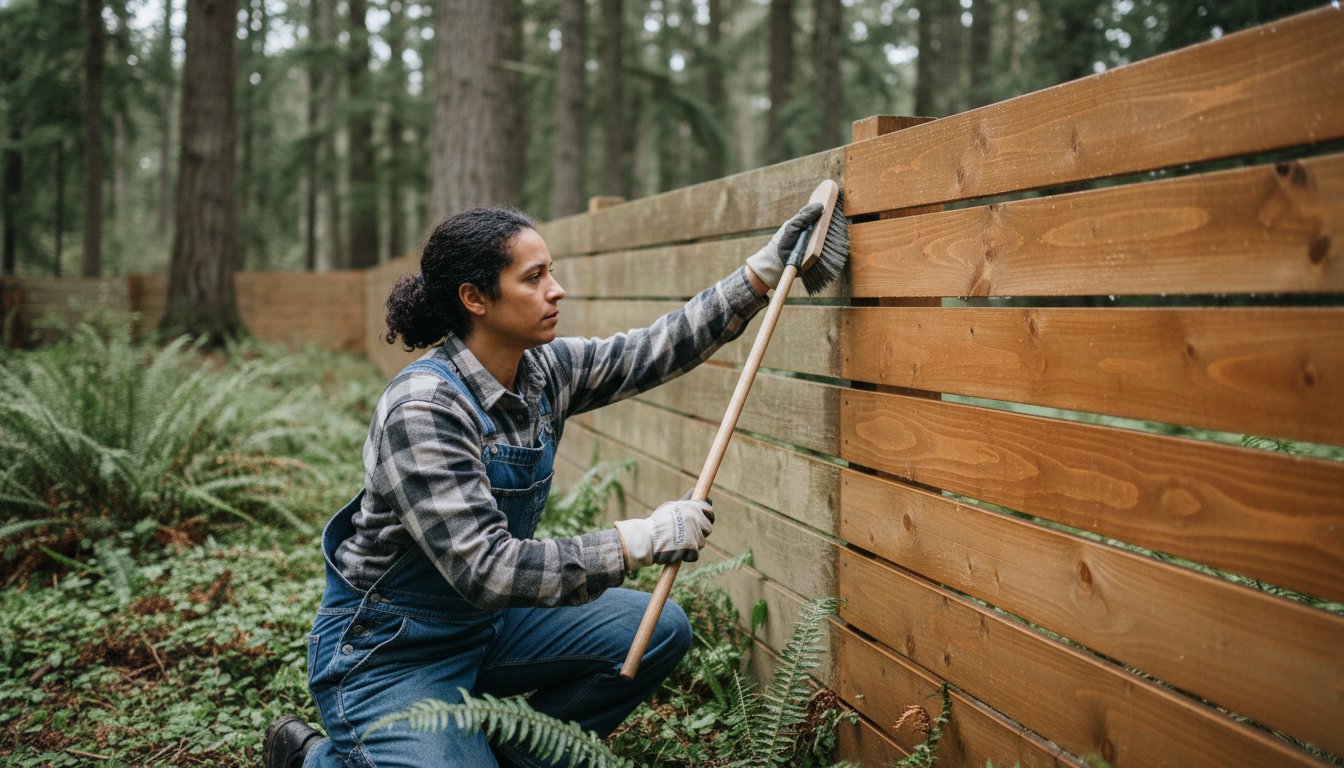
Softwashing is the professional alternative that protects your investment. Instead of using brute force, this method uses eco-friendly solutions to kill moss, algae, and fungal spores at the root. It’s particularly effective for that stubborn green algae that thrives in the Willamette Valley. You get a deeper clean without the risk of splintering or damaging your nearby landscaping with high-pressure runoff. For the best results, time your cleaning during Oregon's dry summer window, typically between July and September. This ensures the wood is completely dry before you move on to the protection phase.
The Dangers of High-Pressure Cleaning
When you use a pressure washer too close to wood, the force literally shreds the soft cellulose between the harder grains. This creates a rough texture that looks like peach fuzz. This damaged wood acts like a sponge, drawing in water and holding it against the core of the picket. Over time, this leads to faster rot and structural failure. Additionally, the high-pressure runoff can blast soil and debris into your siding or nearby garden beds, creating a secondary cleanup project you didn't plan for.
Staining and Sealing for the PNW
Choosing the right product is the next critical step. In our climate, oil-based stains generally outperform water-based options. Oil penetrates deep into the wood grain, providing a more robust barrier against the 40 plus inches of annual rainfall we discussed earlier. Even though we are known as the "Cloudy State," UV protection is still vital. Constant cloud cover doesn't stop UV rays from graying your wood and breaking down the lignin that holds fibers together. You must wait for a 48-hour dry window before applying any sealant. If you apply stain to damp wood, you'll trap moisture inside, which leads to internal rot and peeling finishes. Keeping up with these fence maintenance tips for Oregon homeowners ensures your perimeter stays sturdy and rot-free for years to come.
Actionable Fence Repairs: Extending Lifespan Without Replacement
Most large fencing companies in the Pacific Northwest are installers first. They often push for a total replacement because it's more profitable for them. However, many fence maintenance tips for Oregon homeowners focus on targeted repairs that can add five to ten years to your existing structure. Since construction costs in Oregon are 12% higher than the national average, according to 2026 regional data, repairing what you have is a smart financial move. If your rails are still solid, you don't need to tear everything down just because a few pickets have rotted or a gate is sagging.
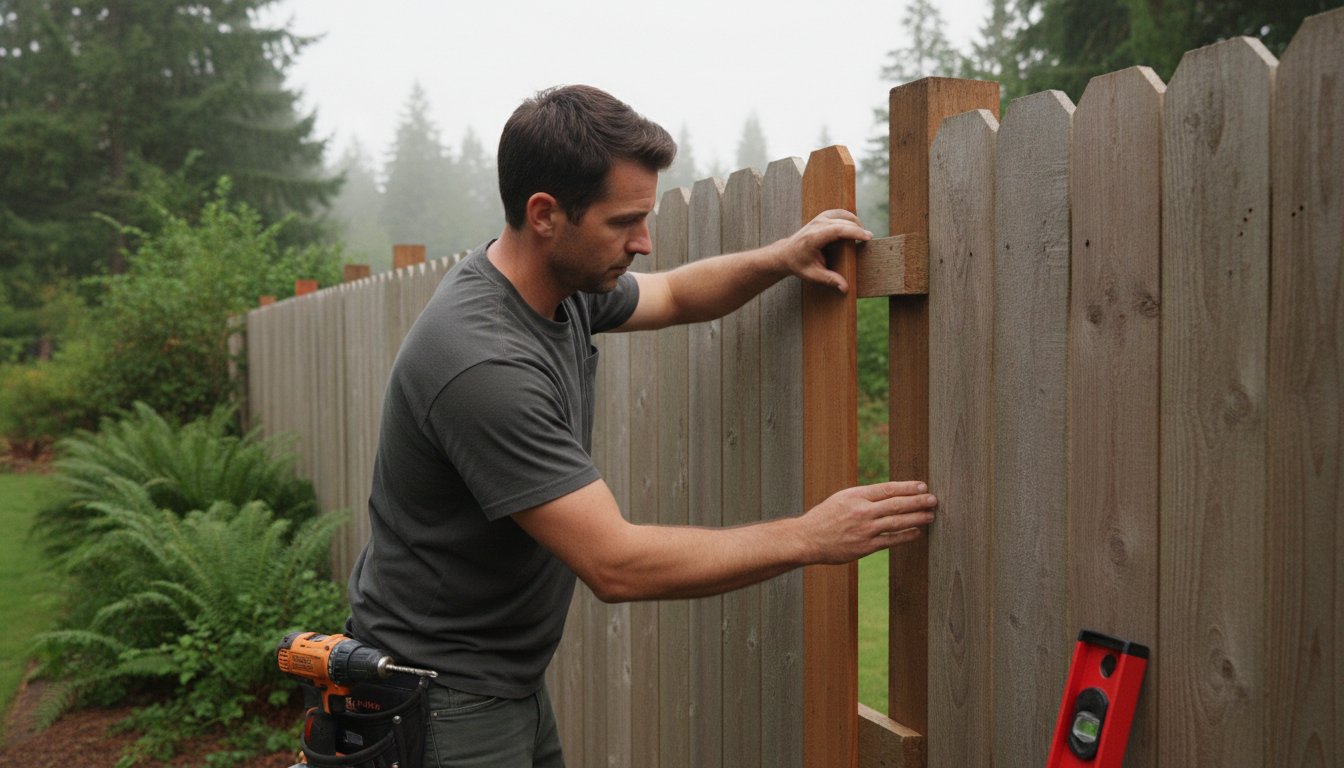
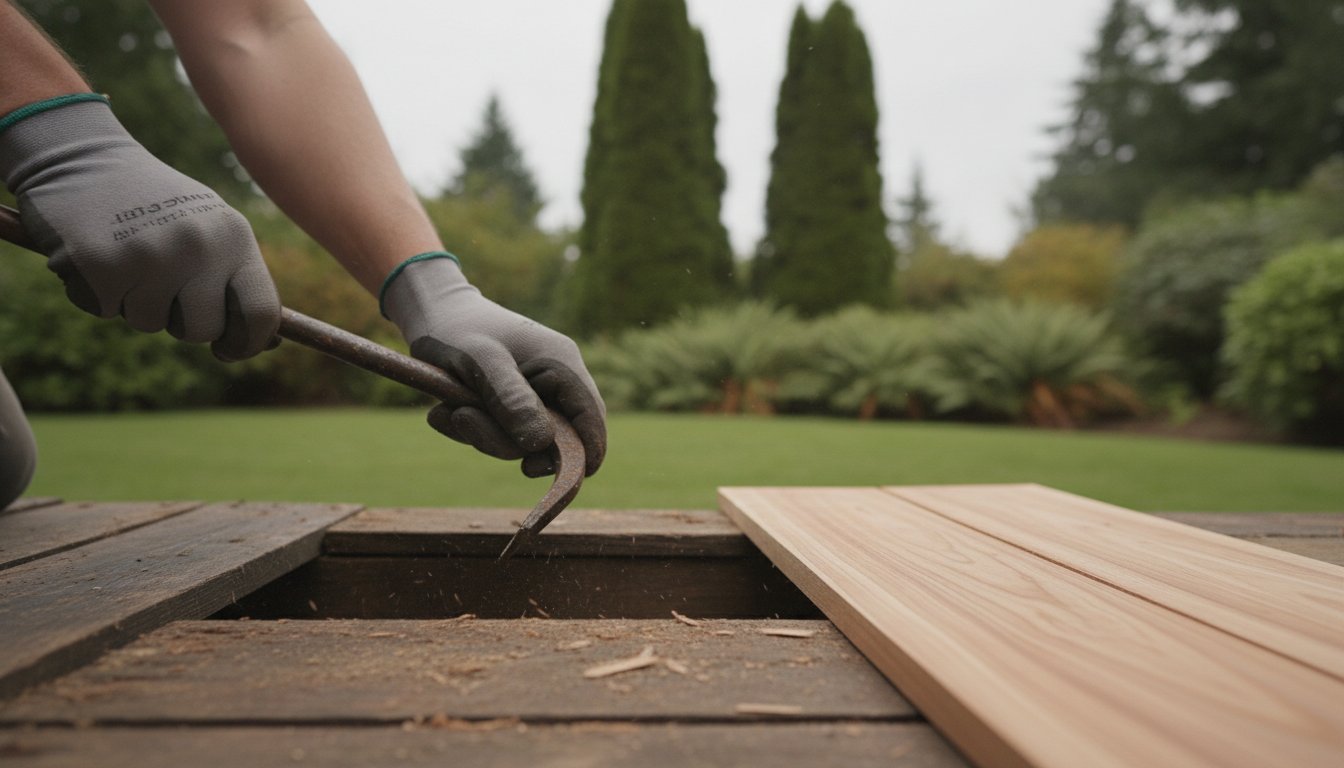
Gate surgery is usually the most urgent repair. Our heavy winter rains soak into the wood, adding significant weight that pulls hinges out of alignment. If your gate is sticking or dragging, install a diagonal cross-brace or a steel anti-sag kit. This transfers the weight back to the hinge post and keeps the frame square. For individual pickets that show signs of "soft rot" at the bottom, simply swap them out. Buying a handful of cedar pickets is much cheaper than replacing an entire eight-foot panel. It's a simple way to maintain your curb appeal without a massive bill.
If you discovered a wobbly post during your "Wiggle Test," you might not need to dig it out. You can often reinforce a weak post by "sistering" it. This involves driving a new pressure-treated post or a heavy-duty steel bracket into the ground next to the existing one and bolting them together. This provides the lateral stability needed to survive our winter windstorms. If the damage is more extensive, you might want to look into professional fence repairs to ensure the structural integrity of your perimeter is restored correctly.
Hardware and Fastener Fixes
Rust is a constant battle in the PNW. If you see streaks of black or orange running down your pickets, your fasteners are failing. Swap out old, rusted nails for galvanized or stainless steel screws. Screws hold much better in wood that frequently swells and shrinks due to our seasonal humidity changes. Make it a habit to lubricate your gate latches and hinges with a silicone-based spray twice a year. This prevents mechanical wear and keeps everything moving smoothly when the wood expands in the winter.
Vegetation and Debris Management
Proper ground clearance is the best defense against rot. Follow the "Two-Inch Rule" by keeping your grass trimmed and bushes pushed back at least two inches from the fence panels. Never pile mulch or soil directly against the wood, as this creates a constant bridge for moisture and wood-destroying insects. While climbing vines look beautiful, they trap dampness against the grain and accelerate decay. Keeping a clear "air zone" around your fence allows the wood to dry out between rain showers, which is one of the most effective fence maintenance tips for Oregon homeowners you can follow.
When to Call a Licensed Oregon Handyman for Fence Repairs
Personal DIY efforts go a long way, but some structural issues require a professional touch. Fence repair in Oregon is a specialized skill because of our unique environmental challenges. A seasoned local craftsman understands how to handle posts that have shifted in saturated clay or rails that have succumbed to internal rot. Knowing when to transition from personal fence maintenance tips for Oregon homeowners to professional intervention saves you time and money. It prevents a small lean from turning into a total collapse during a winter windstorm.
Local Fishing Handyman LLC focuses on providing durable, high-quality repairs that respect your existing structure. We don't push for a total replacement when a targeted fix will do the job. Our approach is grounded in local experience and a commitment to protecting your property. Using a professional ensures your perimeter remains secure and your curb appeal stays high without the massive expense of a full installation. We take pride in doing the job correctly the first time, without shortcuts.
The Handyman Advantage for Small to Mid-Sized Jobs
Many large fencing companies in the region often decline small repair jobs. They are set up for high-volume installations and don't find it profitable to swap out a few posts or realign a sagging gate. This is where a local handyman provides a distinct advantage. We offer a cost-effective middle ground. You pay for the specific repairs you need rather than a full new fence you don't. A local pro also understands the specific soil and weather patterns of the Willamette Valley. This expertise ensures the repair lasts through the next rainy season and beyond.
Ensuring Regulatory Compliance in Oregon
Working with a licensed professional is about more than just quality work; it's about your protection. The Oregon Construction Contractors Board (CCB) serves as a watchdog for homeowners. It ensures that businesses follow strict guidelines for safety and professional conduct. Always verify a contractor's standing before they start work on your property. This protects you from common scams and ensures the person working on your fence has the necessary experience to handle PNW conditions.
Our team is proud to be licensed, bonded, and insured (CCB#254463). These credentials act as a recurring stamp of authority and trustworthiness. You can check any contractor's standing on the CCB website to see their history and current status. This verification step is a vital part of the broader fence maintenance tips for Oregon homeowners because it prevents the headache of poor workmanship or legal disputes. If your perimeter needs expert attention, Contact Local Fishing Handyman LLC for a professional fence repair estimate.
Secure Your Fence for the Seasons Ahead
Staying on top of moisture management is the only way to protect your wood in the Pacific Northwest. By performing regular inspections and choosing soft washing over high-pressure methods, you prevent the structural decay that leads to costly replacements. These practical fence maintenance tips for Oregon homeowners ensure your perimeter remains a functional and attractive part of your property for many years to come.
When repairs become too complex for a weekend DIY project, it's time to bring in a professional. Local Fishing Handyman LLC brings over a decade of local experience to every job, specializing in the unique maintenance needs of PNW homes. We are fully licensed, bonded, and insured (CCB#254463) for your protection. We focus on durable, honest repairs that extend the life of your fence without the need for a total rebuild. This neighborly approach keeps your costs down while ensuring the job is done correctly without shortcuts.
Don't let the Oregon rain win the battle against your wood. Get a Free Fence Repair Estimate from Local Fishing Handyman today. We're here to help you keep your property line sturdy, secure, and looking its best throughout the rainy season.
Frequently Asked Questions
How often should I stain my fence in Oregon?
You should typically stain your fence every two to three years to combat the heavy rainfall and high humidity of the Pacific Northwest. Oregon's climate breaks down protective sealants much faster than drier regions. If you notice that water no longer beads on the wood surface, it is time for a fresh coat. Using a high-quality oil-based stain provides better penetration and helps your perimeter survive the long, wet winters common in the valley.
Is it better to repair or replace a leaning fence post?
You can often repair a leaning post by "sistering" it with a new pressure-treated post or using steel reinforcement brackets if the wood is still solid. If the soil has simply shifted due to freeze-thaw cycles, a structural repair is a cost-effective solution. However, if the post has crumbly rot at the ground line, a full replacement is necessary. A professional can help determine if the post can be salvaged or if it's a safety risk.
Can I use a pressure washer on my cedar fence?
You should avoid using a high-pressure washer on cedar because the intense force can shred the soft wood fibers and cause permanent splintering. This damage makes the wood more absorbent and prone to future rot. A softwash approach is much safer. It uses specialized cleaning solutions to kill biological growth without the mechanical force that ruins the wood's aesthetic finish and structural integrity.
Why is my fence turning green, and how do I stop it?
Your fence is turning green because of algae and moss growth fueled by persistent dampness and shade. To stop this, you must improve airflow by trimming back bushes and clearing debris from the base of the panels. Applying a professional softwash treatment will kill the spores at the root. Following consistent fence maintenance tips for Oregon homeowners, such as keeping the wood sealed, prevents these organisms from regrowing in the grain.
Do I need a permit for fence repairs in Oregon?
You generally do not need a building permit for standard fence repairs or for new wood fences that are 7 feet tall or shorter. However, any fence enclosing a swimming pool always requires a permit regardless of its height or material. In Portland, masonry or concrete fences over 4 feet also require a permit. It's also important to check your specific HOA regulations, as they often have stricter rules regarding height and materials than state law.
How do I stop my fence from rotting at the bottom?
You stop a fence from rotting at the bottom by maintaining a two-inch gap between the wood and the ground. Wood acts like a sponge, pulling moisture up from wet soil and grass. Clearing away mulch and tall weeds prevents this constant contact. If the bottom rail is already soft, replacing that specific piece is one of the most effective fence maintenance tips for Oregon homeowners to stop rot from spreading to the rest of the panel.
What is the best time of year to fix a fence in the PNW?
The best time to fix or stain a fence is during the dry summer window from July through September. Wood must be completely dry before you apply sealants or perform structural repairs that involve setting new posts in concrete. Attempting to stain during the rainy season often leads to trapped moisture and peeling finishes. If you have an emergency like a fallen section, temporary bracing can hold the structure until the weather clears.
Can a handyman fix a sagging gate?
A handyman can definitely fix a sagging gate by realigning hinges, installing anti-sag kits, or reinforcing the internal frame. These issues are often caused by the wood swelling and becoming heavier during the winter months. A professional can also check if the hinge post is stable or if it needs reinforcement. This type of targeted repair is much more affordable than replacing the entire gate and restores full functionality to your perimeter.