Most homeowners think a leaning fence is just a sign of age, but in Beaverton, your soil might actually be pushing your posts out of the ground. It's frustrating to look out your back window and see a fence line that looks like a roller coaster. You probably worry about the next windstorm bringing the whole thing down or having a tense conversation with your neighbor about shifting property lines. It's a common headache, especially when you're trying to avoid the high cost of a full replacement.
We believe your fence should be a source of security, not stress. This guide explains why fixing a leaning fence post in Beaverton requires more than just a bag of concrete and a level. You'll learn how to permanently stabilize your posts against our unique PNW weather and prevent future rot. We will cover the science of hydrostatic heave in our local clay soil and provide a clear path to getting your fence straight and sturdy again without starting from scratch.
Key Takeaways
- Understand how Beaverton’s heavy clay soil and seasonal wet-dry cycles cause posts to shift and lean over time.
- Learn the "Screwdriver Test" to quickly determine if your post is simply loose or if deep-seated rot requires a full replacement.
- Discover modern techniques for fixing a leaning fence post Beaverton, including cost-effective steel splints that avoid the mess of a full dig.
- Get practical tips for managing drainage and performing annual inspections to keep your fence upright during PNW windstorms.
- Find out why hiring a local pro helps you navigate Oregon CCB requirements and handle repairs that larger companies often decline.
Why Beaverton Fence Posts Start Leaning
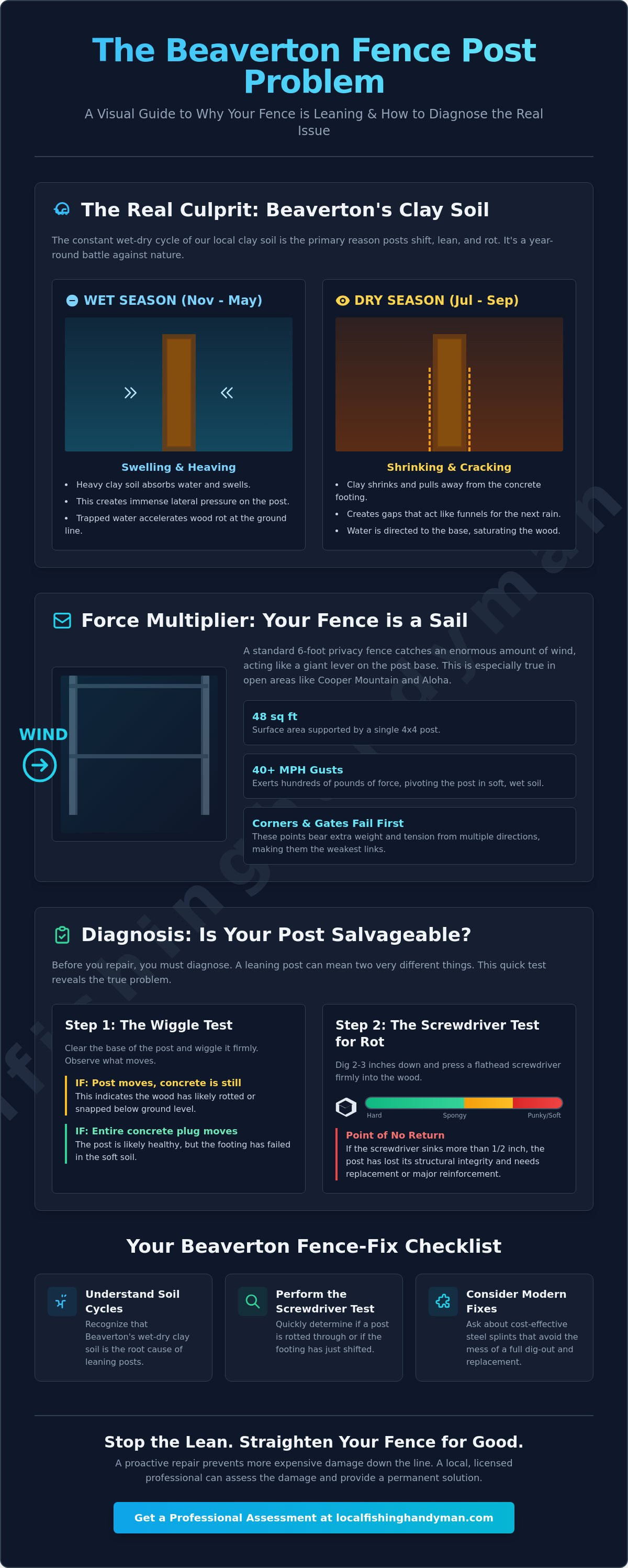
Beaverton isn't just rainy; it has soil that actively works against your fence. Most of our city sits on heavy clay that acts like a giant sponge. When it rains heavily in November, the ground swells. When it dries out in August, the ground shrinks and cracks. This constant movement is the primary reason why fixing a leaning fence post Beaverton homeowners deal with becomes a recurring chore. If you don't address the underlying soil issues, any repair will only be temporary.
The Beaverton Clay Factor
In neighborhoods like Sexton Mountain, the clay is particularly dense and unforgiving. Poor drainage means water stays trapped around the base of your posts instead of soaking into the deeper earth. This creates a cycle where the ground puts immense lateral pressure on the wood. This process, often related to frost heaving during our colder winter snaps, can actually lift a post several inches out of its hole. The trapped water also accelerates wood rot. It turns a solid 4x4 into a soft, pulpy mess at the ground line where you can't see it until the fence starts to tip.
The Tualatin Valley's wet-dry cycle creates soil shrinkage gaps. During our hot, dry summers, the clay pulls away from the concrete footing. These gaps act like funnels when the fall rains return. They direct water straight to the bottom of the post hole. Instead of draining away, the water sits in a clay bowl and keeps the wood saturated for months. This is why a fence that looked perfectly straight in July might suddenly lean after the first big storm in October.
Wind Loads and Fence Leverage
A standard six-foot privacy fence is a massive wooden sail. In high-wind corridors near Cooper Mountain and Aloha, the pressure on your fence is constant. A single 4x4 post often supports 48 square feet of heavy cedar or pressure-treated wood. When a gust hits at 40 miles per hour, it exerts hundreds of pounds of force. This force acts like a lever on the post base. Corner posts and gate posts usually fail first. They bear the extra weight of a swinging gate or the tension of panels pulling from two different directions.
Traditional concrete bells often fail in Oregon’s soggy winters. Many installers dig a hole and pour concrete in a way that creates a wider top than bottom. In the mud of a Beaverton winter, this shape provides very little resistance. The post simply pivots in the soft earth. Fixing a leaning fence post Beaverton requires a method that accounts for this lack of soil stability. Without proper drainage at the base of the hole, even the thickest concrete footing won't keep a post vertical forever.
Evaluating the Damage: Is Your Post Salvageable?
Before you commit to fixing a leaning fence post Beaverton weather has pushed over, you must determine if the wood is still structurally sound. A leaning post doesn't always mean the fence is ruined. Sometimes the concrete footing has simply shifted in the soft ground. Other times, the wood has rotted through at the base. Knowing the difference saves you time and prevents you from wasting money on a repair that won't hold.
Start by clearing away any grass or mulch from the base. Wiggle the post firmly. If the post moves but the concrete base stays still, the wood is likely snapped or rotted. If the entire concrete "plug" moves within the soil, your post is likely healthy but the footing has failed. You should also inspect the rails and panels attached to the post. If the lean has caused the rails to pull away or the wood to split, the damage might be more than just a single post issue.
Performing the Rot Diagnostic
The best way to check for rot is the "Screwdriver Test." Use a shovel to dig about 2 to 3 inches below the soil line. This is where moisture collects and rot usually begins. Take a flathead screwdriver and press it firmly into the wood. Healthy pressure-treated wood will be hard and resistant. If the wood feels soft, spongy, or "punky," the screwdriver will sink in easily. If you can push the tip more than half an inch into the wood core, you've reached the point of no return. At this stage, the post has lost its structural integrity and needs a more significant fix or replacement.
The Cost-Benefit of Repair vs. Replacement
Homeowners often worry that one leaning post means the whole fence is doomed. In many cases, fixing a leaning fence post Beaverton pros handle is a fraction of the cost of a full fence replacement. Replacing a single post or using a reinforcement method can extend the life of your fence by several years. This is especially true if the rest of your panels are in good shape. Proactive repairs prevent the leaning post from dragging down the adjacent panels, which protects your entire investment. If you aren't sure whether your fence can be saved, a professional fence repair can identify the most cost-effective path forward.
A well-timed repair is almost always better than waiting for a total collapse. In our PNW climate, a small lean can turn into a fallen fence overnight during a windstorm. Taking twenty minutes to diagnose the health of your posts today can prevent a much larger bill next season. It's about being practical and addressing the problem before it grows.
Modern Methods for Fixing a Leaning Fence Post
Once you've confirmed your post isn't rotted through, it's time to choose a repair strategy. Fixing a leaning fence post Beaverton homeowners often attempt involves more than just pushing it back into place. You have to address the failed foundation. In our local clay, the traditional method is still popular, but modern steel technologies are quickly becoming the preferred choice for lasting stability. Each method has its own set of tools and labor requirements.
One major debate in the Tualatin Valley is whether to use concrete or gravel-only footings. Concrete provides the weight needed to resist high winds near Cooper Mountain. However, gravel footings offer superior drainage. In Oregon's soggy winters, trapped water is the enemy. Many pros now use a hybrid approach. We place a deep gravel base for drainage and then pour a concrete collar that tapers away from the post to shed water. This prevents the "clay bowl" effect discussed earlier.
The Traditional Reset Process
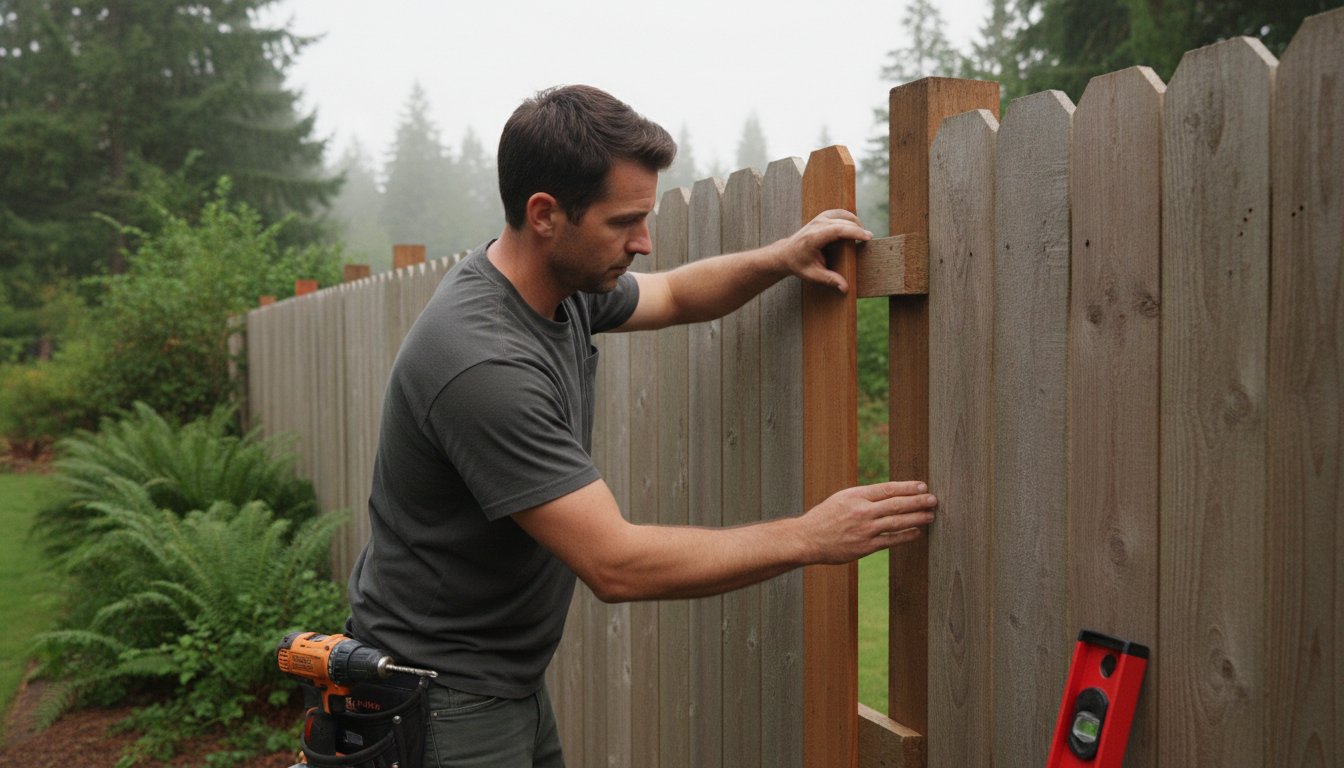
The traditional reset is labor-intensive but effective for posts with failed footings. You must start by bracing the fence panels on both sides using 2x4s. This keeps the fence from collapsing while you work. The most critical step is removing the old concrete "plug" entirely. Don't just pour new concrete over the old, cracked base. This creates a weak joint that will fail during the next storm.
After the hole is clear, you should dig it a few inches deeper to add a 6-inch gravel base. This layer is vital for fixing a leaning fence post Beaverton soil has saturated. It gives water a place to go so it doesn't sit against the wood. Once the post is plumb, you pour new concrete, making sure the top of the pour is slightly above the soil line and sloped downward.
Advanced Reinforcement Technologies
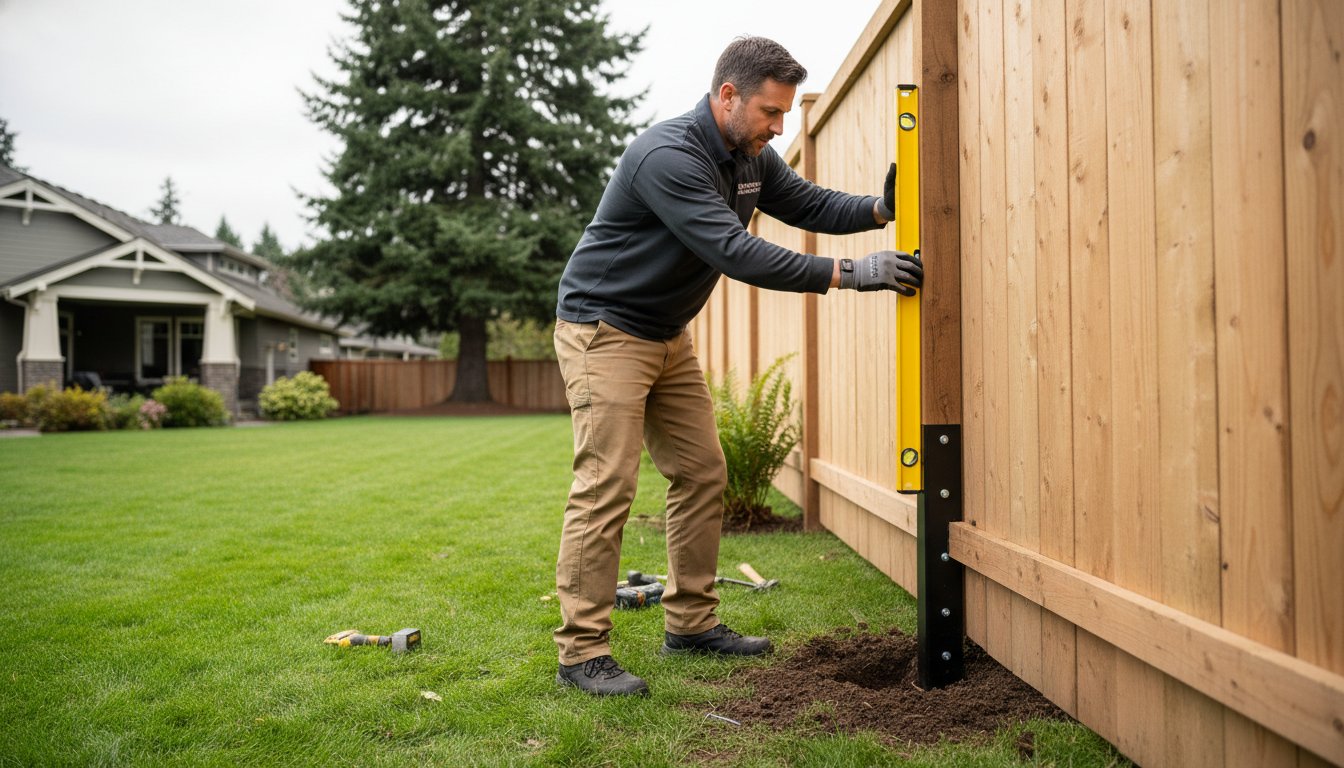
If you want to avoid digging, steel post splints are a game changer. Heavy-duty steel E-Z Menders are designed to be driven into the gap between the wood post and the existing concrete base. You then bolt them directly into the sound wood above the rot line. This creates a "bridge" of steel that bypasses the weak point of the post. It's a very cost-effective alternative to a full replacement.
Other systems like "Post Buddy" use two slim steel stakes that provide secondary support without the bulk of a full splint. Steel is far more durable than wood in our acidic, wet soil. While wood eventually yields to the moisture in Beaverton, galvanized steel stays rigid for decades. These "no-dig" options are often the best choice when a post is located near utility lines or expensive landscaping where a large hole isn't practical. They provide immediate results and get your fence back to being straight and sturdy in a fraction of the time.
Preventing Future Fence Leans in the Tualatin Valley
Once you finish fixing a leaning fence post Beaverton weather has battered, your focus should shift to maintenance. Our local environment is tough on wood. Constant moisture and heavy clay soil mean a "set it and forget it" approach leads to repeat failures. Keeping your fence upright for the long term requires managing the environment around the posts. By taking a few practical steps each season, you can avoid the cost of another major repair or a full replacement.
Start by inspecting the soil-to-air transition zone. This is the two-inch area where the post meets the ground. It is the most common failure point because it stays damp and has access to oxygen, which fungi need to thrive. Applying a copper-based wood preservative to this specific area can add years to the life of your posts. You should also trim back heavy vegetation. Ivy and large shrubs look nice, but they trap moisture against the wood and add significant weight that pulls on the fence during windstorms.
Drainage Solutions for Fence Lines
If your yard in neighborhoods like Aloha or Cooper Mountain stays swampy all winter, consider a French drain. This is a gravel-filled trench that redirects water away from your perimeter. It prevents the soil from becoming a saturated "soup" that allows posts to lean. Managing groundwater is often the only way to stop the cycle of fixing a leaning fence post Beaverton homeowners face every few years.
Annual Maintenance Checklist
Perform a "post-shaking" inspection every fall before the heavy rains arrive. Walk your fence line and give each post a firm tug. If you feel any give, it is better to address a loose footing now than to wait for a December gale. This is also the time to tighten loose fasteners and brackets. Metal hardware can back out of the wood as it expands and contracts with the seasons.
- Check gate hinges for stress cracks or sagging.
- Re-seal or stain your fence every 2 to 3 years to prevent moisture ingress.
- Clear debris and wet leaves from the bottom rail to allow airflow.
Consistent care is the key to a sturdy property line. If you notice a post starting to give way despite your best efforts, it is best to call a professional for fence repairs before the damage spreads to the rest of the panels. Taking action early keeps your repair costs low and your backyard secure.
Why a Licensed Beaverton Handyman is Your Best Choice
Big fencing companies in the Tualatin Valley often decline small repair calls. They're set up for large-scale construction, which leaves homeowners stuck with a "minimum job" hurdle. A local specialist is the better choice for fixing a leaning fence post Beaverton residents find after a heavy storm. We focus on stabilizing your current structure instead of pushing for an expensive, unnecessary replacement.
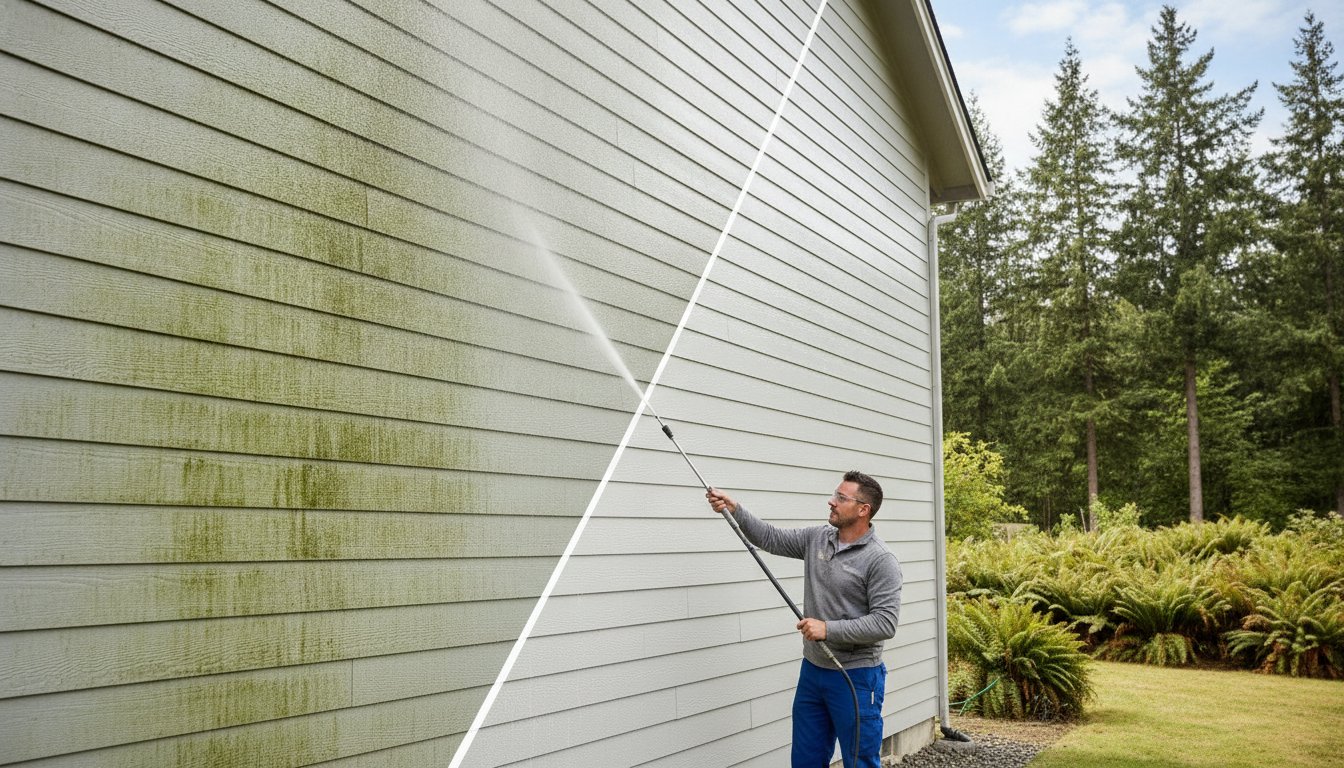
Efficiency matters when maintaining a home in the PNW. While we're out to repair your fence, we can also take care of gutter cleaning or a softwash moss-off roof treatment. Handling these tasks together saves you time and ensures your entire property is protected from the elements. It's a methodical way to keep your home in top shape without managing multiple contractors.
The Licensed and Bonded Advantage
Oregon law requires anyone performing construction or repair work to be licensed through the Construction Contractors Board. For any job over $1,000, this isn't just a suggestion; it's a legal requirement. Hiring Local Fishing Handyman LLC (CCB#254463) means you're working with a professional who is bonded and insured. This protects you from liability and ensures the work meets state standards.
Unlicensed labor might seem cheaper upfront, but it carries significant risks. If a worker gets injured or your neighbor’s property is damaged, you could be held responsible. A licensed craftsman follows local Beaverton regulations regarding fence height and materials. We take pride in doing the job right the first time, providing the peace of mind that comes with professional accountability.
Local Fishing Handyman LLC: Your Beaverton Expert
We have spent years working in neighborhoods across Beaverton and Aloha. We know the specific challenges of local clay soil and how it impacts your property. Our team doesn't just apply a quick fix; we address the root cause of the lean. Fixing a leaning fence post Beaverton soil has compromised requires a deep understanding of local drainage and wind loads.
Take care of your fence before the next big windstorm arrives. A small lean is much easier and cheaper to fix than a collapsed line. Get your leaning fence fixed before the next storm by reaching out to us today. We are a local, family-owned business dedicated to keeping your home sturdy and secure.
Secure Your Property Line Before the Next Storm
Your fence is a vital part of your home's security and curb appeal. We've seen how Beaverton's heavy clay soil and seasonal wet-dry cycles create the perfect conditions for instability. By using the screwdriver test to catch rot early and choosing modern reinforcement methods like steel splints, you can save your fence without the high cost of a full replacement. Proactive maintenance, such as grading soil away from posts and trimming heavy vines, is the best way to prevent future issues.
When you need help fixing a leaning fence post Beaverton weather has pushed over, trust a local Oregon family-owned business. Local Fishing Handyman is specialized in PNW exterior maintenance and understands the specific challenges of our Tualatin Valley environment. We are fully licensed, bonded, and insured (CCB#254463) for your protection and peace of mind. Don't let a small lean turn into a fallen fence. Request a Fence Repair Estimate from Local Fishing Handyman today. We'll help you get your backyard back in order with a straight, sturdy fence that lasts.
Frequently Asked Questions
How much does it cost to fix a leaning fence post in Beaverton?
General industry data for 2026 shows that professional repair for a single leaning post typically ranges from $150 to $300. If your fence has more extensive damage across several sections, you might see costs between $500 and $550. Homeowners choosing to handle minor leans themselves can expect to pay between $25 and $50 for basic DIY materials. These prices vary based on the repair method and the condition of your soil.
Can I fix a leaning fence post without digging it out?
You can definitely fix a post without digging by using steel reinforcement splints or E-Z Mender systems. These heavy-duty steel supports are driven into the ground next to the existing post and then bolted into the sound wood. This is a very effective way of fixing a leaning fence post Beaverton soil has shifted around. It saves you the labor of removing old concrete and keeps your yard much cleaner.
How long does a typical fence post repair take?
A single post repair usually takes between one and three hours to complete from start to finish. If you use the steel splinting method, the job is often done in under an hour because there is no digging involved. Traditional resetting takes longer because you must remove the old concrete plug and wait for the new pour to stabilize. The total time for your project depends on the number of posts and the severity of the lean.
Does my homeowner’s insurance cover a leaning fence post?
Standard insurance policies rarely cover fence damage caused by rot, termites, or general age. Most providers view a leaning fence as a maintenance issue rather than a covered peril. However, if a healthy fence is damaged by a fallen tree or a sudden windstorm, you might be able to file a claim. You should review your specific policy to see if "Other Structures" coverage applies to your perimeter fence.
Should I use concrete or gravel to reset my fence post in Oregon?
A hybrid approach is the best choice for our local climate. You should place six inches of gravel at the bottom of the hole for drainage and then use concrete for the main footing. Pure concrete footings in Beaverton's clay soil often trap water against the wood, which causes it to rot faster. The gravel base allows rainwater to move away from the post while the concrete provides the weight needed to resist high winds.
Is it better to repair or replace a 15-year-old fence post?
If your fence is 15 years old and shows widespread rot, replacement is usually the better long-term investment. Most wood fences in the PNW have a lifespan of about 15 to 20 years before they become structurally unsound. A full replacement typically costs between $1,900 and $4,750 depending on the length. However, if only one post is leaning and the rest of the panels are healthy, a targeted repair is a very cost-effective way to extend the life of the fence.
Can a handyman legally perform fence repairs in Beaverton?
A handyman can legally perform fence repairs as long as they hold a valid license from the Oregon Construction Contractors Board (CCB). In Oregon, any repair or construction work valued at $1,000 or more requires a CCB license. Even for smaller jobs, hiring a licensed professional is smart because they are bonded and insured. This protects you from liability and ensures the work meets local safety standards.
What is the best time of year to fix a fence in the Pacific Northwest?
Late spring and summer are the ideal times for fixing a leaning fence post Beaverton homeowners need to address. The soil is much drier, which makes digging easier and allows concrete to cure correctly without being diluted by rain. You should still perform a "post-shaking" inspection in the fall. Catching a loose post in September allows you to reinforce it before the heavy winter windstorms arrive and cause a full collapse.