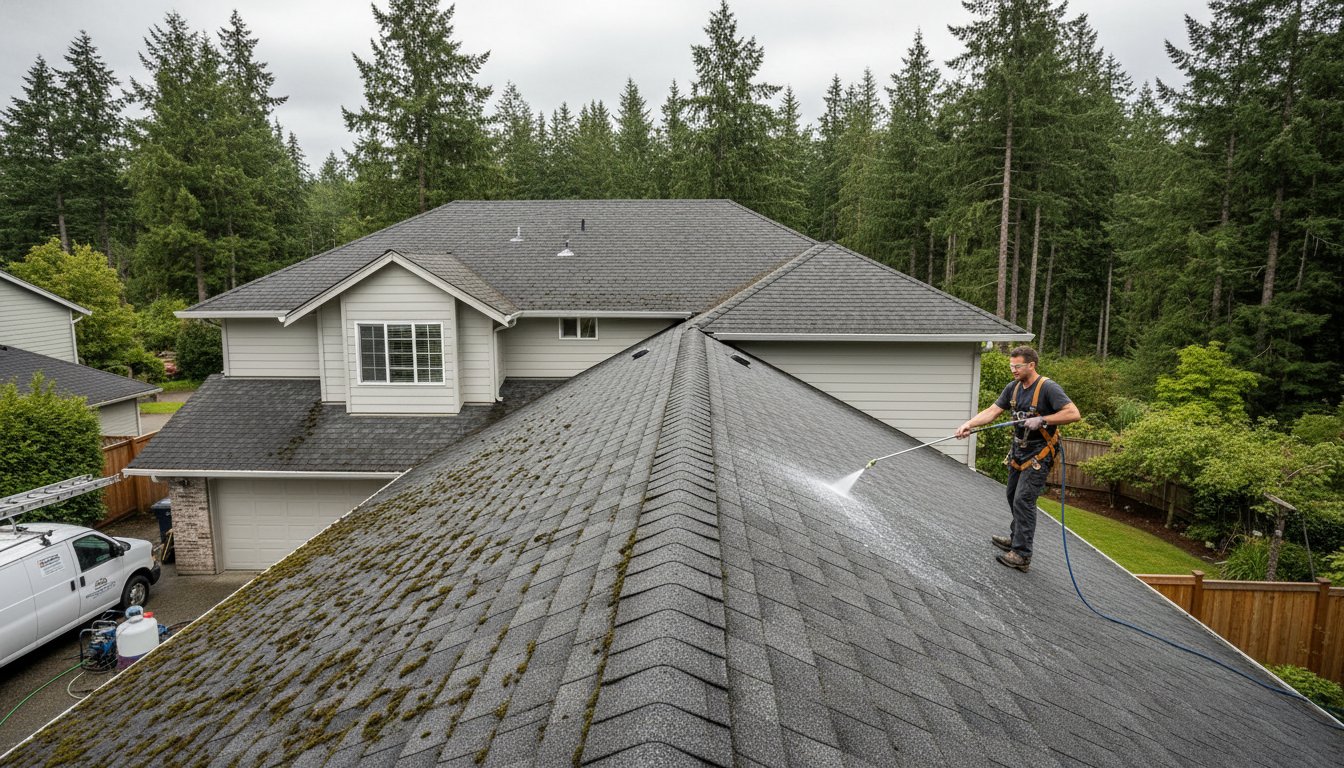
Hiring a contractor to pressure wash your roof might seem like the quickest way to blast away that ugly green moss. But for your Oregon home, it’s a decision that could lead directly to a $15,000 replacement. It’s a costly mistake we’ve seen homeowners make for over 15 years.
We get it. You see that moss building up after our long, damp winters, and you want it gone for good. A clean roof not only boosts your curb appeal, but it also gives you peace of mind, knowing your home is protected from the constant Pacific Northwest rain. The problem is that many contractors offer confusing quotes, and not all cleaning methods are created equal.
This article will give you the straight facts on why a high-powered jet of water should never touch your shingles. We’ll show you exactly how the right method, called soft washing, safely removes moss and protects your investment for the long haul. You'll learn the key differences between the two techniques so you can find a trustworthy local professional and avoid a disastrous repair bill.
Key Takeaways
- Learn how high-pressure water strips away the essential protective granules from your asphalt shingles, leading to premature aging and costly leaks.
- Understand the risks of trying to pressure wash roof moss and why this method often causes more harm than good for Oregon homeowners.
- Discover the difference between blasting away surface growth and using a soft wash to eliminate moss and algae spores at their root for a longer-lasting clean.
- Find out why a professional, low-pressure approach is the safest way to protect your roof's integrity and maximize its lifespan in the damp Pacific Northwest climate.
Should You Pressure Wash Your Roof? The Short Answer for Oregon Homeowners
Let's get straight to the point: No. You should almost never use a high-pressure washer on your asphalt shingle roof. With over 15 years of experience repairing and cleaning roofs here in the Pacific Northwest, I've seen firsthand the permanent damage this common mistake causes. The temptation is understandable. You see thick green moss or ugly black streaks, and you want that instant, satisfying clean that a power washer delivers on a concrete patio. But your roof is not your patio.
This is a critical piece of maintenance for Oregon homeowners. Our damp climate, with the Willamette Valley getting between 35 and 45 inches of rain annually, creates the perfect breeding ground for moss, algae, and lichen. Leaving them to grow is not an option; it's a direct threat to the lifespan of your roof. The key is removing them safely. The professional, industry-standard method is called soft washing, which uses specialized cleaning solutions and low pressure to kill the growth at its root without harming your shingles. It's the only way to protect your home's most important asset.
The 'Pressure Wash' Misconception
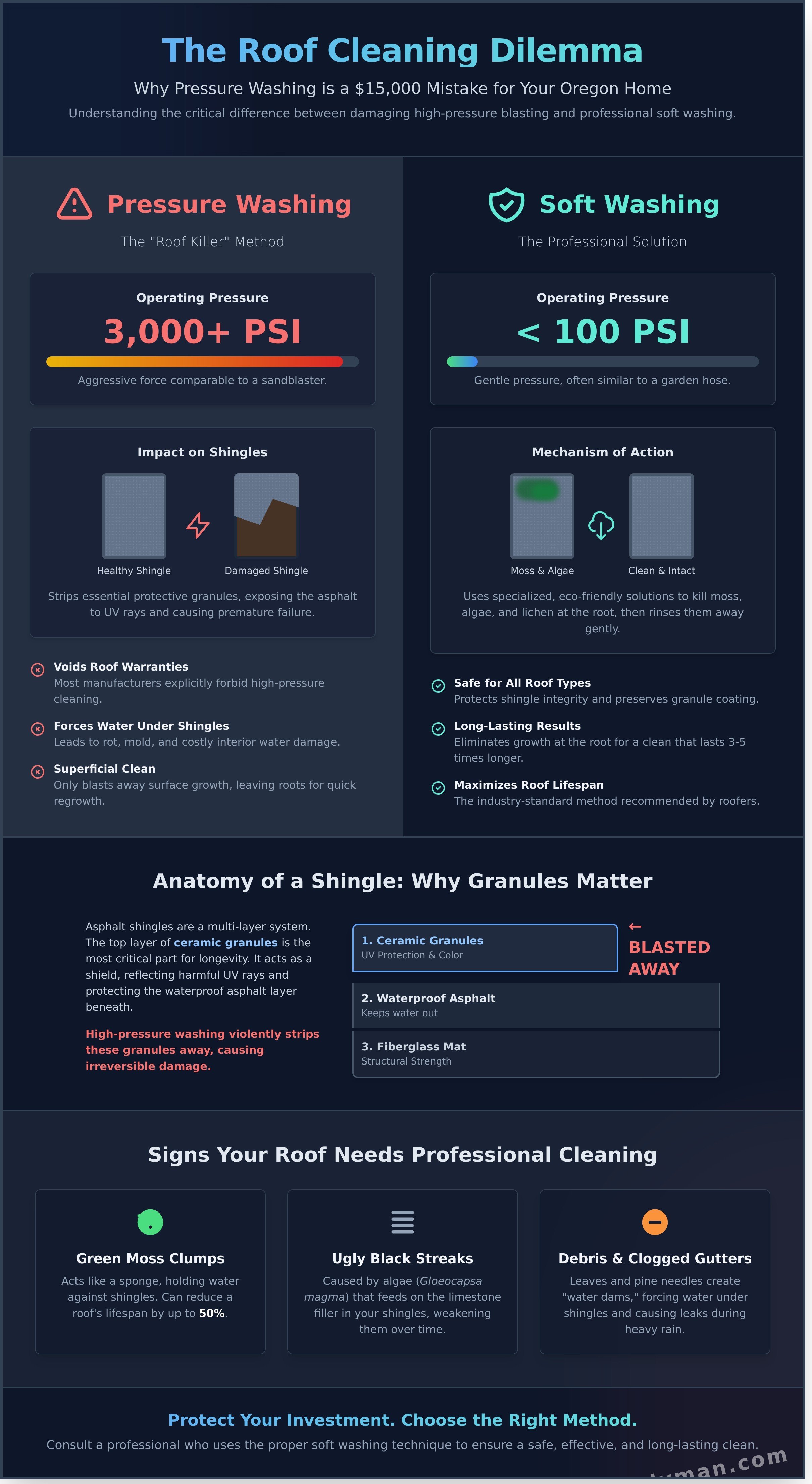
Many homeowners believe that the intense force of a power washer is the only thing that can remove stubborn, thick moss. This idea comes from seeing how effectively it strips grime from hardscapes like driveways and brick. A concrete slab can handle 3,000 PSI (pounds per square inch) of force, but your asphalt shingles cannot. They are a delicate system of asphalt, fiberglass, and ceramic granules. Exposing them to that kind of force is a recipe for disaster. To put it simply, to pressure wash a roof is to use a high-force mechanical process that blasts away protective granules and risks the structural integrity of your shingles. The well-documented dangers of pressure washing shingles are why no certified roofer would ever recommend this approach.
Signs Your Roof Needs Immediate Cleaning
Your roof gives clear signals when it's in trouble. Ignoring them can lead to costly repairs down the line. If you see any of the following, it's time to act:
- Green Moss Clumps: These aren't just an eyesore. Moss acts like a sponge, holding gallons of water directly against your roofing material. This constant moisture can rot the wood sheathing underneath and reduce a shingle's lifespan by up to 50% in severe cases.
- Ugly Black Streaks: Those dark stains running down your roof are a hardy type of algae called Gloeocapsa magma. It feeds on the limestone filler in your shingles, slowly breaking down their composition and creating a welcoming surface for more destructive moss to take hold.
- Debris and Clogged Gutters: A buildup of leaves, pine needles, and branches doesn't just look messy. It creates dams that prevent proper water drainage. This can force water under your shingles and lead to leaks, especially during our heavy winter rains.
Catching these signs early and choosing the right cleaning method is the best way to ensure your roof lasts for its full intended lifespan. Using the wrong one can take years off its life in a single afternoon.
Why High Pressure is a 'Roof Killer': Understanding Shingle Damage
Pointing a pressure washer at your roof seems like a fast and effective way to blast away moss and stains. It looks clean afterward. The problem is that the same force that strips away grime also strips away the life of your shingles, causing permanent damage you might not see for years. To understand why, you first need to know what you're actually cleaning.
Your asphalt shingles are not just simple tiles. They are a sophisticated, multi-layered system designed to protect your home for decades. Each shingle is composed of three critical parts:
- A Fiberglass Mat: This is the backbone, providing structural strength and fire resistance.
- Asphalt: A waterproof layer that keeps water out of the structure of your home.
- Ceramic Granules: This top layer is the most important for longevity and the first victim of high pressure.
A standard gas-powered pressure washer can output 3,000 PSI or more. At that force, the water jet acts less like a cleaner and more like a sandblaster. It aggressively scours the shingle surface, dislodging the protective granules and leaving the vulnerable asphalt layer exposed. This single action sets off a chain reaction of roof failure.
Granule Loss and UV Protection
Those tiny ceramic granules are your roof's primary shield against the sun. They reflect harsh UV rays that would otherwise bake, dry out, and crack the asphalt underneath. When a pressure washer blasts them off, it creates 'bald spots' on your shingles. This exposed asphalt quickly deteriorates, causing shingles to curl and become brittle. This damage is irreversible and can cut the lifespan of a 30-year architectural shingle down to just 15 years.
Water Intrusion and Structural Leaks
Roofs are engineered for water to flow down and off. A high-pressure stream, however, forces water upward, driving it underneath the shingle overlaps and directly into the roofing underlayment. This is water going where it was never meant to be. The focused blast can also destroy the waterproof seals around chimneys, vents, and flashing. Water forced upward by pressure often ends up in the attic before it evaporates, promoting mold growth and wood rot.
The most dangerous part of this damage is that it's often invisible at first. You won't see a waterfall in your living room the day after you pressure wash roof shingles. Instead, you've created thousands of tiny micro-tears and compromised seals. Over the next 2-3 years, seasonal rain works its way into these weak points, leading to slow, hidden leaks that can cause thousands in structural damage before you even notice a ceiling stain.
Roof manufacturers are well aware of this. It's why using high-pressure cleaning methods will almost certainly void your roof's warranty. This isn't just a contractor's opinion; it's an industry standard. In fact, the official ARMA guidelines from the Asphalt Roofing Manufacturers Association specifically warn against aggressive pressure washing due to the granule damage it causes. The damage isn't always obvious from the ground. A professional roof inspection can spot these early warning signs before a small issue becomes a major repair.
Soft Wash vs. Pressure Washing: A Side-by-Side Comparison
Choosing how to clean your roof isn't just about looks; it's about protecting your home's most important shield. The methods behind soft washing and pressure washing are fundamentally different. One is a treatment, and the other is a brute-force attack. Understanding this difference is key to avoiding costly damage.
Let's break down the core distinctions:
- Pressure: A soft wash system uses a gentle 60 PSI, about the same as your garden hose. A typical pressure washer, however, blasts your roof with 3,000 PSI or more. This intense force can strip away the protective granules on asphalt shingles, which are essential for reflecting UV rays and protecting the asphalt layer. Even official industry roof cleaning guidelines caution against high-pressure systems because they can force water up under the shingles, leading to leaks and rot.
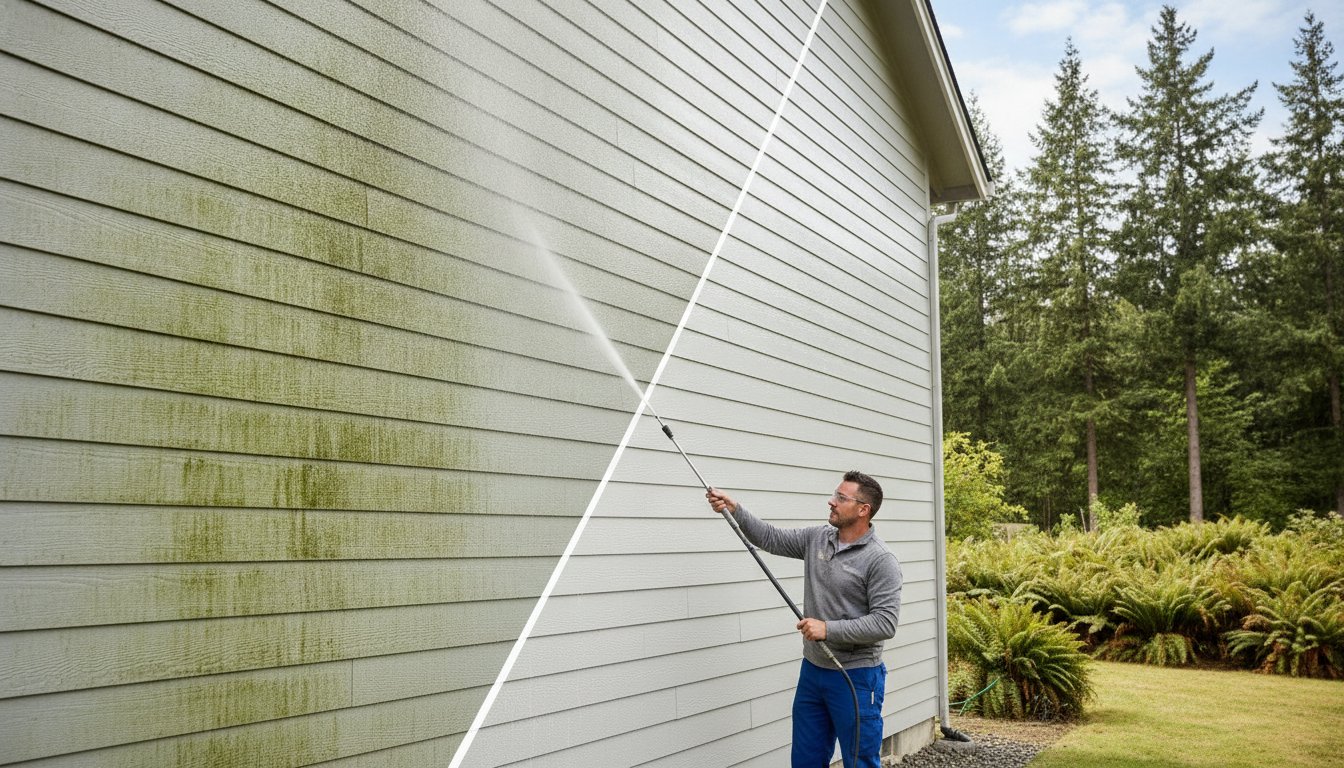
- Methodology: Soft washing is a chemical process. It uses specialized, biodegradable solutions to kill moss, algae, and lichen at the root. Pressure washing is purely mechanical. It uses high-velocity water to rip the growth off the surface, which often leaves the root systems and spores behind.
- Longevity: Because soft washing eliminates the biological growth completely, the results last 2 to 3 times longer than a pressure wash. A roof that has been pressure washed often shows regrowth in less than a year as the remaining spores flourish.
- Safety: Our technicians apply soft wash treatments safely from a ladder or the ground. Attempting to pressure wash roof surfaces requires walking on wet, slippery shingles that are being blasted with high-pressure water, a serious safety risk for both the worker and your roof.
The 'Moss-Off' Chemical Advantage
Think of pressure washing your roof like mowing a weedy lawn. It looks better for a short time, but you haven't solved the problem. Our specialized solutions work like a targeted weed killer, penetrating the moss and algae to destroy their root structures. This is why a soft-washed roof stays clean for years, not months. We also take great care to protect your Oregon landscaping by pre-wetting plants and covering delicate foliage, ensuring our treatment only affects what's on your roof.
Cost Analysis: Short-term vs. Long-term Value
A quote to pressure wash roof shingles might seem cheaper upfront, but it's often a gateway to much higher costs. A single damaged shingle can lead to a hidden leak, and widespread granule loss can shorten your roof's lifespan by years, leading to a premature replacement costing $15,000 or more. A professional soft wash is an investment in your roof's health and longevity. It costs a fraction of a new roof and prevents the very damage that makes early replacement necessary. For a detailed breakdown of what a professional service includes, see our Softwash Roof Cleaning: An Oregon Homeowner's Guide.
Managing Moss in the Pacific Northwest: The Softwash Advantage
Living in Oregon means embracing the rain. Our climate, with its mild temperatures and nearly nine months of consistent moisture, is a perfect storm for moss, lichen, and algae growth on roofs. While it creates our beautiful green landscape, it also creates a serious threat to your home's most important protector. Common Willamette Valley species like Springy Turf-moss (Rhytidiadelphus squarrosus) don't just sit on your shingles; they dig in, trap water, and start the process of decay.
The constant wet-and-dry cycle is incredibly hard on roofing materials. Moss acts like a sponge, holding rainwater and morning dew against your asphalt shingles long after the sun comes out. This trapped moisture accelerates the loss of the protective granules, leaving the shingle's core exposed to UV rays and rot. Trying to blast it away with a high-powered machine is a common mistake. A harsh pressure wash roof treatment will strip even more granules, shortening your roof's lifespan by years and potentially voiding its warranty.
That's why timing is everything. The ideal window for a professional roof treatment in Oregon is between August and October. Applying a "Moss-Off" treatment before the heavy winter rains begin ensures the moss is dealt with when it's most vulnerable. This proactive approach is a standard of care recognized by local experts. Any professional licensed by the Oregon Construction Contractors Board (CCB) understands that preventative maintenance is key to preserving a roof in our unique climate.
Your roof is more than just a shield; it's a major factor in your home's value. In Oregon's competitive real estate market, a stained, moss-covered roof is a major red flag for buyers. According to the National Association of Realtors' 2022 Remodeling Impact Report, a new roof can recover 100% of its cost at resale. A clean, professionally maintained roof directly contributes to that high return on investment and boosts your home's curb appeal.
There's also a neighborly benefit. Moss reproduces by releasing microscopic spores into the air, which can easily travel to your neighbors' roofs. Keeping your roof clean helps protect your entire community's property values. It's a small step that makes a big difference. This holistic approach to exterior care also includes ensuring your drainage is working properly. A clean roof is pointless if your gutters are clogged and overflowing. (Find out more about Why Gutter Cleaning is Vital for Oregon Homes).
This is where the soft wash advantage becomes clear. Instead of using destructive force like you would to pressure wash roof surfaces, our soft washing process uses specialized, eco-friendly cleaning solutions. These solutions work their way to the root of the problem, killing moss, algae, and lichen without damaging your shingles. It's the only method recommended by the Asphalt Roofing Manufacturers Association (ARMA) because it cleans effectively while preserving the integrity and longevity of your roof.
Don't let Oregon's damp climate get the best of your home. Protect your investment and ensure your roof lasts for decades. Schedule your professional soft wash roof treatment today and get a free, no-obligation estimate.
Trusting Local Fishing Handyman: Our 15-Year Roof Care Philosophy
After 15 years of serving homeowners in the Pacific Northwest, we've developed a simple but powerful roof care philosophy: do it right or don't do it at all. Your roof is the most critical shield protecting your family and your investment. We’ve seen firsthand how improper cleaning techniques can lead to thousands in premature repairs. That’s why our entire approach is built on safety, longevity, and trust. We aren't just cleaning a surface; we're preserving the structural integrity of your home.
Our 'Softwash Moss-Off Roof Treatment' is the direct result of this philosophy. It is the only method we use because it's the only one that guarantees a deep clean without causing harm. Think of it this way: you wouldn't use a sandblaster to wash your car. So why would anyone use a high-pressure washer on delicate asphalt shingles? To pressure wash roof materials is to actively strip away the protective granules that shield it from UV rays and weather. This brute-force approach can also crack tiles and force water into your underlayment, creating hidden leaks. Our softwash system uses specific, biodegradable cleaning agents at a pressure no stronger than a garden hose. The solution does the real work, neutralizing moss, algae, and mildew at the root so it can be gently rinsed away.
We believe in direct communication and expert results. When you call us, you get an honest assessment without complicated jargon or high-pressure sales tactics. We'll tell you exactly what your roof needs and what it doesn't. This transparency is backed by our professional credentials. As a licensed, bonded, and insured contractor (CCB#254463), we provide a level of accountability you can rely on. This is our promise to local families and seniors: your property is protected, our work is guaranteed, and you can have complete peace of mind knowing a true professional is on the job.
The Local Fishing Handyman LLC Difference
Our 15 years of hands-on experience in the Pacific Northwest means we understand exactly what your roof endures through the long, damp seasons. We know the specific types of moss and algae that thrive here. We treat your home like it's our own, which means we never cut corners. As part of our commitment to the community, we proudly offer a senior citizen discount. It's about taking care of our neighbors with fair, honest work.
Get Your Free Roof Health Assessment
Our process begins with a free, comprehensive roof health assessment where we identify problem areas and explain our solution. We show you what needs attention and lay out a clear plan. Our softwash treatment is often paired with thorough gutter cleaning for a complete exterior protection package. Don't risk the damage that comes when you pressure wash roof shingles. Choose the safe and effective alternative. Contact Local Fishing Handyman LLC for a Roof Treatment Quote and protect your home today.
Protect Your Investment: The Smart Choice for Your Oregon Roof
Your roof is one of your home's most critical assets, and making the right maintenance decision is vital. The temptation to pressure wash roof shingles is a common but costly mistake, one that can strip away protective granules and shorten your roof's lifespan by years. For Oregon homeowners, our damp climate requires a smarter approach that cleans effectively without causing irreversible damage.
The professional standard is clear: soft washing is the only safe method for removing moss, algae, and stains. At Local Fishing Handyman, this isn't just a service; it's our roof care philosophy, refined over 15 years of hands-on experience right here in the Pacific Northwest. We protect your investment by using proven, low-pressure techniques that preserve your shingle integrity.
Don't risk expensive repairs. Choose the proven, safe method from a team you can trust. We are fully Licensed, Bonded, and Insured (CCB#254463) and proudly offer Senior Citizen Discounts. Your peace of mind is our top priority.
Schedule your Moss-Off Roof Treatment today with Local Fishing Handyman!
Frequently Asked Questions
Will soft washing my roof damage my plants or lawn?
No, professional soft washing will not damage your plants or lawn when performed correctly. A skilled technician protects your landscaping by pre-soaking all vegetation with water and covering delicate plants with specialized sheeting. After the treatment, we thoroughly rinse the entire area to neutralize the cleaning agents. We have used this protective process on over 500 homes in the Portland area with zero reported plant damage.
How long does it take for moss to fall off after a soft wash treatment?
Moss will turn white or yellow within 48 hours of treatment and will naturally fall off with rain over the next 2 to 6 weeks. The soft wash solution kills the moss at its root system immediately. The dead organic matter then needs time to release its grip on the shingles. For very dense moss growth, it can sometimes take up to 8 weeks for the last remnants to wash away completely.
Is it safe to pressure wash a metal roof instead of shingles?
Yes, it can be safe to pressure wash a roof made of metal, but only with the correct low-pressure technique. Metal roofing can typically handle a gentle rinse under 1,500 PSI. However, using excessive pressure or the wrong nozzle angle can easily dent the panels, strip the protective coating, or force water into seams. We always recommend a soft wash first to kill the organic growth, followed by a low-pressure rinse for the safest, most effective results.
How often should I have my roof soft washed in Oregon?
For homeowners in Oregon's damp climate, we recommend a professional roof soft wash every 3 to 5 years. The persistent rain and shade from our Pacific Northwest trees create an ideal environment for moss, algae, and lichen to thrive. A cleaning on this schedule prevents these growths from causing permanent damage to your shingles, protecting your investment and helping you avoid more expensive repairs down the road.
Can I DIY a soft wash roof treatment with store-bought chemicals?
We strongly advise against a DIY soft wash roof treatment for safety and effectiveness reasons. Store-bought products often lack the strength of professional-grade solutions, leading to poor results. More importantly, working on a slippery roof with chemicals is extremely hazardous without proper safety gear, including fall-arrest systems. Over 90% of serious falls from ladders occur during homeowner maintenance projects. It's a job best left to a licensed and insured professional; this same principle of seeking expert help applies to other complex home situations, and if you're dealing with challenging pet behaviors, you can check out I Wuff You Dog Training.
Does soft washing remove the black streaks on my roof?
Yes, soft washing is the most effective and safest method for completely removing those ugly black streaks. The streaks are a form of algae called Gloeocapsa magma, which our biodegradable solution is designed to eliminate. The treatment kills the algae at a biological level, restoring your roof's original color. Unlike an attempt to pressure wash a roof with asphalt shingles, our process won't dislodge granules or cause damage.
What happens if it rains immediately after a soft wash treatment?
A light to moderate rain shortly after a treatment is actually beneficial. The rain helps to gently rinse the cleaning solution and the now-dead organic matter from your roof's surface. Our professional solutions are fast-acting and only need about 20 minutes of dwell time to be effective. Our technicians always check the forecast for storms with over a 60% probability of heavy downpour before beginning any job.
How do I know if my roof is too old to be cleaned safely?
Your roof is likely too old for cleaning if you see widespread granule loss in your gutters or notice that more than 25% of the shingles are cracked, brittle, or curling up at the edges. Before starting any work, we perform a thorough inspection. If a roof shows these signs of advanced age, cleaning could cause more harm than good. At that stage, we would recommend prioritizing a roof replacement to protect your home.