If you think a high-pressure blast is the quickest way to save your graying cedar, you might actually be shortening its life by years. It's frustrating to watch a major investment disappear under a thick layer of green moss and slippery algae. You want that fresh, new-wood look back, but the thought of spending your entire weekend scrubbing hundreds of feet of fencing is exhausting. Even worse is the fear that a standard power washer will splinter the delicate wood fibers, leading to permanent damage and rot.
We understand that a fence in our damp climate needs more than just a surface rinse. Choosing professional wood fence cleaning Oregon homeowners rely on means using low-pressure soft-washing techniques that kill organic growth at the root without harming the timber. This guide will show you how expert maintenance can actually double the lifespan of your fence. You'll learn how to achieve professional results that last through the winter, preventing long-term rot while keeping your property looking its best.
Key Takeaways
- Identify how Oregon’s relentless moisture cycle fuels moss and mildew growth that leads to permanent wood rot.
- Learn why soft-washing at low pressure is the Pacific Northwest standard for cleaning cedar without splintering the delicate wood fibers.
- Perform the simple "Screwdriver Test" to check for structural damage and soft spots before investing in a deep clean.
- Discover how scheduling professional wood fence cleaning Oregon experts can double the lifespan of your fence by killing organic growth at the root.
- Master the professional site preparation steps that protect your garden beds and landscaping during the restoration process.
Why Oregon’s Climate is Brutal on Wood Fences
Oregon is famous for its rain, but your fence pays the highest price for those misty mornings. Most cedar and fir fences in the Pacific Northwest face a relentless cycle of saturation and partial drying. This environment doesn't just make wood look old; it creates a breeding ground for biological growth that eats the structure from the inside out. When you invest in professional wood fence cleaning Oregon homeowners rely on, you're fighting back against a climate that wants to turn your property line into compost.
When moss and algae cover your boards, they act like a wet sponge. They trap water against the wood grain for weeks at a time, even during a rare dry spell. This constant contact prevents the wood from ever fully drying out. This is exactly what wood-decay fungi need to thrive. Over time, this trapped moisture leads to deep structural decay that a simple coat of paint can't fix.
The Biological Threat: Moss and Algae
Moss, green algae, and black mildew are the "Big Three" enemies of local fencing. They each damage the wood in different ways:
- Moss: Penetrates the grain with root-like structures called rhizoids, creating cracks that invite deep rot.
- Green Algae: Creates a slippery, moisture-trapping film that stays slick even when the rain stops.
- Black Mildew: Feeds on the sugars in the wood and leaves deep, unsightly stains that are hard to scrub away.
Moss is especially dangerous because those rhizoids find stability by digging into the wood fibers. As they grow and expand, they widen micro-cracks in the grain. This allows even more water to seep deep into the wood. This is why professional wood fence cleaning Oregon experts focus on removing the entire root system rather than just the visible growth on the surface.
Many homeowners think they can just wait for a hot July to kill off these spores. Unfortunately, those spores stay dormant deep in the wood grain during the dry months. They'll spring back to life the moment the first autumn rains arrive in September. Algae also creates a safety hazard. If your fence is near a walkway or a gate, that green slime can make the ground around it dangerously slick.
UV Damage vs. Moisture Saturation
Knowing the difference between cosmetic issues and structural ones saves you money in the long run. Oregon's sun bleaches the lignin in the wood, which leads to a silver-gray appearance. While this looks weathered, the wood is often still structurally sound. Moisture saturation is the real killer. Cedar is naturally resistant to rot because of its tannins, but even cedar has its limits. Constant saturation causes the wood to swell and shrink repeatedly. This weakens the internal bonds and makes the boards brittle.
Understanding wood preservation techniques is essential for keeping these materials intact. A good rule of thumb is to look at the color of your boards. Gray wood is often healthy, but green wood is dying. That green hue means organic matter is holding moisture against the grain, accelerating rot every single day. Taking action before the wood turns soft is the best way to ensure your fence lasts for another decade.
Softwash vs. Pressure Washing: The Pacific Northwest Standard
Many homeowners assume that more power equals a better clean. When it's time to tackle a grimy fence, they often reach for a rental unit capable of 3,000 PSI or more. For the soft cedar and fir common in our region, this is a major mistake. High-pressure water is wood’s worst nightmare. It doesn't just remove moss; it destroys the very fibers that hold your fence together. Choosing professional wood fence cleaning Oregon services means opting for a method that preserves the wood rather than punishing it.
The difference between the two methods comes down to force versus chemistry. Pressure washing relies on sheer mechanical power to rip contaminants off the surface. Softwashing uses specialized solutions to gently dissolve them. If you want your fence to last, you need a process that treats the wood with respect. It's about working smarter to protect your investment from the harsh elements we face every year.
The Dangers of High-Pressure Water
High-pressure washing often drives water deep into the wood grain. Once moisture is trapped inside, it leads to internal rot that you can't see until the board fails. This mechanical force also strips away the natural oils and seals that protect the wood from the elements. According to the U.S. Forest Service's Wood Handbook, moisture management is the single most important factor in wood durability. Blasting it with high-pressure water works against this principle.
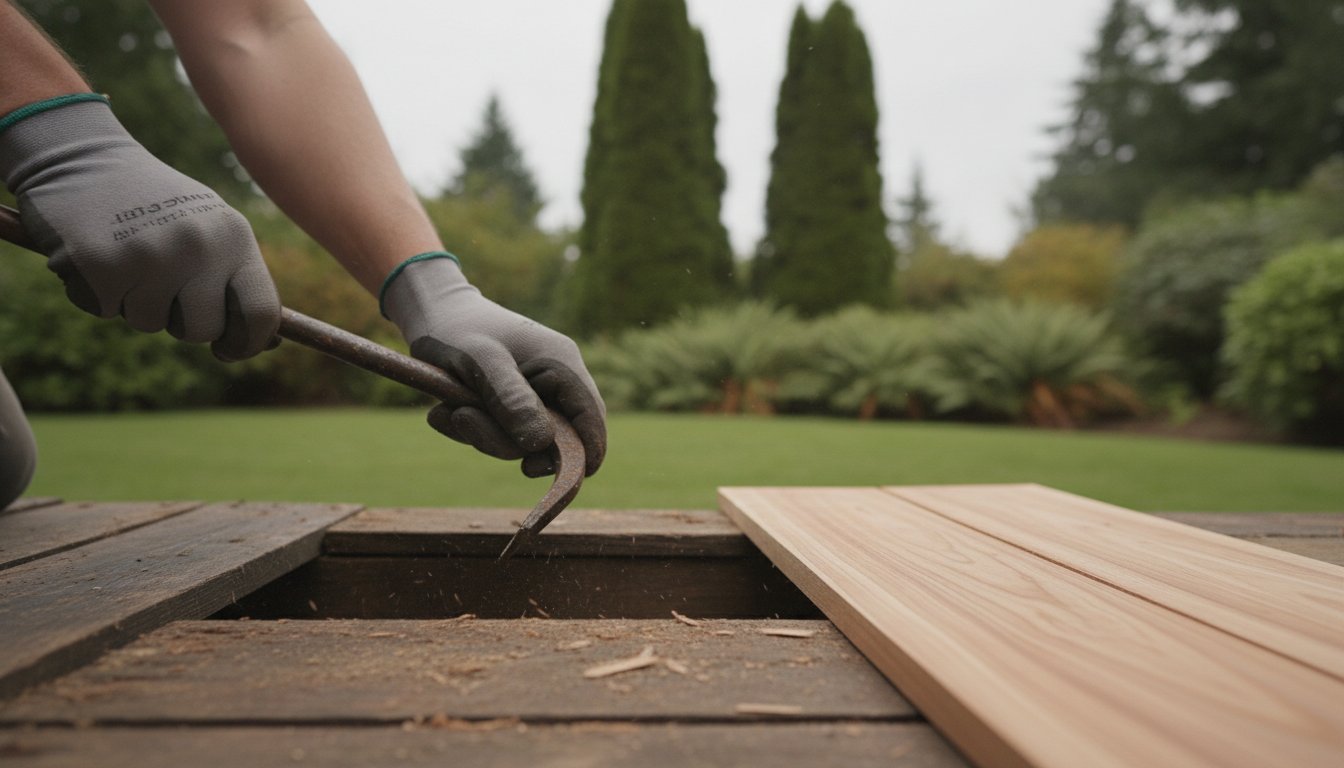
You’ve probably seen fences that look "fuzzy" or "hairy" after a DIY cleaning. This is called furring. It happens when high pressure destroys the wood pulp and lifts the fibers. Once this happens, the wood becomes a magnet for new moss spores. These splinters also make it impossible to get a smooth finish if you plan to stain later. If your fence is already showing signs of wear, you might need expert fence repairs before starting a cleaning project.
The Science of Softwash Solutions
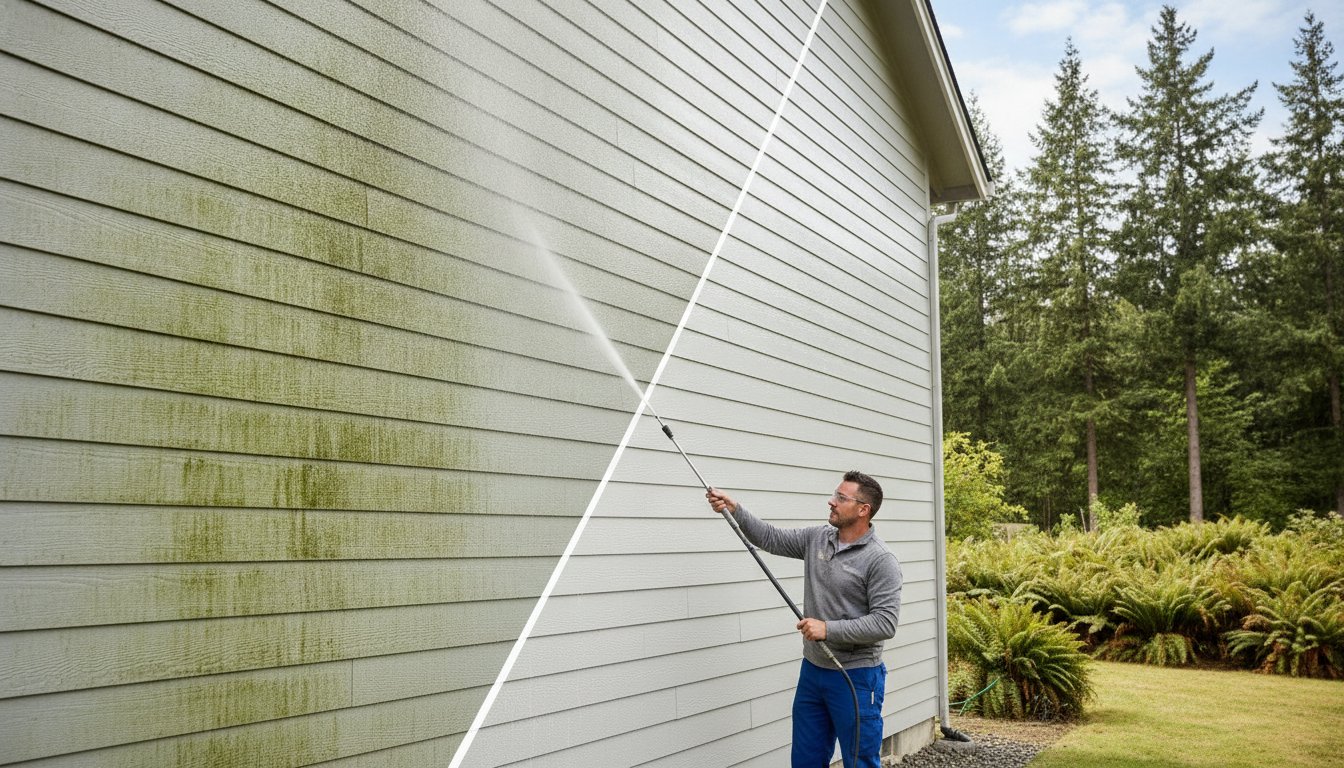
Softwashing is a sanitization process rather than a blasting process. We use low pressure, typically under 500 PSI, which is about the same as a strong garden hose. The real work is done by biodegradable surfactants. These solutions break down organic matter like algae and mildew at the root. While pressure washing just moves spores around, softwashing kills them so they don't grow back in a few months. It's a much more effective way to handle the professional wood fence cleaning Oregon weather requires.
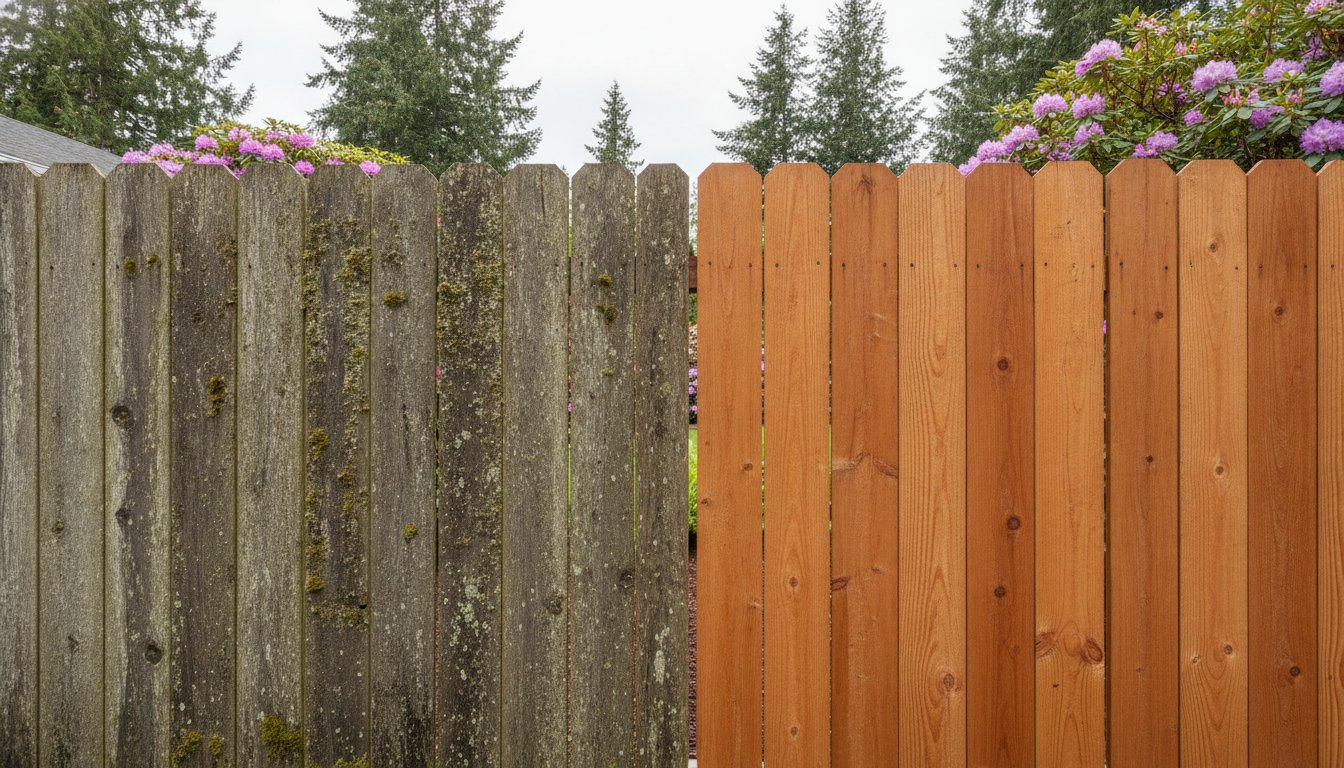
After the cleaning agents do their job, we use professional-grade brighteners. These are essential for restoring the natural pH balance of cedar. They neutralize the cleaners and open the wood pores, which brings back the original warm tones of the timber. This scientific approach ensures your fence isn't just clean; it's preserved for the long haul. It's a methodical way to get results that last through our long, wet winters without damaging your property.
Evaluating Your Fence: Is It Just Dirty or Structurally Failing?
Before you commit to a full restoration, you need to know if your fence is actually worth saving. It's a common mistake to spend money on cleaning a structure that is already rotting from the inside out. This is where the "Handyman Advantage" comes in. A seasoned craftsman looks past the surface grime to find structural weaknesses that a standard cleaning crew might miss. If the wood is too far gone, even the best professional wood fence cleaning Oregon can provide won't bring it back to life.
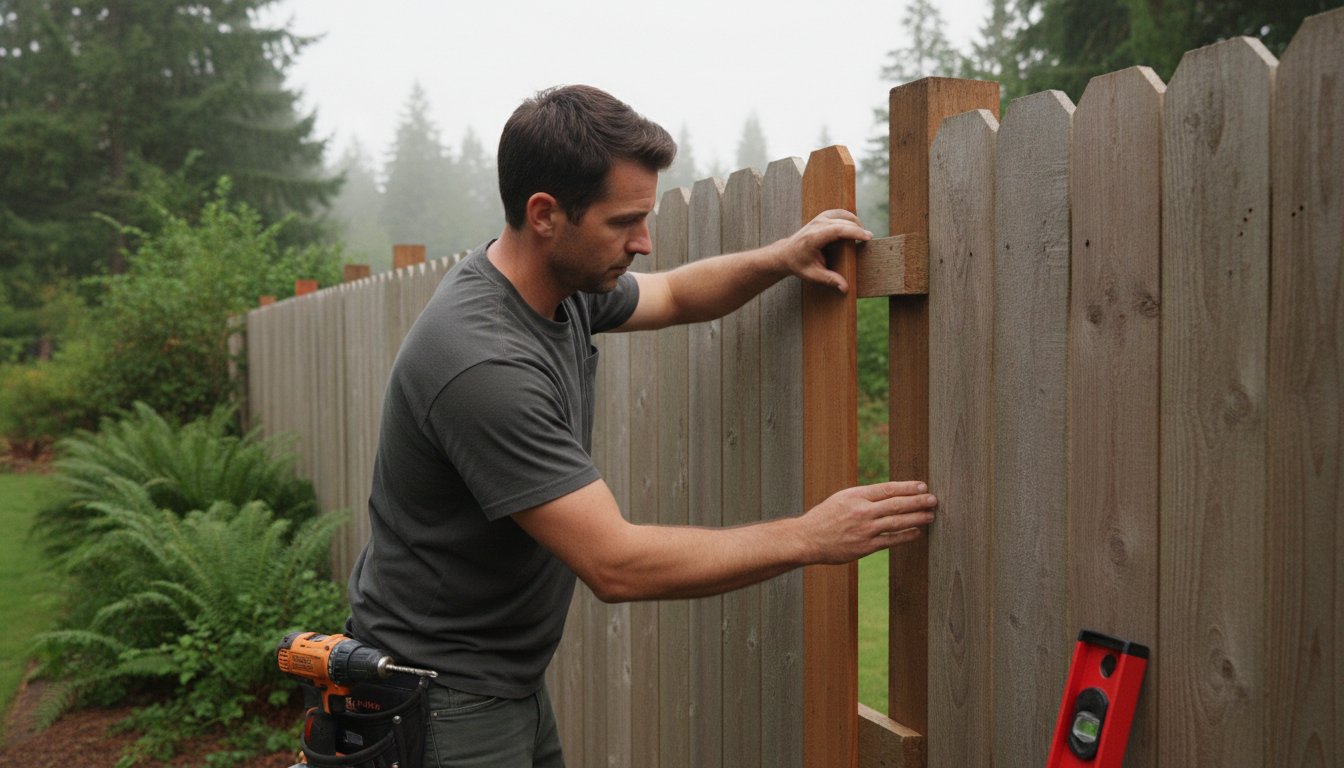
You can perform a simple check yourself using the "Screwdriver Test." Take a flathead screwdriver and gently press the tip into several areas of the wood, especially near the bottom of the pickets. If the metal sinks in easily or the wood feels spongy, you're dealing with rot. Healthy wood should feel firm and offer resistance. You should also look for leaning posts or gates that don't latch correctly. These issues usually point to unstable footings or warped frames that need fixing before any water touches the surface.
Deciding between repairing individual pickets or replacing entire sections comes down to the percentage of damage. If only a few boards are soft, swapping them out is a cost-effective way to prep for a clean. However, if more than twenty percent of the fence shows structural failure, replacement might be the smarter long-term investment. Taking the time to evaluate these details ensures you aren't just putting a fresh coat of "clean" on a failing asset.
Signs Your Fence Needs More Than a Wash
Dry rot is a deceptive enemy in the Pacific Northwest. It often hides beneath layers of green algae, making the board look solid until it's touched. Pay close attention to ground-contact points. In Oregon, the soil stays saturated for months; this often leads to rot right at the base of the posts. You should also check for rusted fasteners. If your nails or screws are corroded, they'll leave ugly orange streaks across your freshly cleaned wood as soon as the next rain hits.
Integrating Repairs with Cleaning
A fence repair should always be your first step before a deep clean. It's much more efficient to have a professional tighten hardware and replace broken pickets while they're already on-site for maintenance. Fixing a sagging gate latch or reinforcing a wobbly post during the cleaning appointment saves you from calling out a contractor twice. When the hardware is secure and the boards are solid, the cleaning process is safer and the results last much longer. It's about ensuring the entire structure is as functional as it is beautiful.

The Professional Fence Cleaning & Preservation Process
A successful restoration project requires more than just a bucket of soapy water and a hose. When you book professional wood fence cleaning Oregon residents expect a methodical approach that respects both the wood and the surrounding property. We don't just show up and start spraying. We follow a strict five-step technical process designed to kill organic growth while restoring the timber's structural integrity. This methodical flow ensures every board is treated evenly and safely.
The process begins with site preparation and pre-wetting. Protecting your garden beds is our first priority. Once the landscape is secure, we saturate the wood with clean water. This is a critical step because dry wood is like a sponge. By pre-wetting the boards, we ensure that our cleaning solutions stay on the surface where the moss and algae live rather than soaking deep into the wood grain. This makes the cleaning more effective and prevents chemical over-absorption.
Next, we apply eco-friendly algicides and mildewcides at low pressure, typically between 150 and 300 PSI. We then allow for a specific "dwell time" where the chemistry does the heavy lifting. This avoids the need for aggressive scrubbing that can damage the wood's surface. The final stage involves a low-pressure rinse followed by a neutralizing brightener. This removes any remaining residue and prepares the wood for long-term preservation. To get started on your property, you can book our professional softwashing services today.
Protecting Your Oregon Landscape
Oregonians take pride in their gardens, and we take every precaution to protect them. Our team uses specialized tarps for delicate plants and performs extensive pre-soaking of grass and shrubs. This dilutes any potential runoff and prevents chemical burns on your greenery. We also manage water runoff carefully to ensure it doesn't impact local storm drains or water systems. Choosing a professional who understands local flora like rhododendrons and ferns is essential for a worry-free service.
Restoring the Wood’s Natural Glow
The secret to a "like-new" finish is the wood brightening stage. After the organic growth is gone, wood can sometimes look dull or dark due to the cleaning agents. Brighteners restore the natural pH balance of the cedar or fir, which brings back the warm, golden tones of the timber. You'll know the fence is ready for a new coat of stain or sealer when the wood is clean, bright, and completely dry. A clean fence must dry for 48-72 hours before staining to ensure the product bonds correctly with the wood fibers.
Why Local Fishing Handyman is Oregon’s Choice
Choosing the right team for your home maintenance shouldn't be a gamble. We operate with a simple, no-nonsense philosophy: we show up on time, do the job correctly, and treat your property like our own. Our deep roots in the community mean we understand the specific environmental challenges your wood faces every season. When you need professional wood fence cleaning Oregon homeowners can rely on, you want a crew that values durability over quick fixes. We take pride in delivering results that stand up to our relentless Pacific Northwest winters.
Our approach is direct and practical. We don't use flashy sales tactics or confusing jargon. Instead, we provide clear communication and high-quality workmanship. Because we are a local team, we’ve seen firsthand how the mist in the Willamette Valley or the heavy rains along the coast affect different wood species. This regional expertise allows us to adjust our methods for your specific location and fence condition. It's about providing a service that actually extends the life of your investment.
The Security of a Licensed Professional
In Oregon, hiring unlicensed labor for exterior maintenance is a major risk for any homeowner. We are fully licensed, bonded, and insured, operating under CCB#254463. This isn't just a number; it’s your protection. Being bonded and insured means that if an accident happens on your property, you aren't held liable for the costs. Many "fly-by-night" cleaners lack these basic credentials, leaving you vulnerable to lawsuits or property damage. Our 2026 standards exceed basic industry requirements, ensuring that every soft-wash and repair project meets the highest safety and quality benchmarks.
Results That Speak for Themselves
Our crew has a reputation for being neighborly and hardworking. We don't just stop at the fence line. Because we are seasoned craftsmen, we understand how all your exterior surfaces work together. Many of our clients find it efficient to bundle their maintenance tasks. It’s common to combine fence care with gutter cleaning to ensure your entire drainage system is ready for the next storm. This integrated approach saves you time and ensures your home's exterior is fully protected from top to bottom.
A clean fence is only part of the puzzle. Our experience with deck repairs and siding maintenance allows us to spot potential issues before they become expensive failures. We treat every project as a step toward long-term preservation. If you’re ready to restore your property’s curb appeal and protect your wood from rot, we’re here to help. Get a professional quote for your Oregon fence today.
Protect Your Investment for the Seasons Ahead
Your fence is a major part of your property’s value and security. By choosing soft-washing over high-pressure blasting, you’ve already taken the most important step in doubling its lifespan. It’s also vital to handle structural repairs and evaluate ground-contact points before moisture causes permanent failure. Investing in professional wood fence cleaning Oregon residents rely on is the most effective way to stop rot before it starts and keep your cedar looking its best through every season.
As an Oregon-owned and operated business, we know exactly what it takes to combat our local moss and mildew. We are fully licensed, bonded, and insured (CCB#254463), providing you with the peace of mind that comes with expert softwash moss-off treatments. Don’t let another wet winter damage your wood. Request Your Professional Fence Cleaning Estimate today and let us put our local expertise to work for you. We look forward to helping you get your fence back to like-new condition.
Frequently Asked Questions
How much does professional wood fence cleaning cost in Oregon?
The investment for cleaning depends on the fence length, height, and the current level of organic growth. Industry data for Oregon shows typical rates between $0.10 and $0.50 per square foot, with a standard 150-foot fence often falling between $1,200 and $2,800 for restoration. We suggest getting a site-specific estimate since factors like moss density and water access can change the final cost.
Is soft washing safe for my garden and pets?
Soft washing is safe for your landscaping and pets when the correct safety protocols are followed. We pre-wet all surrounding grass and shrubs to prevent them from absorbing cleaning solutions and use tarps for delicate garden beds. Once the fence is rinsed and the wood is completely dry, it's perfectly safe for your pets to return to the yard.
How often should I have my wood fence professionally cleaned in the PNW?
Most fences in our climate need a professional cleaning every two to three years. If your property has heavy tree cover or poor airflow, you might need an annual touch-up to prevent moss from taking hold. Regular professional wood fence cleaning Oregon homeowners schedule is the best way to stop the biological growth that leads to structural failure.
Can you clean a fence that has already started to rot?
Cleaning can remove surface algae, but it won't fix wood that has already lost its structural integrity. If our inspection reveals soft spots or crumbling boards, we'll recommend specific repairs before we start the washing process. Cleaning rotten wood can actually accelerate the damage by removing the few healthy fibers that are still holding the board together.
Will professional cleaning remove old stain or paint from my fence?
Soft washing is designed to kill moss and mildew rather than strip heavy coatings. It will remove loose, flaking stain and surface oxidation, but it won't return the wood to a raw state if a solid-body stain or paint is present. If you're looking for a full color change, a more aggressive stripping service would be required after the initial cleaning.
Why shouldn’t I just use a high-pressure washer from a big-box store?
Consumer pressure washers often run at 3,000 PSI, which is enough to shred the soft cedar and fir common in Oregon. This high pressure causes "furring," where the wood fibers lift and become fuzzy. This damage creates more surface area for moss spores to grab onto in the future. Professional soft washing uses specialized chemistry to do the work without damaging the wood.
How long does the professional fence cleaning process take?
A typical residential project takes between three to six hours from start to finish. This time includes setting up property protection, applying the cleaning solutions, and performing the final brightening rinse. Larger properties or fences with decades of moss buildup may require a full day. We always provide a clear time estimate before we begin our work on your property.
Do I need to be home while you clean my fence?
You don't need to be present as long as we have access to the entire fence line and a working exterior water spigot. We just ask that you keep your pets inside and ensure all gates are unlocked before we arrive. We can provide a final walkthrough when you return or send digital photos of the completed project for your records.