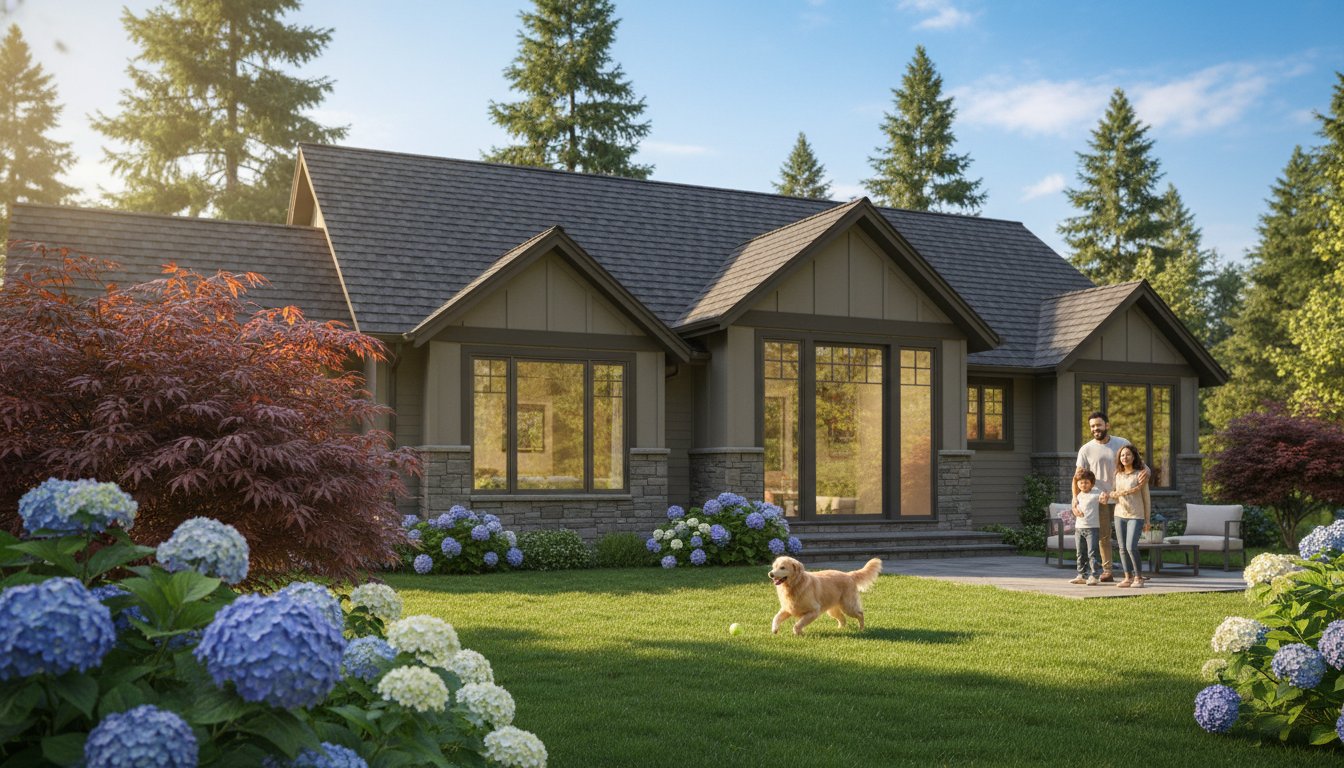
Imagine spending years cultivating a beautiful Oregon garden, only to watch your prized hydrangeas wilt because of toxic runoff from a moss treatment. It is a stressful scenario that many local homeowners face when trying to maintain their property. Finding safe roof cleaning for pets and plants shouldn't feel like a gamble with your family's health or your landscaping investment. You want a clean roof, but you also need to know that your backyard remains a sanctuary for your dogs and your flower beds.
We understand that anxiety. You shouldn't have to choose between protecting your shingles and protecting your soil. This guide will show you how to eliminate thick roof moss using Oregon-proven softwash methods that prioritize safety. We'll cover the professional "saturation and shielding" protocols that prevent chemical burns and explain why hiring a licensed applicator is the best way to manage runoff. You'll learn exactly how to get a moss-free roof that lasts, with the confidence that your yard is safe for pets to enjoy immediately after the work is finished.
Key Takeaways
- Understand why low-pressure soft washing is the only method recommended to kill moss spores without damaging your asphalt shingles or the roof's structural integrity.
- Learn the science of how professional-grade solutions break down into harmless salt and water to ensure safe roof cleaning for pets and plants.
- Follow a practical 5-step yard prep checklist, including deep hydration techniques that shield sensitive Japanese maples and hydrangeas from runoff.
- Discover why hiring a licensed and insured Oregon contractor is essential for managing environmental liability and ensuring professional runoff control.
- See how a specialized "Moss-Off" treatment provides a longer-lasting result than high-pressure blasting, protecting your home's value and curb appeal.
Why Oregon Roofs Need Specialized, Pet-Safe Cleaning
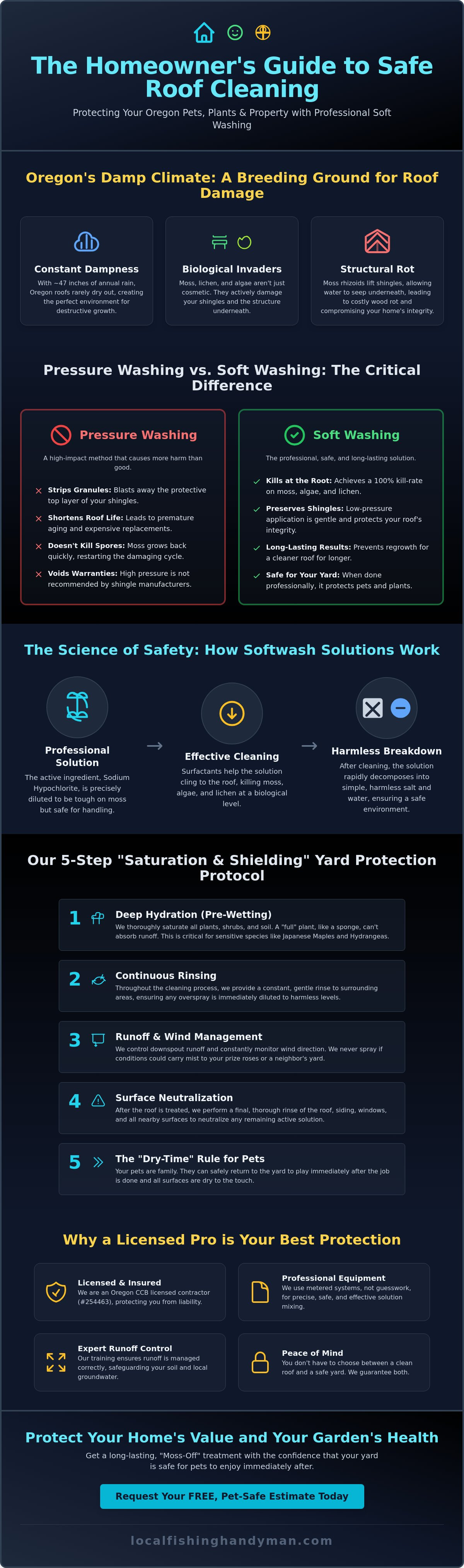
Oregon homeowners know that rain is just part of the deal. With an average of 47 inches of rain annually in cities like Eugene, our roofs never really dry out. This constant dampness creates a perfect breeding ground for moss, lichen, and algae. While some might think a quick blast with a pressure washer is the solution, that often does more harm than good. High-pressure water can strip away the protective granules on your shingles and significantly shorten the life of your roof. It's a mistake that can lead to expensive repairs down the road.
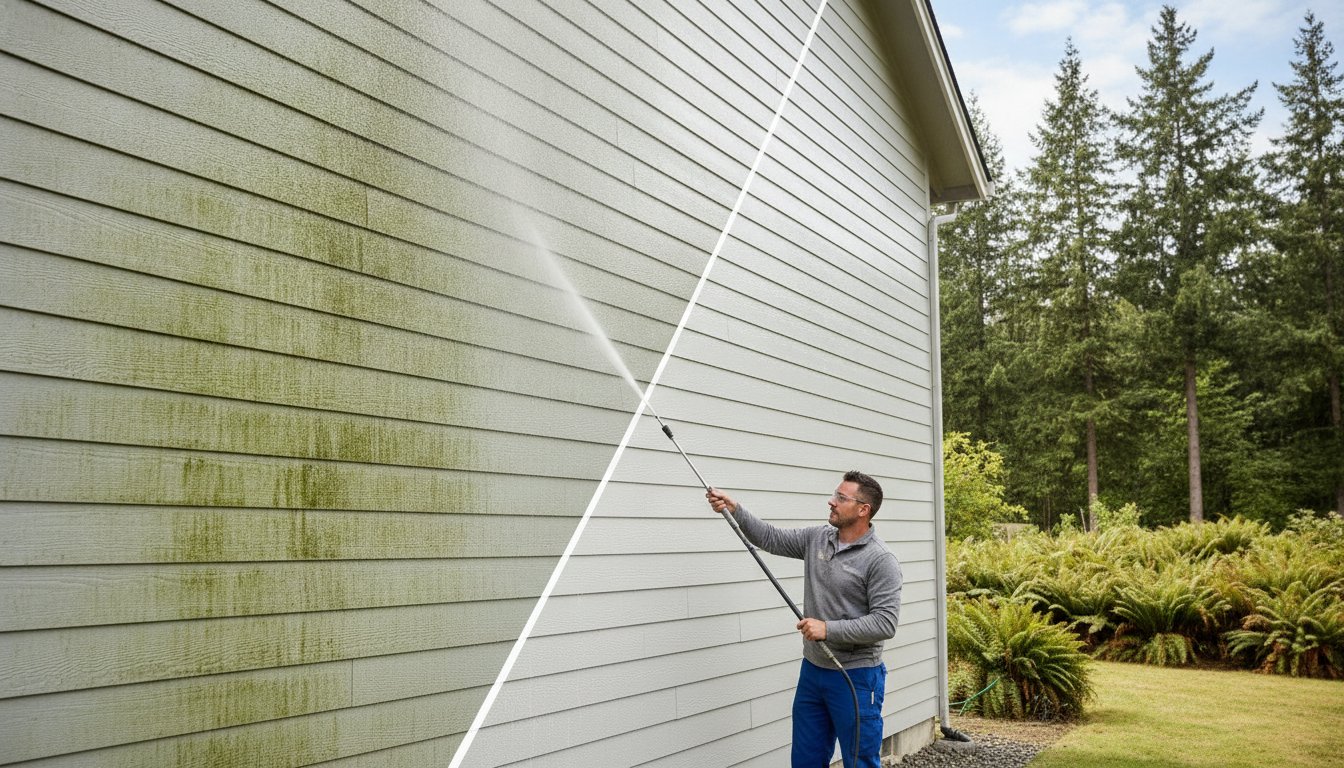
Instead, professionals use softwashing. This is a low-pressure treatment designed to kill biological growth at its source using specialized solutions. When you're looking for safe roof cleaning for pets and plants, the goal is a 100% moss kill-rate without any negative impact on your landscaping. Different Roof cleaning methods exist, but the industry standard focuses on using specific solutions that break down safely after they've done their job. We don't just want a clean roof; we want a healthy home environment.
The Biological Threat: Moss, Algae, and Lichen
Moss isn't just a green carpet on your shingles. It uses tiny root-like structures called rhizoids to anchor itself. These rhizoids actually lift the edges of your shingles, which allows moisture to seep underneath and eventually causes wood rot. If you just use water, you aren't killing the microscopic spores left behind. Those spores will sprout again within months, starting the cycle all over. Biological growth requires a targeted chemical treatment to fully neutralize the threat and protect your home's structural integrity.
The Oregon Ecosystem Connection
The Science of Safety: How Softwash Solutions Work
Sodium Hypochlorite is the active ingredient in most professional softwash solutions. It is highly effective at killing moss and algae at the root. Once the solution finishes the cleaning process, it naturally breaks down into simple salt and water. This rapid decomposition is why it is the industry standard for safe roof cleaning for pets and plants. It does the hard work of sanitizing your shingles and then loses its potency quickly once exposed to the elements.
The difference between a professional job and a DIY attempt is the dilution ratio. Homeowners often use concentrated store-bought bleach that can be too harsh for shingles and surrounding life. We use metered systems to ensure the solution is strong enough to kill moss but weak enough to be easily neutralized. We also add surfactants to the mix. These are specialized "sticky" soaps that help the solution cling to the moss on your roof. This prevents the liquid from immediately running off into your gutters and onto your lawn.
Pre-Wetting: The Invisible Shield for Your Garden
Plants are like sponges. If they are dry, they will drink up whatever liquid hits their leaves. This process is known as osmosis. To prevent this, we use a saturation strategy. We thoroughly water your grass, shrubs, and flowers before we ever start the roof treatment. This fills the plant's cells with clean water so they can't absorb any cleaning solution. We also provide continuous rinsing during the process to keep everything diluted. Monitoring wind direction is another key step. We don't spray if the wind will carry the mist into your neighbor's yard or your prize roses. For more detailed tips on protecting plants from cleaning runoff, industry experts recommend this same saturation approach to keep your garden healthy.
Pet Safety and the 'Dry-Time' Rule
Your pets are family. We take their safety seriously. The most important rule we follow is the "Dry-Time" rule. Once our solution has been applied, rinsed, and allowed to dry completely, it becomes inert. This usually takes about 1-2 hours depending on the weather. After this point, it is safe for paws to walk on the grass again. Before we start, we ask you to move pet bowls, toys, and bedding inside. We want to ensure no mist settles on things your dog might chew or lick. Taking these small precautions ensures a worry-free experience for everyone. If you have questions about our Softwash Moss-Off Roof Treatment, we are happy to explain our safety protocols in person.
Soft Washing vs. Pressure Washing: Which is Safer?
Many homeowners think that using a pressure washer is the natural way to clean. They believe that "just water" is safer than using solutions. However, the physical force of 3000+ PSI (pounds per square inch) is incredibly destructive to asphalt shingles. This high pressure acts like a sandblaster. It strips away the ceramic granules that protect your roof from UV rays. Once those granules are gone, your shingles dry out, curl, and fail prematurely. It's a common mistake that leads to unnecessary Roof Leak Repairs down the road.
There is also the issue of "forced entry." High-pressure streams can easily drive water underneath the shingles and into your attic. This creates hidden mold problems and structural rot that you won't see until it's too late. Soft washing avoids these risks entirely. It uses the same pressure as a garden hose to apply a treatment that does the heavy lifting. When you choose safe roof cleaning for pets and plants, you are choosing a method that respects the physical limits of your home's materials.
The Hidden Danger of 'Just Water'
Pressure washing is effectively "spore-blasting." It uses force to knock the visible moss off, but it doesn't kill the roots. Instead, it sprays microscopic moss spores across your entire yard and into your neighbor's garden. This leads to rapid regrowth and spreads the problem to your lawn and fences. Most roofing manufacturers explicitly state that pressure washing can void your roof warranty. It simply isn't worth the risk to your investment.
Why Soft Washing is the 'Eco-Friendly' Choice
Soft washing is a much more efficient use of resources. High-volume pressure washers can use up to 8 gallons of water per minute. Soft wash systems use significantly less water because the solution does the work of breaking down the organic growth. Because soft washing kills the root, the results last 2-3 times longer than pressure washing. This means you don't need to clean as often. By extending the life of your shingles, you also keep thousands of pounds of roofing material out of Oregon landfills. It's a win for your wallet and the local environment. Our Softwash Moss-Off Roof Treatment is designed to keep your home looking great without the abrasive impact of high pressure.
The Oregon Homeowner’s 5-Step Yard Prep Checklist
Preparation is the key to achieving safe roof cleaning for pets and plants. You don't want to wait until the service truck arrives to start moving your belongings. Following a simple checklist ensures the process goes smoothly and your landscaping remains untouched. Our goal is to create a clear workspace where we can focus on the roof without worrying about the items below.
- Step 1: Clear the perimeter. Move patio furniture, children's toys, and pet accessories at least 20 feet away from the house. This prevents any accidental overspray from settling on surfaces your family touches daily.
- Step 2: Deep hydration. Give your sensitive plants like hydrangeas and Japanese maples a deep soak the night before your appointment. Well-hydrated plants are less likely to absorb any stray runoff that might reach the soil.
- Step 3: Gutter management. Check that your downspouts are clear and directed toward safe drainage areas. If your gutters are clogged, the cleaning solution will overflow the sides and land directly on your shrubs.
- Step 5: Post-wash rinse. Once the treatment is complete, we recommend giving your lawn and garden a final light watering. This ensures any stray droplets are totally diluted and washed safely into the ground.
Protecting Oregon’s Sensitive Species
Gutter Runoff: Directing the Flow
Proper Gutter Cleaning is a non-negotiable prerequisite for a safe roof wash. If water can't flow through the downspouts, our control over the runoff is lost. We use sock filters or collection buckets at the end of downspouts in particularly sensitive areas to catch any debris. This prevents cleaning solutions from pooling in low spots where pets might be tempted to drink. If you need help getting your home ready, you can schedule a professional gutter and roof assessment to ensure your drainage is up to the task.
Why Local Fishing Handyman LLC is the Safe Choice for Your Roof
Being a seasoned craftsman gives us a unique perspective that a dedicated roof-only company might miss. We look at the big picture of your home's health. When we are on a ladder, we notice if your gutters are pulling away or if your siding needs a touch-up. This holistic view ensures that our softwash treatment doesn't solve one problem while creating another. We make sure that every drop of solution is accounted for and every shingle is respected, ensuring a long-lasting result for your investment.
The 'Moss-Off' Difference
Our specialized "Moss-Off" treatment is built specifically for the types of moss and lichen that thrive in the Pacific Northwest. We apply the solution and allow for a precise dwell time to ensure the roots are fully neutralized. Afterward, we perform a thorough safety rinse to protect your soil and landscaping. During this process, we keep an eye out for larger issues. If we spot cracked shingles or damaged flashing, we can address those Roof Leak Repairs before they turn into major attic leaks. Our company's "Fishing" namesake reflects our deep commitment to local clean water and environmental stewardship. We know that what goes on your roof eventually makes its way into our local streams and rivers, so we prioritize methods that keep our water clean.
Licensed Professionalism vs. DIY Risks
Trying to save money with a DIY approach often leads to unexpected costs and safety hazards. Ladder falls are a major risk for homeowners, but our professional insurance provides the protection you need while we work. Beyond physical safety, mixing chemicals without the right equipment often results in "burned" lawns or dead shrubs. We provide safe roof cleaning for pets and plants by using metered systems that take the guesswork out of the chemical ratios. You get a professional result without the anxiety of damaging your expensive landscaping or worrying about your pets. We take pride in doing the job correctly the first time. Get a Safe Softwash Quote for Your Oregon Home Today.
Protect Your Home and Your Landscape Today
Maintaining a moss-free roof in the Pacific Northwest shouldn't come at the cost of your garden's health or your pets' safety. You've seen how the science of soft washing and a proactive yard prep checklist work together to protect your property. It's about combining the right moss-killing solutions with professional runoff management to ensure your shingles stay intact and your soil stays healthy for years to come.
Schedule Your Pet-Safe Roof Treatment with Local Fishing Handyman LLC today. Your home is a major investment, and we're ready to help you protect it with quality workmanship and a neighborly touch.
Frequently Asked Questions
Is roof cleaning runoff toxic to my lawn?
Runoff is not toxic to your grass when it is properly managed and diluted. Professional softwashing involves a thorough pre-wetting and post-rinsing process for all surrounding greenery. By the time any solution reaches your lawn, it is diluted to a level that is harmless to the soil. This methodical approach ensures your grass stays green and healthy while your roof gets clean.
How long should I keep my dog inside after you clean the roof?
You should keep your dog inside for at least 1-2 hours after the service is finished. This timeframe allows the roof and any damp areas on the ground to dry completely. Once the solution is dry, it becomes inert and safe for your pet's paws. We recommend checking the perimeter for any small puddles before letting your animals back into the yard.
Will soft washing kill my Japanese Maples or hydrangeas?
Soft washing will not harm your sensitive plants if the correct saturation and shielding protocols are followed. We soak these delicate species with clean water before and during the treatment to prevent them from absorbing any cleaning agents. This specific strategy is a core part of providing safe roof cleaning for pets and plants in the lush gardens common throughout Oregon.
What happens if it rains right after a soft wash treatment?
Light rain can actually assist the rinsing process, but a heavy downpour immediately after application might wash the solution away before it kills the moss. Our treatment requires a specific dwell time to be effective. If we see a storm in the immediate forecast, we will reschedule your service. This ensures the moss-killing agents have enough time to work their magic on your shingles.
Do you use bleach to clean the roof, and is it safe?
We use a professional-grade sodium hypochlorite solution, which is the active ingredient in bleach, but it is applied at a much safer dilution than household cleaners. This is the industry standard recommended by major shingle manufacturers. It effectively neutralizes moss and then breaks down into simple salt and water. It's a proven method for safe roof cleaning for pets and plants when handled by a licensed professional.
Can I stay in the house while my roof is being soft washed?
You can definitely stay inside your home while we perform the soft wash. The process is much quieter than traditional pressure washing and won't disturb your daily routine. We only ask that you keep all windows and doors tightly closed during the application. This prevents any mist or scent from entering your living space while we work on the exterior of your property.
How often do I need to clean my roof to keep it safe and moss-free?
Does soft washing smell, and will it bother my neighbors?
There is a light scent similar to a swimming pool during the active cleaning, but it dissipates very quickly. The smell usually vanishes entirely within an hour as the solution dries and breaks down. We use specialized surfactants that help the spray cling to the roof. This limits drift and ensures that your neighbors won't be bothered by the scent or any overspray during the process.