
Pressure washing a stamped concrete patio calls for a method suited to the concrete’s pattern and finish, not automatically the strongest spray. When working with Local Fishing Handyman LLC, the cost depends on the patio’s size, dirt and staining, and the approach its finish requires. Pricing is provided after a quote request.
It makes sense to be cautious: stamped patterns and surface finishes can need more care than plain concrete. The right method balances removing grime with protecting the patio’s finish, rather than relying on pressure alone.
This guide explains how patio details affect the washing approach and cost, how high-pressure washing compares with soft washing, and what to expect during preparation, rinsing, and drying.
Key Takeaways
- Clear patio furniture and nearby vehicles before washing so the work area is ready for rinsing and drying.
- Stamped patterns and surface condition can affect the cleaning method, so the design matters as well as the material.
- Match the washing approach to the surface: durable concrete can call for a different method than delicate painted or vinyl surfaces.
- Patio size, staining, and cleaning needs all influence the scope of a washing project and its cost.
Concrete cleaning preparation, rinsing, and drying
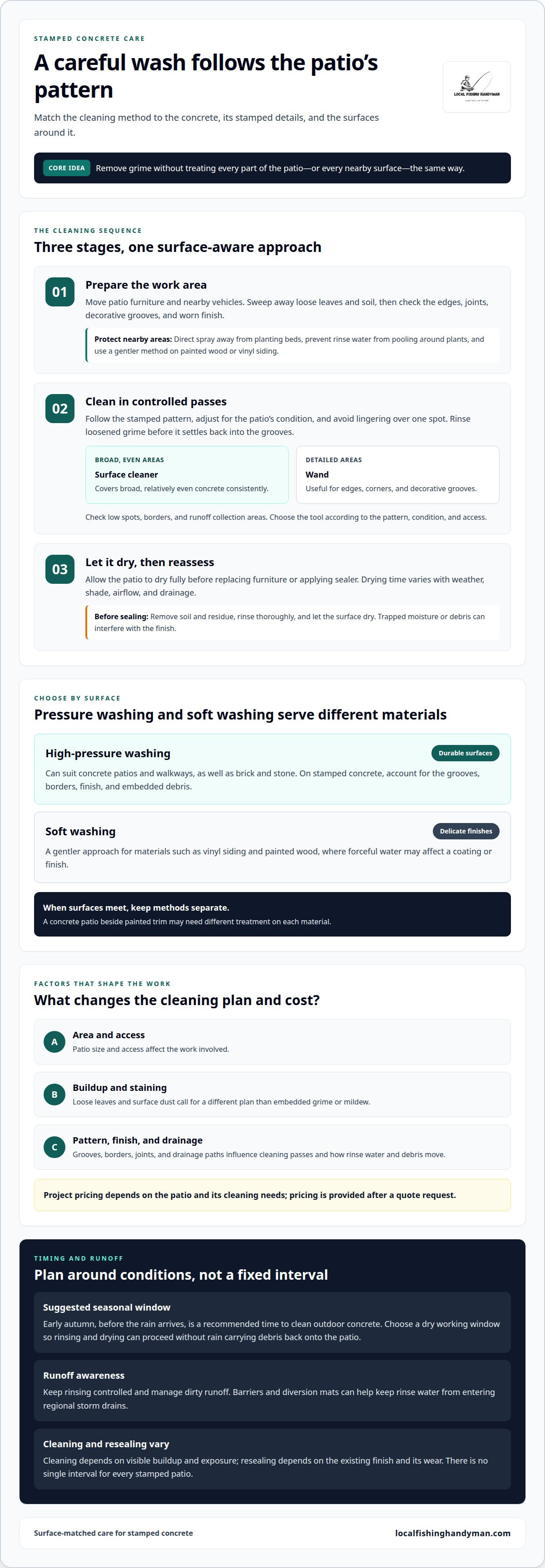
Before pressure washing stamped concrete, move patio furniture and nearby vehicles to keep the work area clear. Sweep away loose leaves and soil, then note the patio’s edges, joints, decorative grooves, and any worn finish. These details help match the method to the surface. Protect nearby landscaping by directing spray away from planting beds and preventing rinse water from pooling around plants. Use a gentler method on bordering painted wood or vinyl siding.
Rinsing matters as much as loosening dirt. Clean in controlled passes across the stamped pattern, then rinse away grime before it settles back into the grooves. Check low spots, borders, and areas where runoff collects. Early autumn, before the rain arrives, is a recommended time to clean outdoor concrete. Choose a dry working window so rinsing and drying can proceed without rain carrying debris back onto the patio.
A surface cleaner can cover broad, relatively even concrete consistently, while a wand is useful for edges, corners, and detailed grooves. Choose based on the pattern, condition, and access. Keep the cleaning path controlled and avoid lingering over one spot. After rinsing, let the patio dry fully before replacing furniture or applying sealer. Drying time varies with weather, shade, airflow, and drainage.
There’s no single pressure-washing or resealing interval for every stamped patio. Cleaning depends on visible buildup and exposure; resealing depends on the existing finish and its wear. Before sealing, remove soil and residue, rinse thoroughly, and let the surface dry. Trapped moisture or debris can interfere with the finish. Check the entire patio, including grooves and shaded corners. If nearby gutters send runoff onto the concrete, gutter cleaning can help address a recurring source of debris.
Does Pressure Washing Cost More for Special Materials or Designs?
The material, buildup, and stamped details shape the washing method and the work involved. A patio, driveway, and nearby siding each need an approach suited to their surface.
Material-Based Washing Methods
Start by identifying the surface material and its condition. Concrete calls for a different washing approach than painted wood or vinyl siding, which need soft washing. Mildew, loose debris, and embedded dirt also affect the work. Matching the method to the surface helps remove dirt without treating delicate finishes like bare concrete. These differences explain why a patterned patio may need more care than a plain slab.
Cleaning Patios and Concrete Surfaces
Pressure washing suits patios and other outdoor concrete surfaces, including driveways. Loose leaves and surface dust require a different cleaning plan from embedded grime or mildew. Concrete joints, edges, and drainage paths also affect how rinse water and debris move. Controlled rinsing helps keep loosened material from spreading across nearby surfaces.
Pressure Washing Surface Designs
Stamped concrete needs attention to its pattern, grooves, borders, and finish. A decorative patio and a plain slab can collect dirt differently, affecting the cleaning passes and work involved. Deep grooves may still hold debris after the open surface looks clean. Tailoring the approach to the design helps clean these details and avoid uneven bands across the pattern.
For water use around Portland-area homes, keep rinsing controlled and manage dirty runoff. Barriers and diversion mats can help keep rinse water from entering regional storm drains. Early autumn, before the rain arrives, is a recommended time to clean outdoor surfaces. Price depends on the project and is provided after a quote request; area, staining, design, and access affect the work involved. For patio washing, request patio power washing and describe the concrete’s pattern and buildup.
Choosing between high-pressure and soft washing
Choose a washing method that suits both the surface material and the cleaning needed. In residential settings, concrete patios and walkways can suit high-pressure washing, while painted wood and vinyl siding call for soft washing. A method suited to durable concrete may be too forceful for a more delicate exterior finish.
High-pressure washing uses directed water pressure to remove dirt and buildup from durable surfaces such as concrete, brick, and stone. On a stamped patio, the pattern and finish still matter. Account for grooves, borders, and places where embedded debris collects. Controlled passes address these details without treating every part of the surface alike. The goal is a cleaner appearance with a method suited to the concrete.
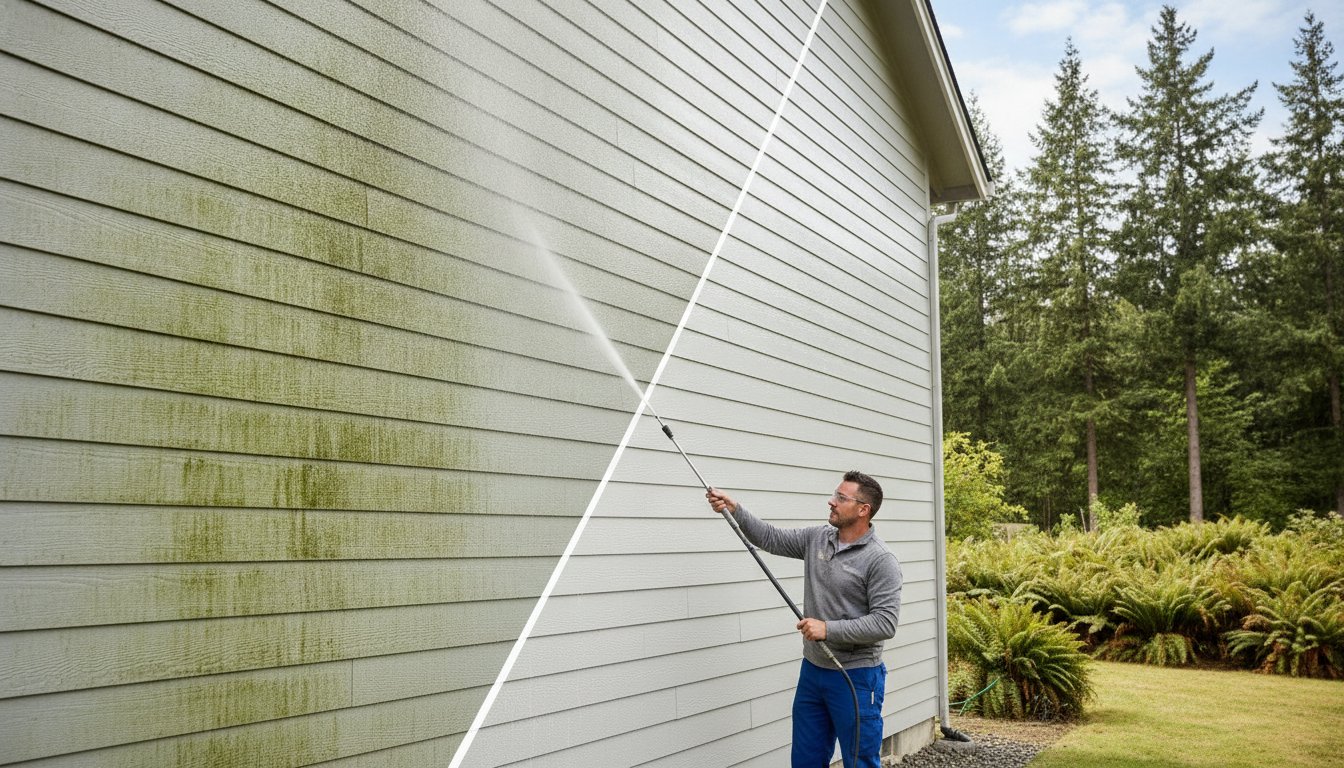
Soft washing uses a gentler approach for delicate materials, including vinyl siding and painted wood. It can be a better fit where forceful water may affect a coating or finish. For example, a patio beside painted trim may need different treatment from the concrete itself. Match the method to each material instead of using one approach indiscriminately across the exterior.
Pay attention to moisture and drainage, too. Before cleaning, note where water will travel from the patio toward walkways, landscaping, or the house. Direct rinse water away from delicate surfaces and avoid leaving loosened dirt on walking areas. Once cleaning is complete, let the concrete dry before replacing furniture or considering a later sealing step. A dry surface makes it easier to spot debris left in grooves or along edges.
For a stamped concrete patio, the decision is not simply high pressure versus soft wash. Consider the concrete’s condition and decorative details, nearby painted or vinyl surfaces, and how runoff can be managed. Matching the method to each surface helps clean it appropriately and achieve a more even result.
Pressure washing services in Eugene and Springfield
For homeowners comparing pressure washing services, the practical takeaway is to match the cleaning plan to the surface and its surroundings. A stamped patio needs consideration of its pattern, condition, and drainage, while a nearby painted finish may need a gentler method. The pressure washing of a stamped concrete patio in Eugene is a useful example of why location-specific questions should include both surface care and runoff planning.
Before work begins, identify where rinse water will travel. Runoff barriers and diversion mats can help keep dirty rinse water out of regional storm drains. Consider the patio’s slope, nearby landscaping, and access to drains. Containing debris before rinsing reduces the chance of spreading it across a driveway or walkway. These details matter for powerwashing patios and other exterior surfaces.
Timing matters, too. Early autumn, before the rain arrives, is a recommended window for outdoor cleaning. A dry period gives the surface time to dry after washing and helps prevent new leaves and debris from washing onto freshly cleaned concrete. For pressure washing a stamped concrete patio in Eugene, consider the climate and the patio’s exposure alongside visible stains and buildup.
Project scope depends on the area, surface design, stains, access, and cleaning needs. Pressure washing a patio, driveway, or deck often takes a few hours. The price depends on the project and is provided after a quote request; the area’s size and surface condition affect the work involved.
Before scheduling, describe the stamped pattern, buildup, and delicate finishes beside the concrete. That gives the work a clear starting point and helps distinguish patio cleaning from other exterior tasks. If power washing is the service you need, request patio power washing and share the surfaces you want addressed.
Local Fishing Handyman
Local Fishing Handyman LLC provides powerwashing for exterior surfaces, including patios that need a considered cleaning approach. When requesting a quote, describe deep grooves, stubborn buildup, or nearby delicate finishes. Those details help shape the work around the surface rather than treating every area alike.
If runoff or debris from roof edges is contributing to patio buildup, gutter cleaning can help address that separate maintenance issue. For a mossy roof, Softwash Moss-Off Roof Treatment is a separate service. Each addresses a different part of exterior upkeep, so choose the next step based on the concern you want handled.
Contact Local Fishing Handyman LLC to discuss powerwashing your stamped concrete patio.
Plan the Next Step for Your Patio
A clean patio starts with a plan that respects its finish and the rest of the property. Before arranging pressure washing for a stamped concrete patio in Eugene, consider what needs attention, such as overall grime, buildup in the pattern, or runoff from nearby roof edges. Sharing those details helps tailor the work to your patio’s condition.
Consider related exterior maintenance if it contributes to debris or moisture around the patio. Local Fishing Handyman offers gutter cleaning, roof leak repairs, and Softwash Moss-Off Roof Treatment. Keep your request focused on the issue you want handled to make the next step clear.
Contact Local Fishing Handyman today to discuss your patio cleaning needs. A thoughtful approach can help you move forward with confidence and enjoy a cleaner outdoor space.
Frequently Asked Questions
How Can You Save on Pressure Washing Cost in Eugene, Oregon?
Reduce avoidable labor by clearing the work area and accurately describing the patio’s size, stamped pattern, and problem spots. If the driveway or another concrete area also needs washing, including those surfaces in one project may make scheduling more efficient. Point out oil marks, mildew, or shaded sections beforehand, since the type of buildup can affect the cleaning method and time required.
What Pressure Is Safe for Each Surface?
There isn’t one pressure setting for every surface. Concrete, brick, and stone are durable materials commonly cleaned with high-pressure washing, while painted wood and vinyl siding call for soft washing. Condition and finish matter, too. Worn paint or decorative concrete, for example, needs a different approach from an even, uncoated slab. Match the method to the material, not just the dirt.
Can stamped concrete be pressure washed safely?
Yes, stamped concrete can be pressure washed if the method suits its condition and finish. Raised patterns and recessed grooves can collect grime differently from a smooth slab. Account for worn areas, existing coatings, and decorative borders. If the concrete is visibly flaking or damaged, take particular care so cleaning does not worsen the surface.
What PSI and nozzle are safe for pressure washing stamped concrete?
No single PSI and nozzle combination is safe for every stamped patio. The concrete’s condition, any coating, the equipment, and the operator’s technique all affect the result. A suitable setup should clean without leaving visible lines or disturbing the finish. Pay close attention to grooves and edges, where concentrated spray can leave uneven marks.
How far should a pressure washer wand be held from stamped concrete?
There isn’t one fixed wand distance for every stamped surface. Spray strength at the concrete changes with the equipment and wand position, so distance must suit the finish and cleaning response. A close, concentrated pass can leave marks, especially across decorative grooves. Keep passes even, avoid lingering in one spot, and inspect the pattern as you clean.
What detergent removes moss, algae, and stains from stamped concrete?
Choose a cleaner labeled for concrete and suited to the specific buildup, such as moss or algae. Stains may need a different treatment from surface growth, so identify the residue before selecting a detergent. Follow the product label for application and rinsing, and consider the effect of runoff on nearby landscaping. Don’t assume one cleaner suits every stain or stamped finish.