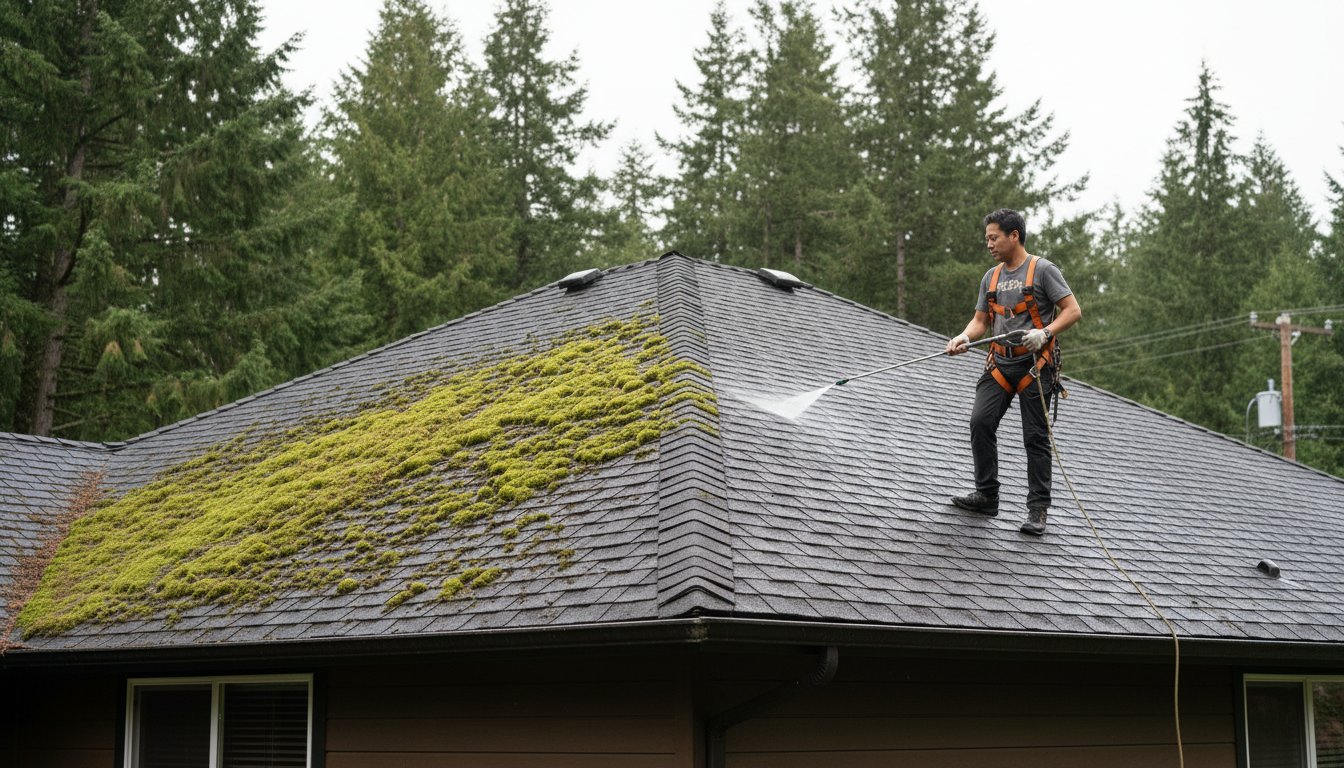
Last November, a local homeowner spotted a few green tufts on his shingles and ignored them, only to find by February that those roots had lifted the asphalt and caused a leak. It's a common story here in the Pacific Northwest where the damp climate turns roofs into moss gardens overnight. You want a clean home, but you don't want to risk a fall or use harsh chemicals that might wither your prize-winning hydrangeas. Finding the best way to remove moss from roof safely is about more than just aesthetics; it's about protecting your biggest investment without a trip to the emergency room.
Maintaining a beautiful residence requires attention to detail both inside and out. While this guide focuses on the exterior challenges of the Pacific Northwest climate, homeowners in the Washington area looking for expert interior care can rely on Smart Cleaning Service House Cleaning Seattle and Eastside to ensure their living spaces are just as pristine as their newly cleaned roofs.
We understand that dragging a heavy ladder out and scrubbing shingles feels like a recipe for disaster. It's frustrating to see your roof age prematurely because of a little bit of greenery. This guide shares the professional secrets we've gathered over 15 years of experience to help you get the job done right. You'll discover how to eliminate growth using gentle, effective methods that keep your shingles intact and your landscaping safe. We'll walk through the essential safety gear, the right time of year for treatment, and the specific products that prevent moss from coming back for at least two seasons.
Key Takeaways
- Learn how moss acts as a biological sponge that traps moisture and uses its roots to compromise your roof's integrity.
- Avoid common DIY mistakes like pressure washing or aggressive scraping that can strip away protective granules and cause instant damage.
- Discover why softwashing is the best way to remove moss from roof safely by killing growth at the root with specialized, low-pressure treatments.
- Identify long-term maintenance strategies, such as using zinc strips and keeping gutters clean, to prevent moss from returning.
- Understand the importance of hiring a licensed Oregon professional (CCB#254463) to ensure your home is protected by a bonded expert.
Why Moss is a Serious Threat to Your Roof’s Integrity
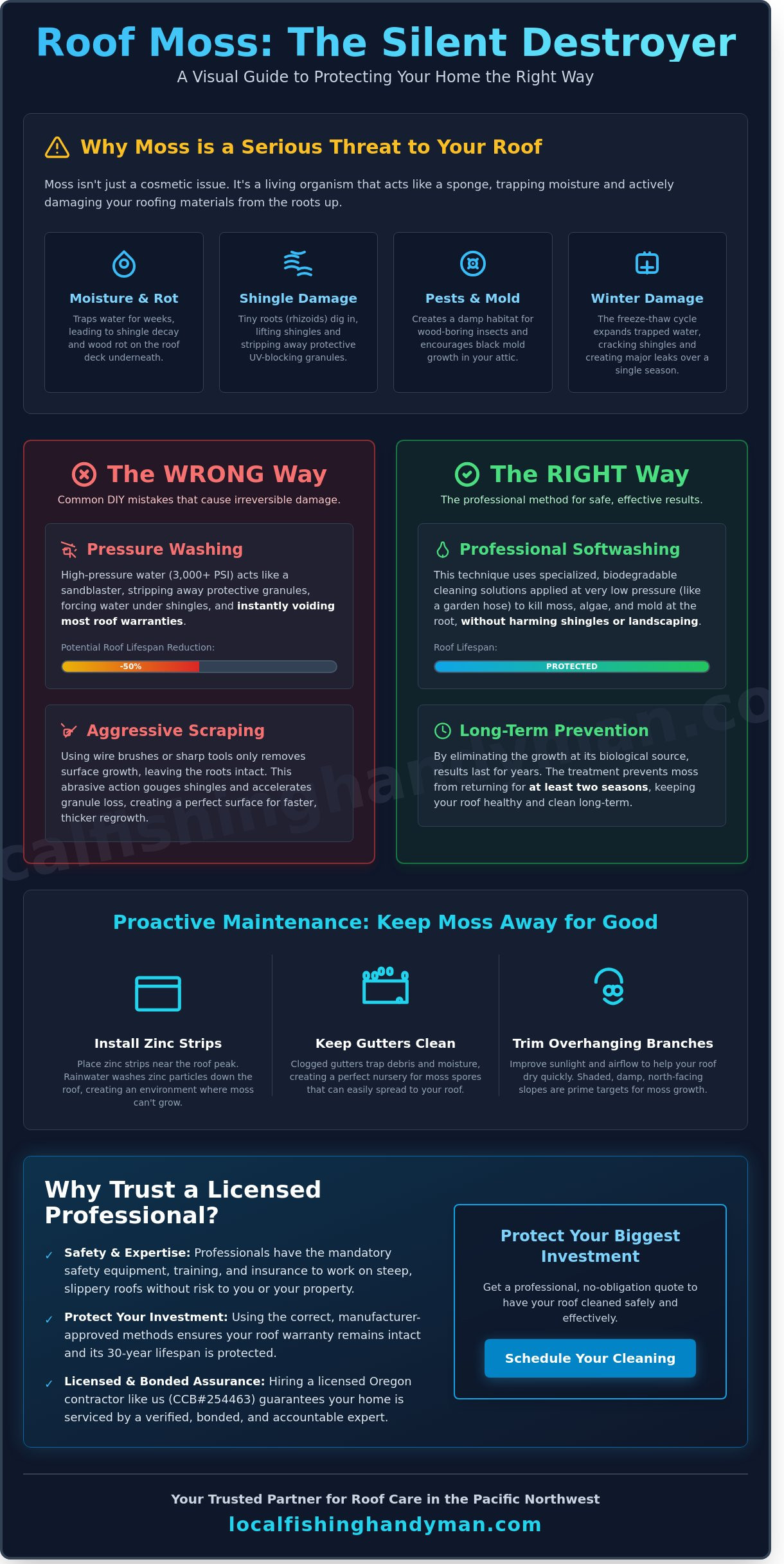
Moss looks like a soft green cushion, but it’s actually a destructive force for your home. It acts like a heavy sponge, holding onto moisture for weeks after a rainstorm. This constant dampness keeps your roof shingles wet, which leads to premature aging and rot. To protect your home, you need a solid understanding of what moss is and how it feeds on your roofing materials. It doesn't just sit on top; it actively works to break down the structure of your house.
Unlike garden plants with traditional roots, moss uses tiny filaments called rhizoids to anchor itself. These filaments dig deep into the asphalt shingle granules to stay secure. When you try to pull the moss off by hand, you often pull the protective layer of the shingle right along with it. The best way to remove moss from roof safely is to use a treatment method that kills the growth at the source without scrubbing away these essential granules. Without those granules, your shingles have no protection against UV rays.
Winter weather makes the situation even more dangerous. When the water trapped inside the moss freezes, it expands. This physical expansion forces the shingles apart and creates gaps for leaks to form. Over a single winter season, this repeated freeze-thaw cycle can turn a small patch of green into a major roof repair project. I've seen roofs lose years of life because a homeowner let moss sit through a cold Oregon winter.
The Damage You Can’t See from the Ground
You might only see a few green patches from the driveway, but the real damage happens underneath. Moisture wicks under the shingle edges, reaching the plywood decking. This leads to wood rot and black mold in your attic space. Moss also creates a perfect habitat for pests. Wood-boring insects like carpenter ants are attracted to the softened, damp wood. This growth even affects your energy bills. A moss-covered roof absorbs more heat, raising attic temperatures by as much as 12 percent during sunny spells.
Why the Pacific Northwest Climate Accelerates Moss Growth
Here in Oregon, our consistent rainfall and shade-heavy yards create a perfect breeding ground. Weather patterns for 2026 suggest we'll see higher humidity levels, which means more aggressive moss blooms for local homeowners. North-facing roof slopes are the primary danger zones because they stay damp longer and rarely see direct sunlight. Our 15 years of experience shows that these areas require the most frequent inspections. Finding the best way to remove moss from roof safely is the only way to ensure your roof lasts its full 30-year lifespan in this damp climate.
The Dangers of Common DIY Moss Removal Mistakes
Many homeowners think they're saving money by tackling roof moss themselves. In reality, the best way to remove moss from roof safely involves avoiding the most common DIY shortcuts that do more harm than good. These mistakes don't just damage your shingles; they can lead to thousands of dollars in premature replacement costs. When you're standing on a 4/12 pitch roof with a bucket of bleach, the risks to your home and your health are significant.
Pressure Washing: A Recipe for Disaster
Pressure washers are excellent for cleaning driveways, but they're a nightmare for your roof. A standard consumer pressure washer can blast water at 3,000 PSI. This intense force easily strips the protective asphalt coating and ceramic granules right off your shingles. These granules are your roof's primary defense against UV rays. Without them, your roof's lifespan can drop by 50 percent almost overnight. High-pressure water also gets forced under the laps of the shingles. This causes immediate leaks in the attic that you might not notice until the wood begins to rot. Most major shingle manufacturers, including GAF and Owens Corning, will void your warranty if you use a pressure washer on their products. If your roof is already damaged beyond repair, you may want to explore modern alternatives; for instance, Rainier Roofing LLC specializes in GAF Energy solar roofing systems that offer a durable way to protect your home while generating power.
The Myth of the Wire Brush
Scrubbing away at moss with a wire brush feels productive, but it's purely cosmetic. You're only removing the green "heads" of the moss while leaving the microscopic roots, called rhizoids, deeply embedded in the shingle. Metal bristles are too abrasive for composite materials. They create micro-tears in the shingle surface that give new moss spores a better place to grip and grow. For those seeking non-commercial advice on moss removal, experts agree that mechanical scrubbing often does more harm than good. This aggressive cleaning method accelerates granule loss and leaves your roof vulnerable to the elements.
Safety is the most critical concern for any DIY project. The Consumer Product Safety Commission reports that over 164,000 people visit emergency rooms every year due to ladder-related injuries. Roofs are slippery, especially when you're dealing with wet moss and soapy water. Beyond physical safety, using generic household bleach or harsh acids can kill the grass and shrubs around your home. These chemicals often run down the gutters and soak into the soil, damaging your landscaping. Finding the best way to remove moss from roof safely means prioritizing your home's structural integrity over a quick fix. If you're unsure about the right approach, it's often better to consult a local roofing specialist who has the right gear to protect your investment.
The Professional Solution: Why Softwashing is the Best Way
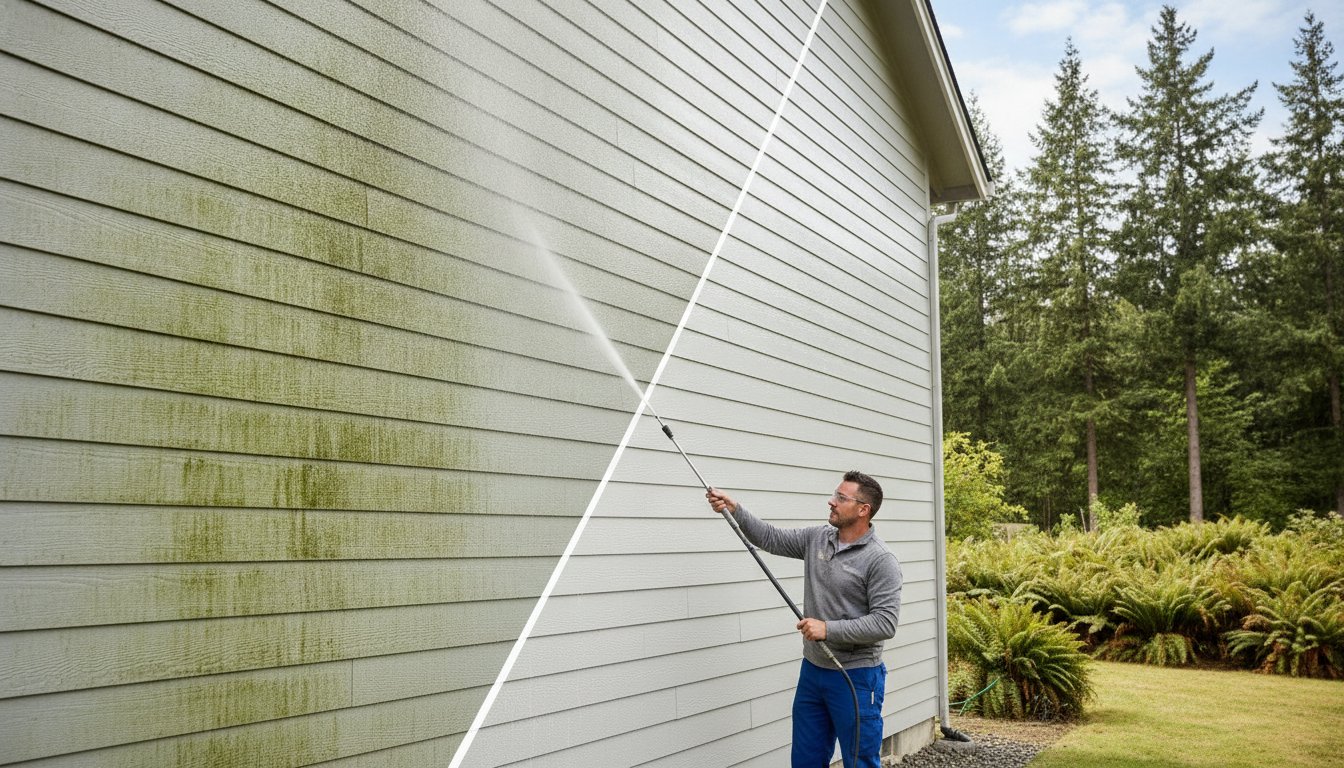
Softwashing is a safe, low-pressure alternative to traditional power washing. For homeowners in the Pacific Northwest, this method stands out as the best way to remove moss from roof safely because it treats the roof as a delicate surface rather than a sidewalk. While high-pressure water can strip away protective granules and shorten the life of your shingles by years, softwashing uses a low-pressure chemical treatment that kills moss at the root. It’s a methodical, damage-free approach that keeps the structural integrity of your home intact.
This professional process relies on biodegradable surfactants and specialized algaecides. These aren't just soaps; they are targeted solutions designed to break down the bond between the moss and your roofing material. This creates a "clean and stay clean" effect. By killing the microscopic spores that hide in the cracks, the treatment prevents immediate regrowth. You aren't just removing what you can see; you're sanitizing the entire surface to ensure the roof stays clear for a much longer duration than manual brushing could ever achieve.
This thorough approach to exterior maintenance isn't limited to the roof; for instance, the cleaning experts at My Property Pros highlight the importance of using safe methods when cleaning uPVC window frames to prevent damage and maintain curb appeal.
How Softwash Moss-Off Treatment Works
The chemistry of a moss-off treatment is designed to neutralize the hardy root systems of moss and lichen. Professional equipment is a requirement for this job. Unlike a standard garden sprayer that lacks the reach and consistent flow to saturate thick growth, professional-grade pumps provide even coverage across every square inch of the roof. This ensures the solution hits every hidden spore. The chemical requires a specific "dwell time," usually between 15 and 20 minutes, to fully penetrate the organic matter. This waiting period is critical. It allows the algaecide to do the heavy lifting so the moss can eventually be rinsed away or weather off naturally without aggressive scrubbing.
Protecting Your Landscaping During Treatment
A major concern for many homeowners is the safety of their garden. Professionals use a specific protocol to protect your property. This starts with pre-wetting all surrounding plants, bushes, and grass with fresh water. By saturating the foliage first, the plants won't absorb the cleaning solution. During the application, crews use heavy-duty tarps to shield sensitive flower beds and may use neutralizing agents to further safeguard the soil. This careful process provides peace of mind, knowing your pets and your landscaping are protected. It’s about doing the job right and leaving the property in better shape than we found it; for those who want to explore professional turf solutions as part of their property care, you can learn more about Ray Lawns and their expert sod installation services.
Preventing Moss Regrowth: Long-Term Maintenance Strategies
Cleaning your shingles is only half the battle. Even after you find the best way to remove moss from roof safely, the spores will return if the environment stays damp and shaded. I've seen roofs in Oregon lose years of service life because homeowners ignored the surroundings. To protect your investment, you need to change how your roof handles water and light. With 15 years of experience in the Pacific Northwest, I recommend a proactive approach that stops moss before it gets a foothold.
Installing Zinc or Copper Flashings
Metal strips are a proven way to keep your roof clear. When rain hits zinc or copper, it releases metallic ions. These ions wash down the slope and create a toxic environment for moss spores. They don't hurt your shingles, but they prevent organic growth from taking root. It's science that works for you every time it rains.
- Installation: Secure 2 to 3 inch strips directly below the ridge cap on both sides of the roof.
- Coverage: On very long slopes, you might need a second row of strips halfway down to maintain the ion concentration.
- Longevity: These strips usually remain effective for 5 to 10 years before oxidation reduces their potency.
Combining these physical barriers with a professional treatment is the best way to remove moss from roof safely while ensuring it stays gone for seasons to come.
The Connection Between Gutters and Moss
Clogged gutters are a primary cause of moss growth along the eaves. When leaves and needles block the flow, water backs up under the bottom edge of your shingles. This "backsplash" effect keeps the roof perimeter constantly soaked. Moss loves this moisture. It will grow thick and heavy, eventually lifting the shingles and causing leaks.
Keeping your drainage system clear is your first line of defense. Professional gutter cleaning ensures that water moves off the roof and into the downspouts where it belongs. I suggest cleaning them at least twice a year. In Oregon, the heavy rains in November and the seed drops in May are the most critical times to check your system.
Sunlight and Airflow
Moss thrives in the dark. If you have large Douglas firs or maples hanging over your home, you're providing the perfect nursery for moss. Trim your branches back so there is at least a 10 foot gap between the tree and your roofline. This allows the sun to dry out the shingles, increases airflow to evaporate morning dew, and prevents pests from jumping onto your house. For those who want to discover We Love Trees, their professional arborist services are a great example of the expert care needed to keep your property safe and moss-free.
Establish a bi-annual inspection schedule. Walk your property every April and October to look for green dusting or debris buildup. Catching a small patch of moss early is much easier than dealing with a full-blown infestation later. If you don't want to climb the ladder yourself, I can help.
Hiring a Licensed Oregon Handyman for Roof Care
Finding the best way to remove moss from roof safely usually leads homeowners to a simple conclusion: hire a professional who knows the local climate. In Oregon, hiring someone for roof work isn't just about getting the moss off; it's about legal and financial protection. You should never hire a contractor who can't provide an Oregon Construction Contractors Board (CCB) number. A valid license, such as CCB#254463, means the business is registered with the state and follows specific safety and professional standards.
There is a massive gap between a "guy with a ladder" and a bonded professional. If an unlicensed worker falls or damages your gutters, you could be liable for medical bills or repairs. A bonded professional carries insurance that shields your property and your bank account. Local Fishing Handyman LLC brings over 15 years of experience to every job, ensuring that the methods used are effective without being destructive. We prioritize the safety of your home and our crew on every project.
What to Look for in a Roof Treatment Quote
A professional quote should be transparent and detailed. Don't accept a verbal handshake deal for something as vital as your roof. Ensure the quote includes these three things:
- Verification of insurance: Ask for proof of active bonding and liability coverage to protect your assets.
- Methodology: The quote should specify a softwash approach rather than high-pressure washing, which can strip the protective granules off your shingles.
- Social proof: Look for 5-star ratings or direct references from other Oregon homeowners who have used the service.
The Local Fishing Handyman Difference
We believe in practical, direct communication. You won't get a slick sales pitch here; you'll get honest advice and a no-nonsense approach to home maintenance. Our commitment to top-notch services means we treat your home like it's our own. We understand the unique challenges of Pacific Northwest weather, from heavy rain to persistent moss growth. To show our commitment to the community, we proudly offer a Senior Citizen Discount for our neighbors.
Protecting your home's longevity starts with a call to someone you can trust. If you're ready to restore your home's curb appeal, contact us today for a Softwash Moss-Off Roof Treatment estimate. Our 15 years of experience ensures the job gets done right the first time.
Protect Your Pacific Northwest Home Today
Moss isn't just a cosmetic issue for Oregon homeowners; it's a structural threat that traps moisture and causes shingles to rot prematurely. While many try to handle this task themselves, high-pressure washing often leads to permanent damage. Professional softwashing is the best way to remove moss from roof safely because it uses specialized treatments to kill moss at the root without stripping away protective granules. This method preserves your roof's integrity and prevents the spores from returning quickly.
You deserve a reliable partner who understands our local climate and its unique challenges. Local Fishing Handyman brings over 15 years of local Oregon experience to every project. We're fully licensed, bonded, and insured with CCB#254463, ensuring your home stays protected throughout the process. Our 5-star rated expert services are designed to give you peace of mind and long-lasting results. Don't wait for a small leak to become an expensive repair. Take action now to keep your roof in top-notch condition for years to come.
Get your free Softwash Moss-Off estimate from Local Fishing Handyman today!
We're ready to help you restore your roof's beauty and durability. Thanks for trusting a local professional to do the job right!
Frequently Asked Questions
Is it safe to use bleach to remove moss from a roof?
It's safe only when you use a diluted solution of 50 percent bleach and 50 percent water as recommended by the Asphalt Roofing Manufacturers Association. Using full strength bleach or harsh chemicals can dry out your shingles and cause them to crack. We follow these industry standards to ensure the best way to remove moss from roof safely while protecting your home's exterior. Our 15 years of experience ensures your roof stays durable.
How much does professional roof moss removal cost in Oregon?
Professional roof cleaning in Oregon typically costs between $400 and $900 for a standard 2,000 square foot home based on 2023 industry data. The price depends on the roof's steepness and how thick the moss has grown over the years. We provide direct and honest estimates so you can plan your home maintenance without any guesswork. Protecting your investment is our top priority, and we keep our prices fair for every neighbor.
Can I walk on my roof to remove moss myself?
You shouldn't walk on your roof because it's dangerous and can cause permanent damage to your shingles. Falls are a leading cause of home injuries, and moss makes surfaces as slippery as ice. Walking on the roof also rubs off the protective granules that shield shingles from the sun. It's much safer to hire a licensed, bonded, and insured professional who has the right safety gear and 15 years of expertise.
How long does it take for moss to die after a softwash treatment?
Moss usually turns brown and dies within 24 to 72 hours after we apply a professional softwash treatment. After the moss dies, the root structures will naturally loosen and wash away with the rain over the next 4 to 8 weeks. This gradual method is the best way to remove moss from roof safely because it doesn't involve harsh scrubbing. It preserves the integrity of your roof for years to come.
Will moss grow back after a professional cleaning?
Moss will return within 18 to 36 months in our damp Pacific Northwest climate if you don't use a preventative treatment. We apply a specialized moss-off roof treatment that keeps spores from growing back quickly. Most homeowners find that a maintenance visit every 2 years is the most effective way to keep their roof clean. This regular care prevents thick moss from trapping moisture and causing rot in your roof deck.
What is the best time of year to treat roof moss in the Pacific Northwest?
The best time to treat moss is during the dry windows of late spring or early fall when temperatures are between 45 and 75 degrees. You need at least 24 hours of dry weather so the treatment can soak into the moss effectively. Treating your roof in September or October prepares it for the heavy winter rains. Our team stays busy during these months, so it's smart to schedule your service early.
Does moss on the roof mean I need a new roof?
Moss doesn't always mean you need a new roof, but it can hide underlying damage if it's been there for 5 years or more. Thick moss traps water against the shingles, which leads to wood rot and leaks. We'll inspect your roof to see if the shingles are still in good shape or if they've reached the end of their 20 year lifespan. If you're considering a more resilient material for your home, you can explore Metal Roofing to see how it resists moisture and organic growth.
Are moss-killing chemicals harmful to my pets or lawn?
The chemicals we use are safe for pets and plants when applied by a professional who follows strict safety protocols. We thoroughly soak your grass and shrubs with fresh water before and after the treatment to prevent any damage. This protective step ensures your landscaping stays green while we get your roof clean. If you want to ensure your pets are in a safe, professional environment during any home maintenance project, you can discover Noah's Pet Hotel & Spa. We take pride in leaving your property better than we found it. Thanks!!!