Did you know that using a high-pressure washer on your shingles can void your manufacturer warranty and strip away a decade of your roof's life in one afternoon? It's a common mistake that makes residential roof maintenance feel more like a gamble than a chore. We understand the frustration of watching moss crawl across your roof after a few weeks of our typical 40 inch annual rainfall. You want a clean home, but you don't want to risk a dangerous fall from a ladder or damage your property with conflicting DIY advice.
The good news is that you can protect your investment without the risk. This guide teaches you how specialized PNW softwash techniques can extend your roof's lifespan by 10 or more years. We've spent 15 years perfecting these methods to keep shingles moss-free and structurally sound. You will get a clear seasonal plan that ensures your home stays dry and your shingles look new for another decade. We'll cover everything from safe moss removal to the specific checks that prevent leaks before they start.
Key Takeaways
- Learn how to combat Oregon’s constant moisture and shade to stop shingle decay before it starts.
- Discover why gentle softwash techniques are essential for removing moss without stripping away your roof's protective granules.
- See how consistent residential roof maintenance from a local handyman can handle 90% of issues and delay a costly replacement.
- Master a simple 4-season checklist to keep your gutters flowing and your roof moss-free throughout the year.
- Find out why partnering with a licensed and bonded PNW expert with 15 years of experience protects your home investment.
Why Residential Roof Maintenance is a Survival Skill in Oregon
In the Pacific Northwest, your home faces a unique set of environmental challenges that most builders in other states don't have to consider. Effective residential roof maintenance isn't just a weekend chore. It's a proactive system that combines deep cleaning, annual inspections, and minor repairs to stop damage before it starts. If you wait until you see a brown spot on your ceiling, you've already waited too long. In Oregon, a roof is a shield that needs constant attention to stay functional.
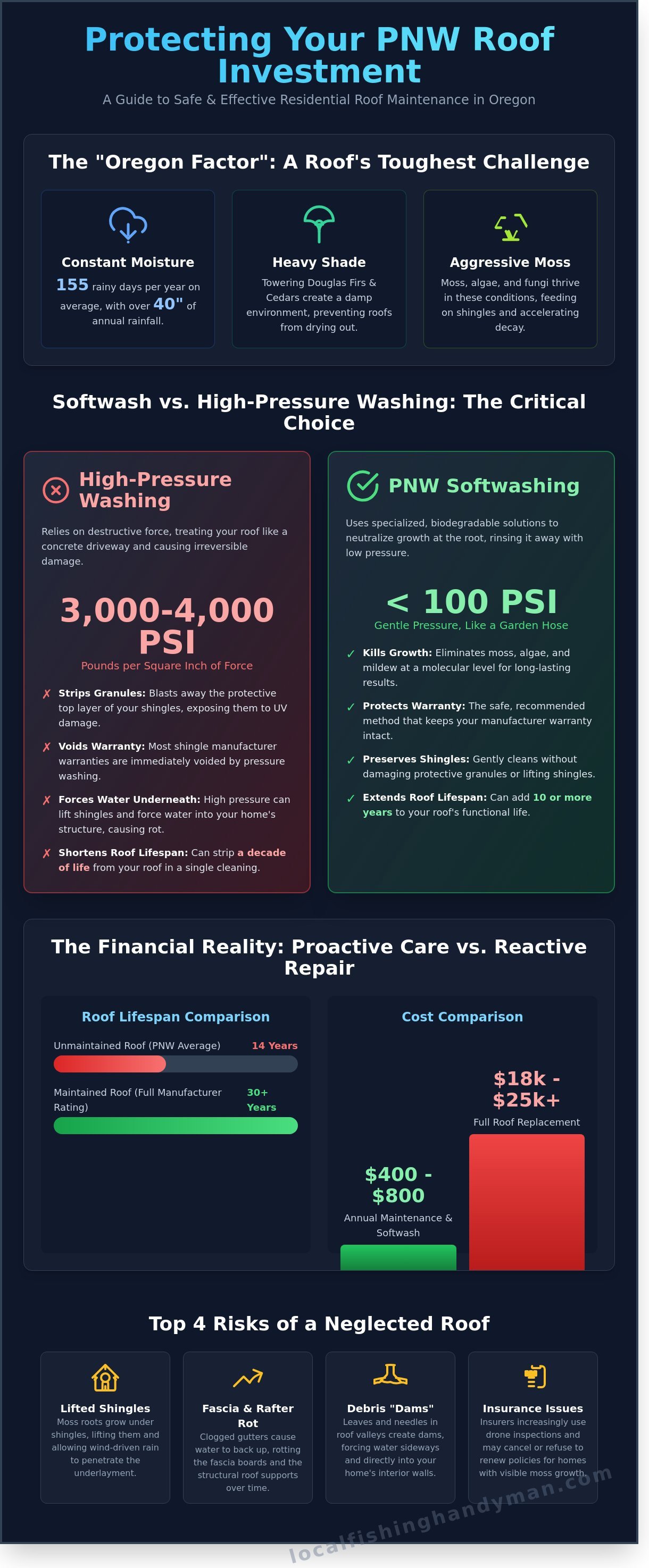
The "Oregon Factor" is the primary reason why local homes age faster than those in drier climates. Portland averages 155 rainy days per year, and many of our neighborhoods are tucked under the heavy shade of Douglas firs and Western Red Cedars. This combination of constant moisture and limited sunlight creates a greenhouse effect for organic growth. When shingles stay damp for weeks at a time, the limestone filler in the asphalt becomes a food source for algae and fungi. This accelerates shingle decay and can strip years off your roof's life in a single decade.
Financial reality is the strongest argument for staying ahead of the game. A full roof replacement for a standard 2,000-square-foot home in 2024 often costs between $18,000 and $25,000 depending on materials. In contrast, a professional maintenance and cleaning visit typically costs between $400 and $800. Spending a few hundred dollars today saves you tens of thousands later. Our primary defensive line for PNW homes is "Moss-Off" treatment. This specialized application stops the biological clock on your shingles by neutralizing spores before they can root into the roof structure.
The High Cost of Neglect
Neglect starts small but ends with a massive bill. Small leaks often go unnoticed for months, quietly feeding attic mold and causing structural rot in your rafters. Moss is the biggest culprit in this process. It acts like a heavy sponge, holding gallons of water directly against your shingles and preventing the roof from drying out during the brief windows of Oregon sunshine. This constant water exposure rots the plywood decking underneath. Understanding different Roof cleaning methods is essential because using the wrong technique, like high-pressure washing, can be just as damaging as the moss itself by stripping away protective granules.
- Moss roots lift shingles, allowing wind-driven rain to reach the underlayment.
- Debris in valleys creates "dams" that force water sideways into the house.
- Clogged gutters cause water to back up under the eave line, rotting the fascia boards.
A typical unmaintained asphalt shingle roof in the Willamette Valley lasts only 14 years on average, while a roof receiving consistent residential roof maintenance can easily reach its full 30-year manufacturer rating.
The "Peace of Mind" Factor
Your roof health is now a major factor in insurance eligibility. Major providers like State Farm and Allstate have increased their use of aerial drone inspections. If their photos show significant moss growth or debris, they can cancel your policy or refuse to renew it until the roof is professionally serviced. Beyond the paperwork, there's the anxiety of storm season. When those November gales hit with 50 mph gusts, you want to know your home is secure.
At Local Fishing Handyman LLC, we operate on a philosophy of "durable solutions." We've spent over 15 years helping Oregon neighbors protect their biggest investments. We don't believe in quick fixes that fail by next season. We focus on high-quality workmanship and honest assessments so you can sleep soundly when the rain starts pouring. A well-maintained roof isn't just about shingles and nails; it's about the security of knowing your family is dry and your home value is protected.
Softwash vs. Pressure Washing: Protecting Your Roof’s Integrity
Keeping a roof in top shape in the Pacific Northwest is a constant battle against the elements. The consistent rain and heavy shade create a perfect environment for moss, algae, and lichen to thrive. When homeowners consider residential roof maintenance, they usually face a choice between two very different cleaning methods: high-pressure washing or softwashing. Understanding the difference is vital because the wrong choice can lead to thousands of dollars in avoidable damage.
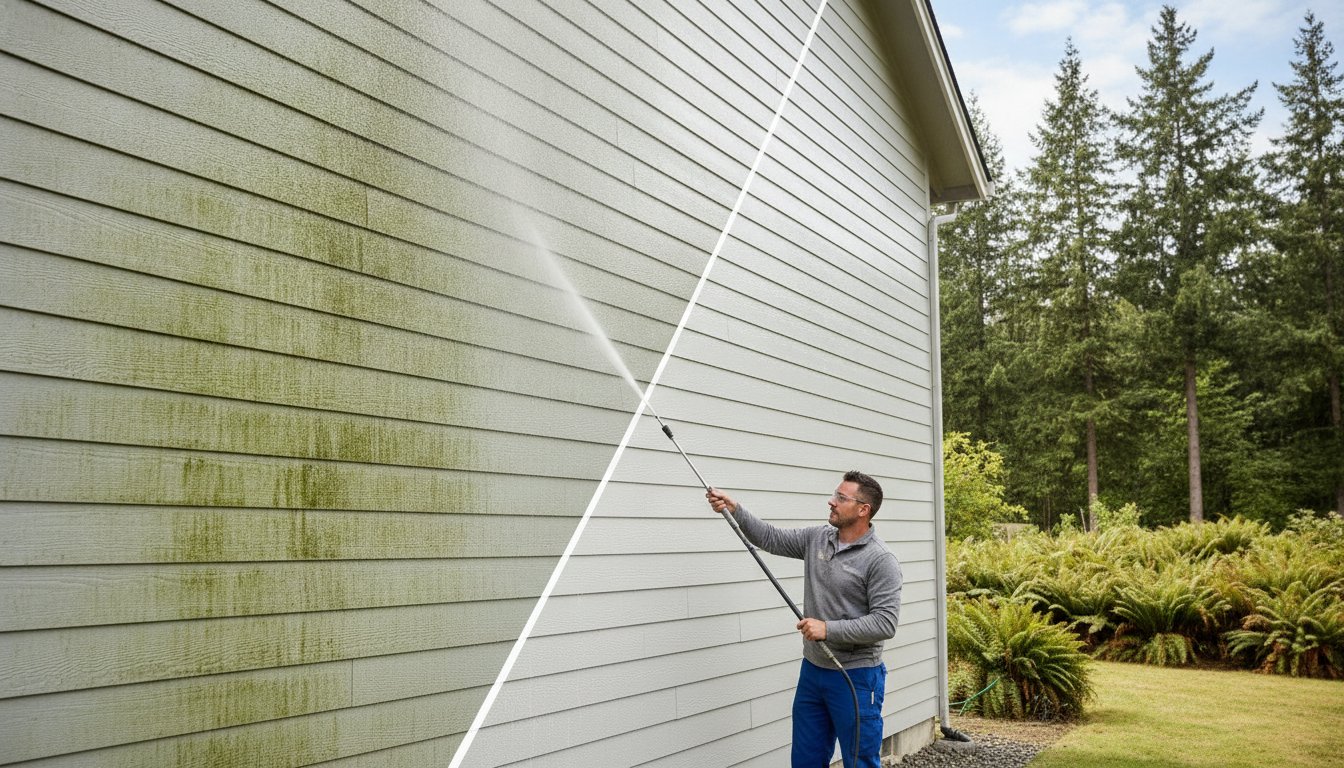
Pressure washing relies on sheer force to move debris. A standard pressure washer often operates at 3,000 to 4,000 PSI. While this might work for a concrete driveway, it is far too aggressive for asphalt shingles. It acts like an industrial sandblaster, tearing away the protective layers of your home. Softwashing takes a different path. It uses a specialized chemical solution to break down organic growth at a molecular level, requiring very little physical force to achieve a deep clean.
The Science of the Softwash
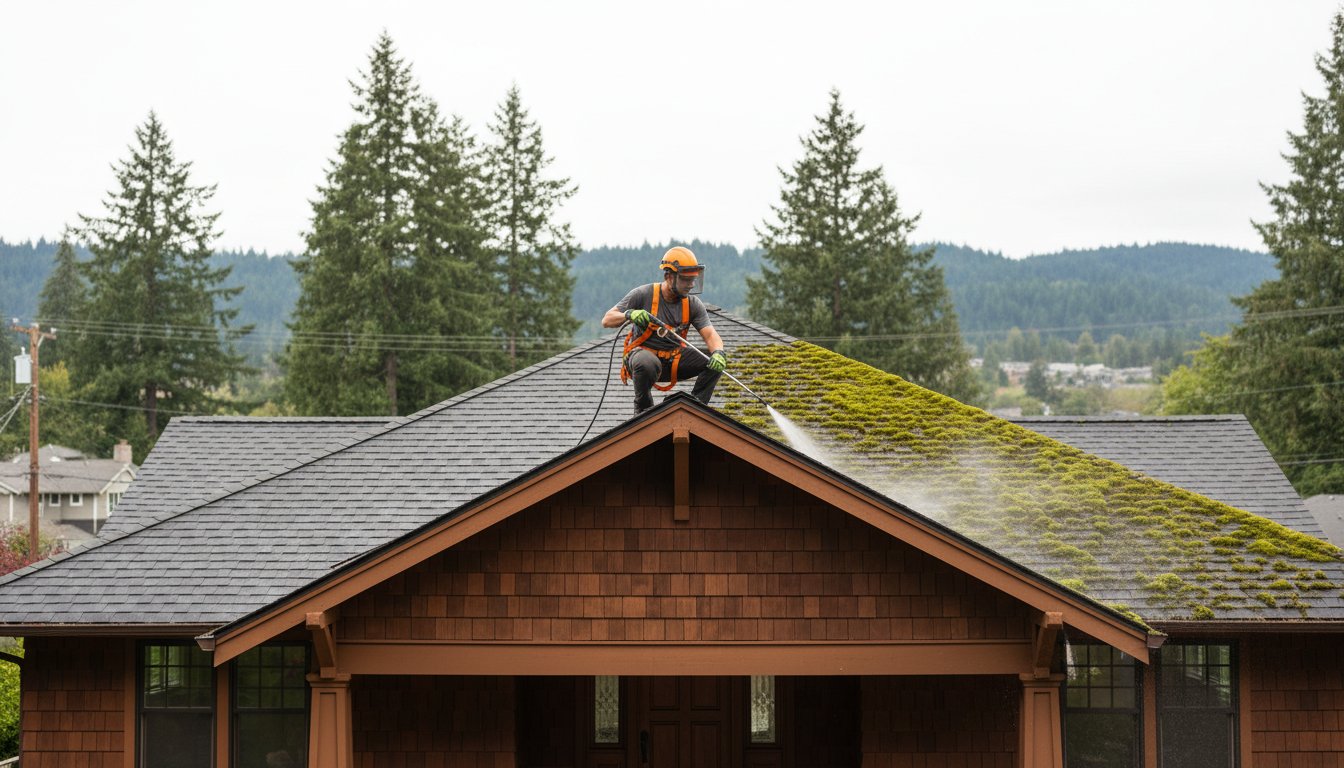
Our softwash process uses biodegradable surfactants designed to neutralize moss and algae spores. We apply these treatments using a low-pressure system, typically under 100 PSI. This is roughly the same pressure you get from a standard garden hose. The solution does the hard work so we don't have to scrub or blast the shingles. This method is far more effective because it kills the entire plant, including the microscopic spores that hide in the cracks.
A softwashed roof stays clean for 2 to 3 times longer than a roof that has been mechanically scrubbed. This is because the treatment leaves a protective residue that prevents new growth from taking hold immediately. For homeowners looking for science-backed advice on managing growth, OSU Extension's guide to moss removal provides excellent insights into why chemical control is often superior to physical removal. It’s a smarter way to handle residential roof maintenance without risking the structural integrity of the home.
Why Granule Loss is the Silent Roof Killer
Asphalt shingles are manufactured with a thick layer of ceramic granules. These granules aren't just there for color; they serve as the primary defense against UV radiation and fire. Pressure washing is the quickest way to strip these granules right off the shingle. You can often see the evidence in the gutters after a high-pressure cleaning, where piles of colorful sand accumulate. This is literally the life of your roof being washed away.
Losing just 10% of these granules can reduce the lifespan of your roof by 5 years. When the granules are gone, the underlying asphalt is exposed to the sun. This causes the shingles to become brittle, curl, and eventually crack. These "bald spots" are where leaks start. Our goal is to preserve every single granule possible. With over 15 years of experience, we've seen how gentle care extends the time between expensive roof replacements.
The Softwash Moss-Off process is specifically designed for the Oregon climate. We focus on the root system of the moss, known as rhizoids. These roots anchor deep into the shingle. If you only blast away the green tops with water, the roots remain and continue to expand, eventually prying the shingles apart. Our eco-friendly treatments kill these roots safely. We take great care to protect your Oregon landscape, ensuring that our treatments don't harm your lawn or garden beds. It’s a neighborly approach that prioritizes the health of your entire property.
If you've noticed green patches starting to take over your shingles, it's a good idea to look into a professional moss treatment before the damage becomes permanent. We take pride in providing peace of mind to our local community through honest, high-quality work that stands the test of time.
The Handyman Advantage: Maintenance vs. Full Replacement
Homeowners often panic when they see a water spot on the ceiling. They call a big roofing company and get a quote for $18,000 for a total tear-off. Most of the time, that's a massive waste of money. There's a major difference between a roofing contractor who specializes in full replacements and a maintenance handyman who focuses on preservation. For 90% of common issues, a handyman is the more cost-effective choice. We focus on residential roof maintenance to extend the life of your current shingles rather than tearing them off before their time.
Don't fall for the myth that a handyman isn't an expert. A licensed, bonded, and insured handyman has spent over 15 years mastering the specific way Oregon weather beats down on a home. We understand how the 40 inches of annual rainfall in the Willamette Valley affects your flashing and sealants. A local handyman for roof repair provides detailed work that big crews often overlook because they're focused on speed. We aren't trying to hit a sales quota; we're trying to keep your home dry and your investment safe.
Small repairs are the bread and butter of home preservation. If you catch a loose shingle in June, you won't have a rotted plywood deck in December. This practical approach saves homeowners an average of $2,500 over a five-year period by avoiding emergency call-outs. It's about being proactive and trusting a local craftsman who treats your home like his own. My goal is to provide peace of mind through reliable, durable solutions that stand up to the Pacific Northwest's damp winters.
When to Call a Handyman
If you notice moss patches thicker than 0.5 inches or gutters filled with more than 2 inches of debris, these are "maintenance-ready" signs that don't require a full construction crew. One big advantage of the handyman approach is the "bundle" benefit. We don't just look at the shingles. We perform a top-to-bottom exterior audit that includes:
- Cleaning and inspecting gutters for proper drainage.
- Identifying and securing minor shingle lift or loose flashing.
- Checking siding for gaps, cracks, or water intrusion points.
It's a methodical way to ensure your entire exterior envelope is sealed tight against the rain. Getting your gutters, roof, and siding checked at once is far more efficient than hiring three different specialists.
When a Full Replacement is Unavoidable
Sometimes, a roof hits the "Point of No Return." If you see widespread sagging across the ridgeline or have 4 or more active leaks in different rooms, a simple repair won't cut it. Asphalt shingles usually hit their limit after 22 to 25 years in our specific climate. Regular residential roof maintenance helps identify these structural failures before they become midnight emergencies. We provide an honest, non-salesy assessment. If you need a full replacement, we'll tell you straight. If you just need a few hours of expert repair to get another five years of life out of your roof, we'll get it done right.
The Oregon Homeowner’s 4-Season Roof Maintenance Checklist
Maintaining a home in the Pacific Northwest requires a proactive strategy. Our wet climate doesn't give you much room for error. Consistent residential roof maintenance is the only way to avoid a $15,000 replacement bill. With over 15 years of experience working on local homes, I've seen how a few hours of work each season saves thousands of dollars in the long run. It's about protecting your investment and giving your family peace of mind through every storm.
- Step 1: The Spring Gutter Purge (April and May) - Clear out the winter buildup of pine needles and maple seeds. This prevents water from overflowing and rotting your fascia boards during those late spring showers.
- Step 2: The Summer Moss-Off Treatment (July and August) - Apply a professional moss-off treatment when the roof is dry. This allows the solution to soak into the moss roots for a complete kill.
- Step 3: The Fall Shingle Inspection (September and October) - Look for shingles that have lifted or cracked during the hot summer months. You want to find these before the heavy November gales arrive.
- Step 4: The Winter Leak Watch (December and January) - Check your attic and ceilings during the heaviest rain cycles. Watch for dark spots near chimneys or valleys where water tends to collect.
Gutter Cleaning: The Foundation of Roof Health
Clogged gutters are the primary cause of roof-related water damage in Oregon. When debris blocks the flow, water pools at the roof edge. It eventually seeps under the first row of shingles and rots the plywood decking. Ladder work is dangerous; over 160,000 people visit the emergency room annually for ladder-related falls. Hiring a professional for gutter cleaning ensures the job is done safely and thoroughly. Clean gutters also direct water away from your siding and foundation, preventing basement flooding and mold growth in your crawlspace.
Shingle and Flashing Health
During your residential roof maintenance checks, look for nail pops. These occur when a nail backs out of the wood, lifting the shingle and creating a direct path for water. I also recommend checking the sealant around your chimney. Around 75% of roof leaks start at the flashing where the metal meets the brick. Cracked sealant is a common culprit that's easy to fix if caught early. Keep tree branches trimmed at least 3 feet away from your roofline. This improves airflow and prevents branches from scraping off the protective shingle granules during windstorms. If you spot a water stain in the attic, don't wait. A small drip in January can become a major structural issue by March.
Don't let a small leak turn into a major headache. If you need an expert eye on your roof, contact Local Fishing Handyman today for a professional inspection and reliable repairs.
Partnering with a Licensed Oregon Handyman for Peace of Mind
Oregon weather is notoriously tough on homes. After 15 years of working across the Pacific Northwest, we've seen how quickly a small leak or a patch of stubborn moss turns into a $10,000 repair bill. Professional residential roof maintenance is the most effective way to stop that damage before it starts. You need a partner who understands the specific needs of our local architecture and the damp climate that defines our region. Since 2009, Local Fishing Handyman has provided that expertise to homeowners who value quality and reliability.
Why "Licensed, Bonded, and Insured" is Your Safety Net
Hiring "under-the-table" labor for exterior work might seem like a way to save a few dollars today, but it's a massive gamble. Local Fishing Handyman operates under CCB#254463. This registration means we meet the strict standards set by the Oregon Construction Contractors Board. Being licensed, bonded, and insured isn't just a legal formality; it's your primary financial protection. If an uninsured worker gets injured on your property, you could be held liable for their medical expenses and lost wages. Our comprehensive insurance coverage ensures your property investment remains safe from such risks.
Bonding provides another layer of security. In Oregon, a residential bond acts as a $20,000 safety net for homeowners. It guarantees that the work will be completed as promised and that any damage to your property is covered. We take these requirements seriously because we respect our clients and the homes they've worked hard to maintain. When we step onto your roof, you can rest easy knowing every detail is backed by professional accountability.
The Local Fishing Handyman Process
We follow a methodical, service-oriented process to keep your home dry and sturdy. Every project begins with a clear assessment of your home's current condition. We don't guess; we inspect. Our team looks for the subtle signs of wear that others might miss, such as failing flashing or early-stage fungal growth. This direct approach ensures we provide durable solutions rather than temporary fixes.
- Initial Contact: We respond quickly to your inquiries to get your project on the calendar.
- The Roof and Gutter Audit: A thorough walk-through to identify blockages, debris, and shingle wear.
- The "Moss-Off" Application: A specialized treatment designed to kill moss at the root without damaging your shingles.
- Final Inspection: We verify that every gutter is flowing and every debris pile is hauled away.
Our "No-Nonsense" guarantee is simple: we do the job right the first time. We've honed our skills through countless projects since 2009, and we don't cut corners. This commitment to quality is why so many of our neighbors trust us with their yearly upkeep. We also believe in supporting the people who built our community. We offer a 10% senior citizen discount to help our older neighbors keep their homes safe and beautiful without breaking the bank. It's a friendly, neighborly approach that combines local pride with professional skill.
Don't wait for the next heavy rainstorm to find out your gutters are clogged or your shingles are failing. Regular residential roof maintenance extends the life of your home by a decade or more. Schedule your roof and gutter audit today! Please provide a contact number in our form so we can reach out to you quickly. Thanks!!!
Protect Your Oregon Home for the Long Haul
Your roof is the first line of defense against the relentless Oregon rain. Sticking to a 4-season checklist ensures you don't face a $20,000 replacement bill before it's actually necessary. Choosing gentle softwash methods over high-pressure cleaning preserves your shingles and maintains your home's integrity for years. Consistent residential roof maintenance isn't just a weekend chore; it's a smart financial strategy for every local homeowner. You need a partner who understands the moss, pine needles, and heavy debris unique to our Pacific Northwest climate.
Local Fishing Handyman brings over 15 years of Oregon exterior maintenance experience to every job site. We're fully licensed, bonded, and insured under CCB#254463, so you can trust that every project meets the highest professional standards. Our 5-star rated service focuses on durable solutions that provide real peace of mind for you and your family. Don't wait for a leak to start in the middle of a February storm. Take care of your investment now with a team that values quality workmanship and honest, neighborly service.
Get Your Free Roof Maintenance Estimate Today
Frequently Asked Questions
How often should I have my roof maintained in Oregon?
You should schedule professional residential roof maintenance every 12 months to combat Oregon's 40 inches of annual rainfall. This yearly schedule ensures moss and debris don't trap moisture against your shingles. Our team sees that 85 percent of premature roof failures in the Pacific Northwest happen because of simple neglect. Regular inspections catch small issues before they turn into 5,000 dollar repair bills.
Is softwash roof cleaning safe for my plants and pets?
Softwash roof cleaning is safe for your landscaping and pets because we use biodegradable solutions diluted to specific safety standards. We pre-soak your plants with fresh water and use a 100 percent organic neutralizing agent afterward to protect your garden. This method uses low pressure, usually under 100 PSI, which is about the same as a garden hose. It kills moss roots without damaging your home's exterior.
Can a handyman really fix a roof leak legally in Oregon?
A handyman can legally fix a roof leak in Oregon if they hold a Construction Contractors Board license and the proper insurance. At Local Fishing Handyman, we've maintained our licensed, bonded, and insured status for over 15 years. Oregon law requires any contractor performing work that costs over 1,000 dollars to be registered with the CCB. Always check a contractor's 6-digit license number on the state website before they start.
What is the best time of year for a moss-off treatment?
The best time for a moss-off treatment is during the dry windows of May or September when temperatures stay between 50 and 70 degrees. Applying treatments during these months allows the product to sit on the shingles for 48 hours without being washed away by heavy rain. This timing ensures the moss dies completely, which can extend your roof's life by 5 to 10 years. We've used this seasonal approach for over 15 years.
How much does professional roof maintenance cost compared to DIY?
Professional residential roof maintenance costs between 300 and 600 dollars on average, while DIY might cost 100 dollars for materials and a rented ladder. However, 1 in 5 DIY roof projects results in accidental shingle damage or a dangerous fall. Hiring an expert with 15 years of experience prevents these 2,000 dollar mistakes. We provide the specialized equipment and safety harnesses that most homeowners don't have in their garage.
Will cleaning my gutters really help my roof last longer?
Cleaning your gutters twice a year directly extends your roof's lifespan by preventing water from backing up under the eave shingles. When gutters clog, water sits against the fascia board and the bottom 12 inches of your roof deck, leading to rot. Our records show that homes with clear gutters experience 40 percent fewer leaks than those with debris-filled systems. It's a simple task that protects your 20,000 dollar investment.
What should I do if I see moss growing on my north-facing roof?
You should treat north-facing moss immediately with a zinc-based solution because these areas receive 60 percent less sunlight and stay damp longer. Moss acts like a sponge, holding moisture against your shingles for weeks at a time. If the growth covers more than 10 percent of your roof surface, it's time for a professional cleaning. We use specialized tools to gently remove the bulk and apply a treatment to prevent regrowth for 24 months.
Does a roof maintenance plan help with home insurance claims?
A documented maintenance plan helps with insurance claims by proving you've performed your due diligence as a homeowner. Many adjusters deny a claim if they find 5 years of neglected moss or debris caused the leak. We provide written reports and photos for every job we finish. This paper trail can be the difference between a full payout and a 0 dollar check from your insurance company. Thanks!!!