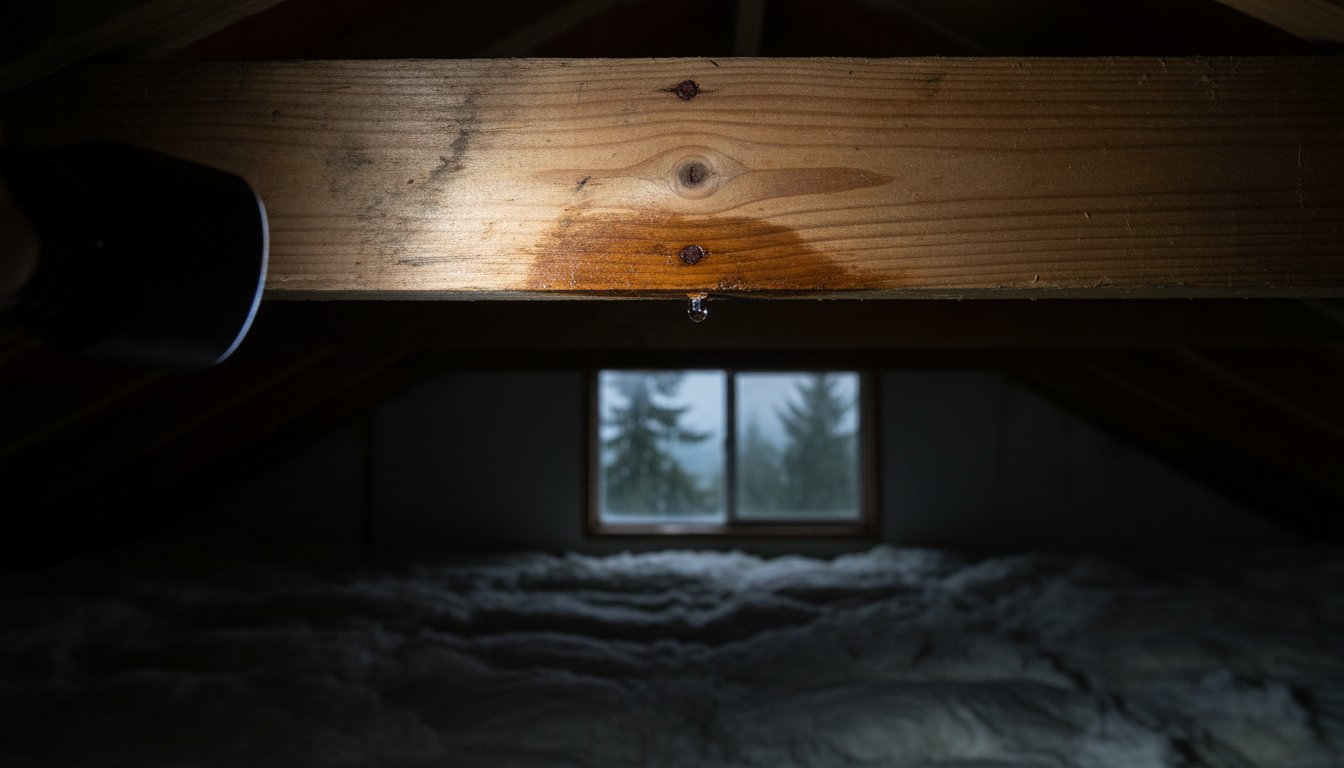
Imagine it is 6:30 PM on a Tuesday in November. You head up to the attic to grab some storage boxes and notice a dark, damp patch on a rafter beam. It is a sinking feeling because you know that in Oregon, where many regions recorded over 40 inches of rainfall in 2023, a small moisture spot is rarely a one-time fluke. Identifying the early signs of a roof leak in your attic is the best way to prevent hidden mold growth and the anxiety of a massive repair bill later this winter.
Key Takeaways
- Understand why Oregon's constant drizzle requires a proactive attic inspection to find leaks before they show up on your living room ceiling.
- Learn how to identify the visual signs of a roof leak in attic spaces, including "tide marks" on rafters and darkening wood that indicates structural rot.
- Discover why your nose is a powerful tool for detecting musty odors and how rusted "shiner" nails can signal hidden moisture issues.
- Get step-by-step instructions for safely tracking water to its source using the "garden hose" method while protecting yourself from insulation fibers.
- Recognize when a minor shingle fix is enough and why a licensed local expert is your best bet for durable, long-term roof solutions.
Why Your Attic is the Best Place to Catch a Roof Leak Early
Oregon homeowners deal with a unique set of weather challenges. While states like Florida face sudden tropical downpours—and residents there can check out Rainier Roofing LLC for local help—our region is known for a persistent, soaking drizzle that can last for weeks. This constant moisture makes it difficult to spot a problem from the ground. By the time a brown circle appears on your living room ceiling, the damage is already well underway. Your attic serves as a critical buffer zone that catches moisture before it wreaks havoc on your finished living spaces. Finding the signs of a roof leak in attic areas allows you to address the issue while it's still a simple shingle or flashing repair.
One of the biggest hurdles in leak detection is the "traveling water" problem. Gravity rarely pulls water straight down from the entry point to your floor. Instead, moisture enters through a cracked vent or missing shingle and runs along the underside of the roof deck. Understanding how leaks travel is the first step in protecting your home. A stain on your ceiling might be located 10 feet away from the actual hole in your roof. Checking the attic directly is the only way to trace the path back to the source and save thousands of dollars in interior restoration costs.
The Role of the Attic in Home Protection
Your attic isn't just for storage; it's a diagnostic tool for your home's health. Fiberglass and cellulose insulation act like a giant sponge. They can hide early moisture for months until they become completely saturated. Once the insulation is soaked, it loses its R-value and begins to grow mold. High-performance insulation specialists like Third Coast Spray Foam emphasize that choosing the right materials can significantly improve a home's resilience against moisture. I've spent over 15 years inspecting roofs across the Pacific Northwest and I've seen how rafters and trusses act as highways for water entry. During our brief dry season from July to September, you should still head upstairs with a flashlight. Look for dark streaks on these wooden supports, as these are permanent records of where water flowed during the winter months.
Why Ceiling Stains Are a Late-Stage Symptom
If you wait for a ceiling stain to appear, you're already dealing with a late-stage symptom. At this point, the water has bypassed your roofing, your plywood decking, your insulation, and is now rotting your ceiling drywall. The cost difference is massive. A simple shingle replacement or a bead of professional sealant is a quick fix, but replacing a moldy ceiling involves demolition, new drywall, and professional painting. Water follows the path of least resistance, often moving horizontally before dripping. Structural beams often trick homeowners into looking in the wrong spot because they channel the water toward the lowest point of the house. Catching signs of a roof leak in attic inspections prevents these structural "tricks" from turning a small leak into a major renovation project. For those looking to upgrade to moisture-resistant materials during repairs, visit Third Coast Spray Foam to explore high-performance insulation solutions.
5 Visual Red Flags: What a Leak Looks Like Under Your Roof
Grab a high-powered flashlight and head into the attic during or immediately after a rainstorm. Oregon weather provides plenty of opportunities to catch a roof in the act of leaking. Identifying the signs of a roof leak in attic spaces early can save you thousands in structural repairs. I have seen how a small drip turns into a major headache over 15 years of service in the Pacific Northwest. Look for these five visual red flags:
- Water stains and tide marks: These look like brown or amber rings on the rafters or the underside of your roof decking.
- Darkening or rot: Wood that stays damp will turn dark brown or black. If the wood feels soft when poked with a screwdriver, rot has already set in.
- Matted insulation: Fiberglass or blown-in insulation that looks compressed or "crusty" has likely been soaked.
- Active dripping: During a heavy storm, you might see water running down a nail or pooling on the attic floor.
- Daylight gaps: If you turn off your flashlight and see points of light coming through the roof boards, you have a direct path for water to enter.
Identifying Water Stains and Discoloration
Not every stain means you have a current emergency, but you must know how to tell the difference. Active leaks usually look dark, feel damp to the touch, and may have a slight sheen. Old stains often appear light tan and feel "crusty" or brittle. You should follow these stains upward. Water often enters at a high point, like a ridge vent or chimney flashing, and then travels down a rafter before dripping. If you spot black, fuzzy spots on the wood, don't assume it is just dirt. In 90% of these cases, those spots are mold colonies thriving on the moisture trapped in your attic. This is one of the most common signs of a roof leak in attic areas with poor ventilation.
Insulation and Decking Warning Signs
Your insulation tells a story about your roof's health. Blown-in cellulose insulation should be fluffy. If you notice it has lost 2 or 3 inches of loft in specific sections, moisture has likely clumped the fibers together. Check the roof decking for delamination. This happens when the glue in plywood or OSB fails due to water saturation, causing the layers to peel apart. These issues often lead to structural warning signs such as sagging or visible warping from the exterior. Also, examine the eaves and soffits. If you see water marks near the edges, your gutters are likely backed up, forcing water under the shingles. If you find these issues, a professional roof repair can stop the damage before it reaches your living space.

Beyond the Eyes: Smells, Humidity, and Rusted Nails
Your eyes aren't the only tool for spotting trouble. Sometimes, you'll smell a leak before you see a single drip. A persistent, musty odor in the attic is one of the most reliable signs of a roof leak in attic spaces. This scent comes from damp insulation or wood that can't dry out. In the Pacific Northwest, where humidity often stays above 75% during the rainy season, moisture gets trapped easily. If the air feels heavy or "thick" when you step into the space, your roof might be letting in more than just a little water.
You should also look for white, powdery stains on your brick chimney or masonry. This is called efflorescence. It happens when water moves through the brick and pulls minerals to the surface. As the water evaporates, it leaves a salty residue behind. I've seen this many times in my 15 years of service. It's a clear signal that the flashing around your chimney has failed or the masonry is absorbing too much rainwater. If you see these white streaks, the moisture is already inside your structure.
The 'Shiner' Phenomenon
A shiner is a nail that missed the rafter and sticks into the open attic. During a cold snap, these nails stay freezing cold. When warm air rises from your home, it hits that metal and turns into frost. In Oregon, where winter humidity often tops 80%, these nails drip enough to rot the wood. It looks like a leak, but it usually means your ventilation is failing and moisture is trapped.
Mold and Mildew Growth Patterns
Mold can take hold in just 24 hours after a leak starts. Surface mildew looks like a gray dust, while structural mold is darker and grows into the wood fibers. Poor ventilation keeps this moisture trapped, turning a small drip into a big health risk. Ignoring these smells can lead to indoor air quality issues; to ensure your living environment remains healthy, you can discover AlphaLux Cleaning for professional residential cleaning services. If your attic feels damp, you likely have a moisture problem that needs a professional look.
Checking these signs helps you catch problems before they require a full roof replacement. A damp attic isn't just a roofing issue; it's a threat to your home's structural integrity. When you notice rusted nail heads or a damp smell, it's time to investigate the source. Catching these early signs of a roof leak in attic areas can save you thousands in repair costs down the road. Most homeowners find that a quick inspection twice a year, especially after the first heavy rains in October, prevents these issues from spiraling.
During these inspections, you might also find that moisture has attracted unwanted pests like rodents or insects; to keep your home safe and sanitary, visit Jones Bros Pest Control, Inc..
While you work to keep external rainwater from damaging your home, it is equally important to ensure the water inside your pipes is clean; Tradewinds Water Filtration offers advanced systems to remove contaminants like PFAS and microplastics, supporting a healthy household environment.
How to Track a Leak to Its Source (Safety First!)
Finding the exact entry point of water is often the hardest part of home maintenance. In Oregon, we deal with over 150 rainy days a year, which makes spotting the signs of a roof leak in attic spaces a common winter chore. However, moisture can also originate from internal systems; for example, sweetdreamsplumbing.com explains how water heaters located in the attic can leak and cause similar damage. Water rarely drips straight down; it hits a rafter, runs along a board, and might pool six feet away from the actual hole in your shingles. To find the source, you need to head up there during a heavy rain or have a partner run a garden hose over the roof while you watch from inside.
Safety is the top priority before you climb that ladder. Put on an N95 mask and impact-resistant eye protection. Attics are full of dust and fiberglass insulation fibers that can irritate your lungs and eyes for days. Bring a powerful flashlight with at least 500 lumens of brightness. When you shine it across the rafters, look for the "glint" or reflection of water. Once you find it, use a permanent marker to circle the spot. This helps your repair professional find the exact location even after the wood has dried out.
Navigating the Attic Safely
Never step on the insulation. It might look like a solid floor, but it's usually just 1/2-inch thick drywall underneath. Standard ceiling drywall can only support about 15 to 20 pounds per square foot; it won't hold your weight. Only step on the wooden ceiling joists. Use the "two-point contact" rule by always keeping both feet or one foot and one hand firmly planted on solid wood. A high-quality headlamp is better than a handheld flashlight because it keeps your hands free to balance as you move across the beams.
The 'String Trick' for Drip Tracking
If you find a steady drip, you can stop the ceiling damage immediately using a simple piece of heavy twine. Tie the string to the wet rafter and let the other end hang into a five-gallon bucket. The water will follow the string down into the bucket instead of splashing onto your insulation. Follow that wet trail up the wood to its highest point. This is where the water is entering through the roof deck. Take clear photos of this path and the surrounding signs of a roof leak in attic areas to show your handyman. Having this visual evidence saves time and ensures the fix is applied to the right area.
Don't risk a fall or further damage if you aren't comfortable climbing into tight spaces. Contact Local Fishing Handyman for expert leak detection and durable roof repairs today.
Fixing the Drip: Why a Licensed Oregon Handyman is Your Best Bet
Spotting the signs of a roof leak in attic spaces can feel like a disaster, but it does not always mean you need a brand new roof. There is a massive difference between a $500 shingle repair and a $20,000 total replacement. Many homeowners jump to the most expensive conclusion when a targeted, durable fix is all that is required to keep their home dry.
In high-rainfall regions where moisture management is a constant challenge, specialists like weatherguardroofsg.com provide advanced waterproofing and repair services to protect properties from long-term water damage.
In cases where the damage is structural and a full replacement is unavoidable, Supreme Roofing and Reconstruction provides a detailed guide to help you understand the steps, costs, and materials involved in a major roofing project.
Handyman vs. Roofing Company
Choosing a multi-skilled handyman offers another distinct advantage. Roof leaks rarely stay on the roof. Water often travels, damaging siding, soffits, or even nearby deck structures. Instead of hiring three different contractors to handle the roof, the exterior walls, and the woodwork, you get a single professional who can address every point of failure in one visit. This saves you time and keeps your project costs manageable.
The Local Fishing Handyman Promise
We bring over 15 years of experience to every Pacific Northwest home we service. Our team understands how Oregon weather beats down on a structure, and we provide a no-nonsense approach to every repair. We don't use high-pressure sales tactics. We just provide honest assessments and high-quality craftsmanship. You can trust that the work is done right because we are fully licensed, bonded, and insured under CCB#254463.
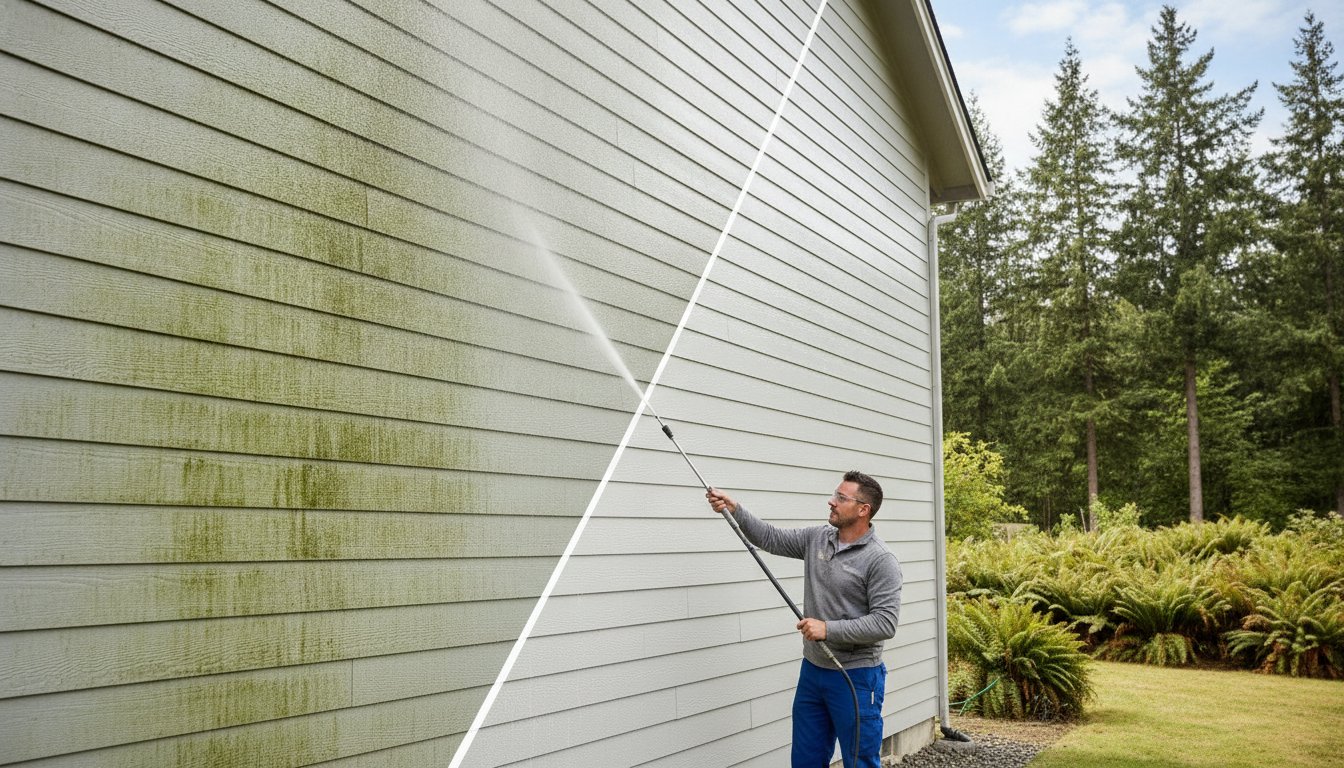
To ensure your repairs last, we often integrate softwash treatments. Moss is a primary culprit for roof failure in our region because it acts like a sponge, holding moisture against shingles until they rot. Unlike high-pressure power washing that can strip away protective granules, our softwash method uses low-pressure systems and specialized solutions to kill moss at the root. This preventative care stops the signs of a roof leak in attic areas before they ever start.
We believe in straightforward communication and reliable service for every neighbor we help. Please provide a contact Number so we can reach out to you. Thanks!!! Contact Us
Protect Your Oregon Home Before the Next Storm Hits
Your attic acts as the early warning system for your entire house. Regularly checking this space helps you spot trouble before it turns into an expensive structural repair. Keep a sharp eye out for the signs of a roof leak in attic areas, specifically looking for damp insulation, rusted nail heads, or dark water tracks along the wooden rafters. Catching these indicators now prevents mold growth and protects your home's long-term resale value. It's much easier to fix a small shingle issue than it is to replace entire sheets of rotted plywood.
Climbing into tight attic spaces or onto a wet roof carries real physical risks. It's best to rely on a professional who understands the unique challenges of our damp local climate. Local Fishing Handyman provides expert inspections backed by 15+ years of local Oregon experience. We're proud to be Licensed, Bonded, and Insured (CCB#254463) to give you total peace of mind. We also offer senior citizen discounts to ensure every neighbor can afford a sturdy roof over their head.
Don't let a small drip become a big headache. Contact Local Fishing Handyman for a Roof Leak Inspection today!
We look forward to helping you keep your home dry and secure for many years to come.
Frequently Asked Questions
Is a roof leak in the attic an emergency?
Yes, any roof leak is a home emergency. FEMA reports that mold begins to grow within 24 to 48 hours of water exposure. Waiting to fix a leak leads to rotted rafters and ruined insulation. This damage gets expensive fast, so it's best to call a professional as soon as you spot moisture to protect your investment.
Can I fix a small roof leak from the inside of the attic?
You can't fix a roof leak permanently from inside your attic. Applying sealant to the underside of the roof deck just traps water inside the wood. This causes the plywood to rot much faster. A real fix requires working on the exterior to replace shingles or flashing. It's the only way to ensure a durable, long-term solution.
How much does it typically cost to have a handyman fix a roof leak in Oregon?
Roof repair costs in Oregon depend on the scope of the work and the materials involved. According to 2024 industry data from HomeAdvisor, the national average for a roof repair falls between $300 and $1,100. Complex jobs involving skylights or chimney flashing often sit at the higher end of that scale. Local rates fluctuate based on your specific roofing material.
What if I see mold in my attic but no active water?
Mold without active water usually means you have a slow seep or a ventilation problem. Mold thrives when attic humidity levels stay above 60 percent for extended periods. This is one of the subtle signs of a roof leak in attic spaces that homeowners often overlook during the dry summer months. You should address the moisture source immediately to protect your family's health; for instance, ensuring your ventilation systems are clear with Pronto Air Duct Cleaning can help maintain a dry and healthy attic environment.
Will my homeowners insurance cover a roof leak found in the attic?
Insurance coverage depends on why the roof leaked in the first place. The Insurance Information Institute states that most standard policies cover damage caused by sudden events like a fallen tree or a windstorm. However, they don't cover leaks caused by old age or lack of maintenance. Review your policy to see if "perils" like hail are included in your specific coverage.
How often should I inspect my attic for leaks?
You should inspect your attic at least twice every year. Schedule your walkthroughs for late fall and early spring to catch problems before Oregon's rainy season peaks. Use a powerful flashlight to look for water stains on the wood. These marks are clear signs of a roof leak in attic areas that need professional attention before the wood starts to soften.
Can moss on my roof cause leaks in the attic?
Moss is a major cause of roof failure in the Pacific Northwest. It holds moisture against your shingles like a wet sponge, which leads to rot. Thick moss can actually lift shingles up by 0.5 inches. This allows wind-driven rain to blow underneath the roofing material and soak your attic insulation, eventually leading to structural damage.
What is the most common cause of roof leaks in Oregon?
Damaged flashing is the most frequent cause of leaks in Oregon homes. Our state averages roughly 150 rainy days per year, which puts massive pressure on the seals around vents and chimneys. Over 10 to 15 years, these seals dry out and crack. Once the seal fails, water flows directly into the attic along the pipe or chimney wall.