That last windstorm, the one with the 45 mph gusts, probably left more than just branches in your yard. You step outside and see it: your fence is leaning at an angle you can't ignore anymore, or the gate just won't latch, no matter what you do. It's a frustrating problem that many Oregon homeowners face after a rough season.
We get it. Your first thought is likely about the huge expense of a full replacement, a project that can quickly cost thousands of dollars. But here’s the good news: you probably don’t need one. This guide is here to show you how strategic fence repairs can secure your property and save you a significant amount of money. We’ll help you diagnose the real issues, from post rot to hardware failure, so you know exactly what to expect when you call a pro who does the job right the first time.
Key Takeaways
- Learn how to perform a simple "wiggle test" to check your fence posts for rot and instability before major damage occurs.
- Understand the key factors that determine whether to repair or replace your fence, helping you make the most cost-effective decision.
- Discover a simple maintenance routine tailored for the Oregon climate to prevent common issues and avoid the need for expensive fence repairs.
- Find out why hiring a local professional with knowledge of Oregon's unique soil and weather leads to a more durable, long-lasting result.
Understanding Fence Damage in the Oregon Climate (2026)
A fence is more than just a property line marker; it's a key part of your home’s security, privacy, and curb appeal. Fence repair is the process of restoring that structural integrity and aesthetic value. Here in Oregon, our fences face a unique set of challenges you won't find in drier climates. While there are many different types of fences, from classic picket to tall privacy styles, they all battle constant moisture, high winds, and aggressive plant growth. Moss and algae aren't just cosmetic issues; they hold water against wood surfaces, leading to rapid fiber degradation.
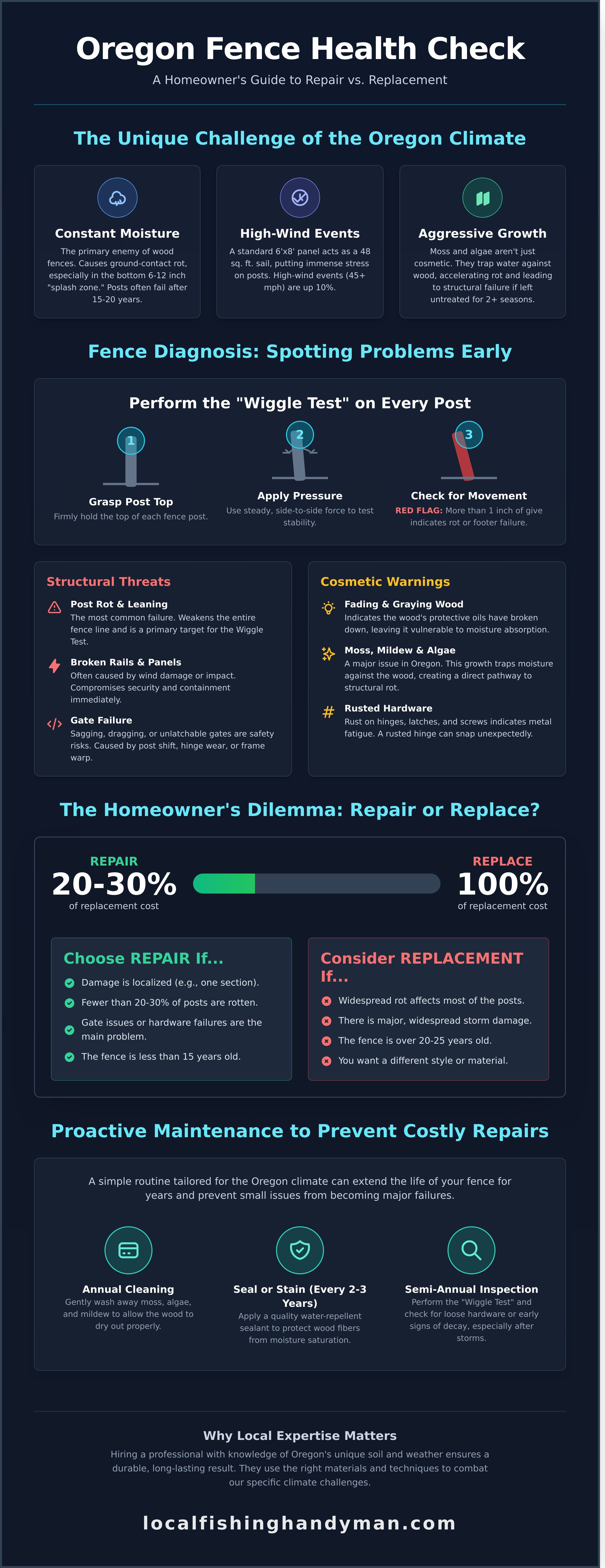
The good news is that addressing these problems early protects your investment. Proactive fence repairs typically cost only 20-30% of a full replacement, saving you thousands of dollars and extending the life of your existing structure for years. It's about smart maintenance, not waiting for a total failure.
The Role of Moisture and Wood Rot
In the Pacific Northwest, water is the primary enemy of any wooden fence. Ground-contact rot is the most common point of failure, happening where posts enter the soil. Even pressure-treated posts have a lifespan, often failing after 15-20 years of exposure to Oregon's damp earth. We also see significant damage in the "splash zone," the bottom 6-12 inches of your fence panels. Rainwater hits the ground and splashes back up, keeping this area perpetually damp and accelerating decay. You'll often see the difference between wet rot (spongy, dark, and stringy wood) and dry rot (wood that appears dry and crumbles into cubes), both of which compromise your fence's strength.
Wind Damage: The Silent Fence Killer
A solid privacy fence acts like a giant sail during a windstorm. A standard 8-foot-wide, 6-foot-tall panel has to withstand the force on 48 square feet of surface area. During a strong gust, this "sail effect" puts immense pressure on the posts, often causing them to weaken or snap at the base. This problem gets worse when fasteners like nails and screws become loose over time. A wobbly panel creates constant stress on the post with every breeze, leading to a sudden structural failure during a storm. With Pacific Northwest weather patterns in 2026 indicating a 10% increase in high-wind events (gusts over 45 mph), ensuring your fence is properly braced and secured isn't just a good idea; it's essential preparation.
Identifying Common Fence Issues: From Post Rot to Storm Damage
Your fence works hard year-round, especially in Oregon's damp climate. A small problem today can become a major headache next season. Knowing what to look for is the first step in protecting your property and avoiding costly replacements. A quick walk around your fence line every six months can save you thousands.
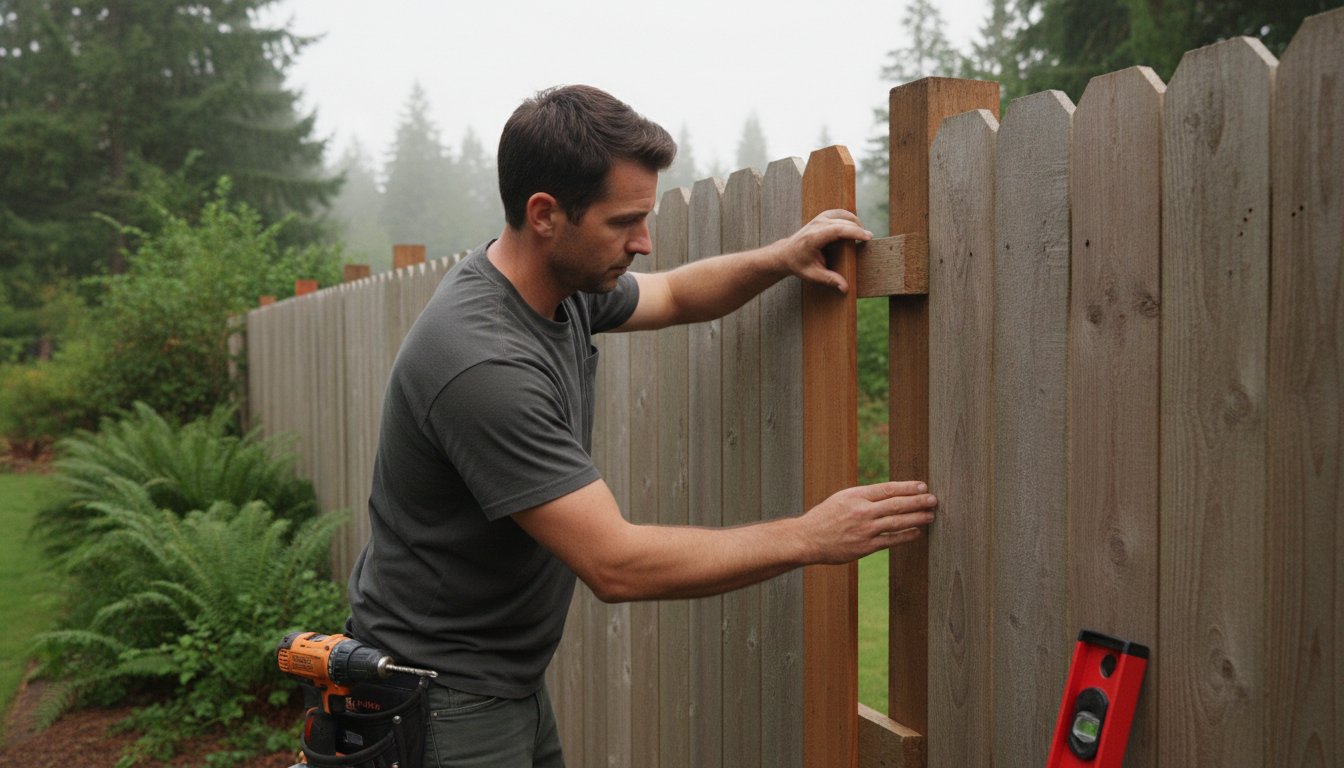
Start with the foundation of your fence: the posts. A wobbly post is a weak post, and it's a sign of underground rot or a failing concrete footer. You don't need special tools to check them. Just use this simple "wiggle test" checklist:
- Grasp the top of each post firmly.
- Apply steady, side-to-side pressure. Don't try to break it, just test its stability.
- A secure post should have almost no give. If it moves more than an inch in any direction, it's a red flag.
- Pay extra attention to posts at corners and gates, as they bear the most stress.
Next, inspect the hardware. Are your gate hinges covered in rust? Do your latch bolts stick? These aren't just ugly; they are signs of metal fatigue. A rusted hinge can snap under the weight of a gate, causing it to fall unexpectedly. Also, look for signs of wood damage. You can often tell insect damage from fungal decay by its appearance. Carpenter ants and termites leave behind small holes and sawdust-like material, while rot makes the wood feel soft, spongy, or brittle to the touch.
Structural vs. Cosmetic Issues
Structural problems directly threaten your fence's integrity. This includes leaning posts, split or broken rails, and entire missing sections after a storm. Cosmetic issues are surface-level problems like graying wood, moss buildup, or mildew stains. In our region, ignoring cosmetic issues for more than two seasons often leads directly to structural failure. That layer of green moss holds moisture against the wood, accelerating rot. Proper cleaning, sealing, and maintenance are proven to increase the life of wood structures and prevent minor blemishes from becoming major breaks.
Gate Malfunctions and Safety
A gate that drags, sticks, or won't latch properly is more than an annoyance; it’s a safety risk. For homeowners with children or pets, a faulty gate means a loss of security. Gates typically fail for three reasons: the posts they hang on have shifted due to soil movement, the hinges are worn out and sagging, or the gate's frame itself has warped. This is a common problem that requires professional fence repairs to correct the underlying cause.
For minor alignment issues, you can try a quick fix. First, check all hinge screws and tighten any that are loose. Often, this is enough to lift a slightly sagging gate. If that doesn't work, you can install a gate anti-sag kit, which uses a turnbuckle and cable to pull the gate back into a square shape. If these simple steps don't solve the problem, it's a sign of a deeper issue with the posts or frame. When your gate's safety is on the line, our expert gate and fence repairs can restore its function and give you peace of mind.
The Homeowner’s Dilemma: When to Repair vs. Replace Your Fence
Every Oregon homeowner with a fence will eventually face this question. Do you patch the weak spots or tear the whole thing down and start over? Knowing when to invest in professional fence repairs versus a full replacement is key to protecting your property's value without overspending. A good rule of thumb is the 50% Rule: if the total cost of repairs exceeds half the cost of a brand-new fence, replacement is usually the smarter financial decision.
The material of your fence is the biggest factor in this calculation. Each has a different lifespan, especially in our damp Pacific Northwest climate.
- Cedar Fencing: Untreated cedar can last 15 years, but a well-maintained, properly stained cedar fence can serve you well for 25 to 30 years.
- Pressure-Treated Wood: This is a more budget-friendly option, but it typically has a shorter lifespan of 10 to 20 years before rot becomes a major issue.
- Vinyl (PVC) Fencing: Vinyl is resistant to rot and insects, giving it a lifespan of 20 to 30 years or more. Its weakness is physical damage, which can be harder to fix than wood.
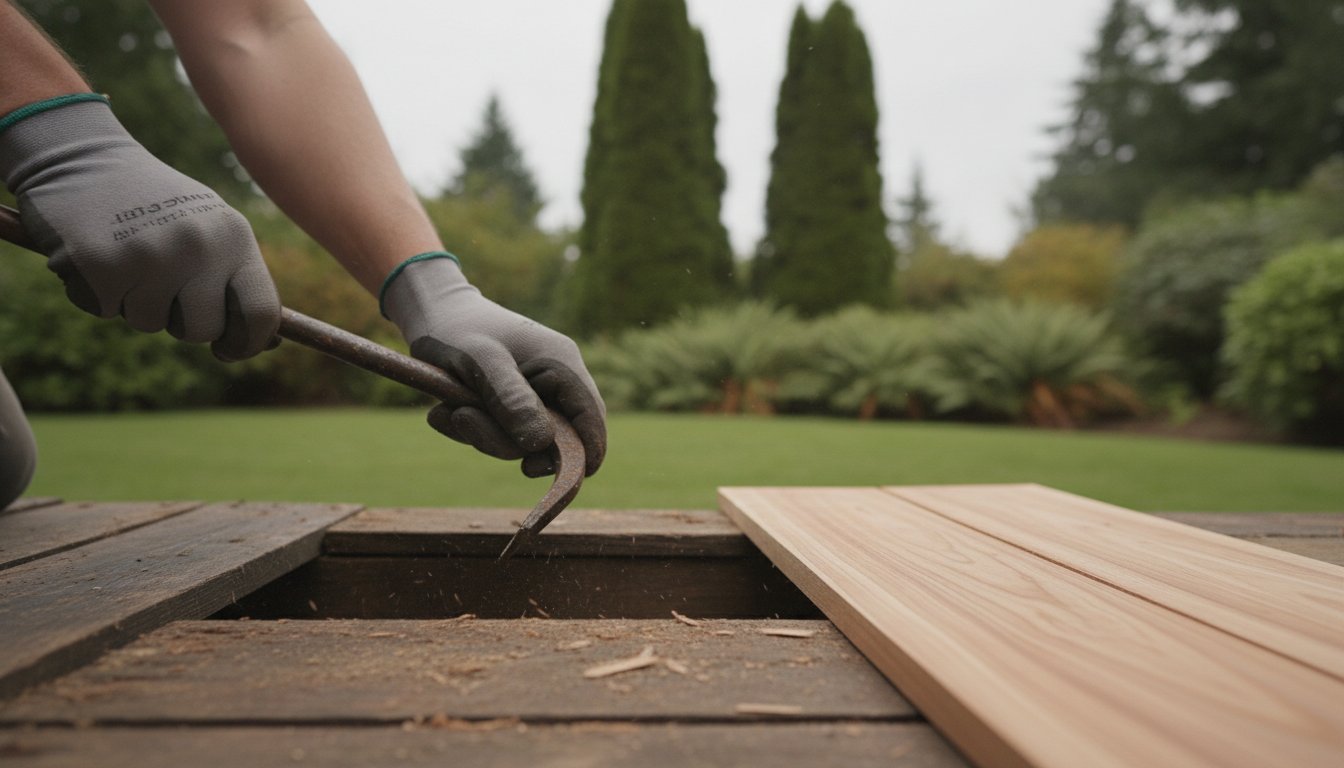
A well-executed repair doesn't just fix a problem; it actively extends the life of your entire fence. Replacing a few rotten posts or securing loose panels can add another 5 to 10 years of service to an otherwise healthy structure. For homeowners thinking about selling around 2026, this is critical. A sturdy, clean fence boosts curb appeal and signals to buyers that the home is well-maintained. A leaning, dilapidated fence, on the other hand, can become a negotiating point that costs you thousands off your asking price.
Cost-Benefit Analysis of Common Repairs
Let's break down the numbers. Professionally replacing a single rotted 4x4 post, including concrete and labor, typically costs between $200 and $350. If you need to replace an entire 8-foot section of fence panels and a post, you're looking at $400 to $700. Compare that to the cost of preventative maintenance. A professional power washing and staining for a 150-foot fence might cost $500-$800, a fraction of the $7,500+ it would cost for a full cedar replacement. Fence Longevity is the direct result of consistent, minor interventions that prevent small problems from becoming catastrophic failures.
When Replacement is the Only Option
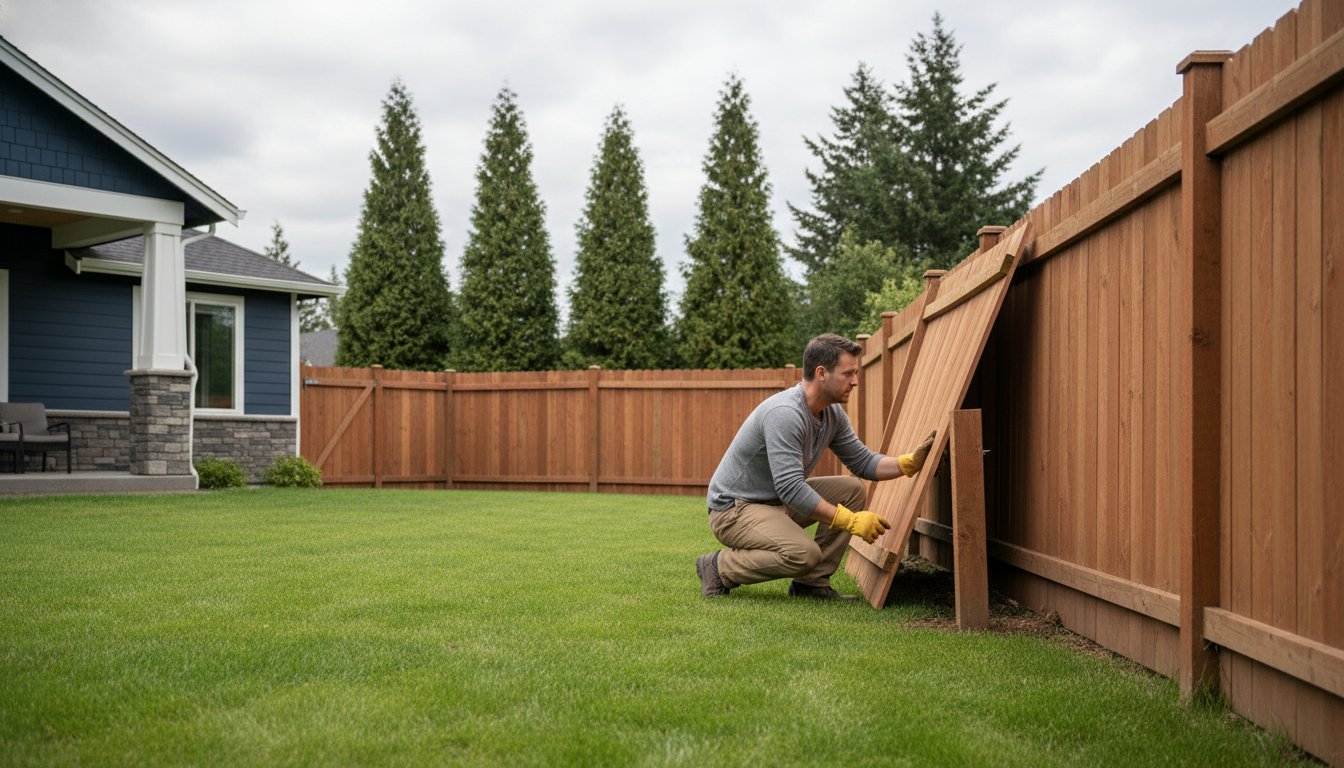
Sometimes, repairs are just not enough. We consider a fence at its "point of no return" when more than 30% of its support posts are rotted or compromised. At that stage, the structural integrity is gone, and patching it becomes a safety hazard. Other situations also demand a full replacement, such as a new property survey that reveals your fence is encroaching on a neighbor's lot or a major landscaping project that requires a different fence line. Finally, materials like vinyl and composite have repair limitations. You can't just sand and patch a large crack in a vinyl panel; the entire section must be replaced, and finding a perfect color match for a panel that's been weathering for 9 years is nearly impossible.
Step-by-Step Maintenance to Prevent Costly Fence Repairs
Your fence is a major investment. Here in Oregon, the constant cycle of rain and sun can take a serious toll on wood, vinyl, and even metal. A consistent maintenance schedule is your best defense against premature rot and the need for expensive fence repairs. Think of it like changing the oil in your car; a little effort now saves you from a massive headache later. We recommend a full inspection twice a year, once in the spring after the winter rains and again in the fall before they return.
Your bi-annual check-up should be simple and direct. Walk the entire perimeter of your fence and look for:
- Wobbly Posts: Grab each post and give it a firm shake. Any significant movement at the base is a red flag for rot or a failed concrete footing.
- Damaged Boards: Look for cracked, split, or warped pickets and rails. Pay special attention to the bottom of the fence.
- Signs of Rot: Use a screwdriver to gently poke the base of wood posts and the bottom rail. If the wood feels soft or spongy, decay has already started.
- Loose Hardware: Check gates for sagging and make sure all hinges, latches, and fasteners are secure.
Catching these small problems early prevents them from turning into major issues that compromise your entire structure. A key part of this process is keeping the base of your fence clear. Remove any soil, leaves, or vegetation piled up against the wood. This debris traps moisture and creates a perfect breeding ground for fungus and rot, which are the number one cause of post failure in the Pacific Northwest.
The Power of Softwashing and Cleaning
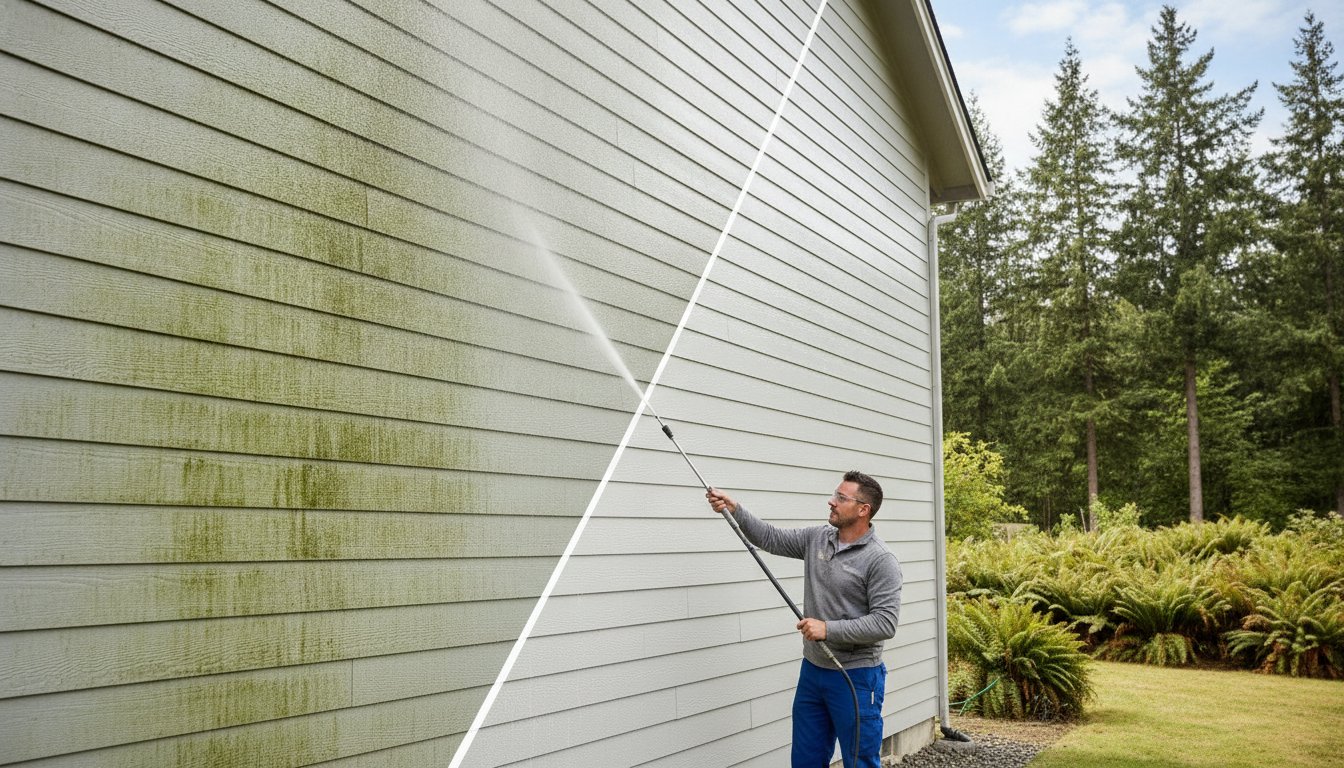
Many homeowners think a pressure washer is the answer to a dirty fence, but high-pressure streams can blast away the soft wood grain, leaving a scarred, fuzzy surface. We always use a softwashing technique. This method uses low-pressure water combined with specialized, eco-friendly cleaners to kill moss, mildew, and algae without damaging the wood fibers. Moss acts like a sponge, holding water against your fence boards and accelerating rot. Removing it is essential for longevity. This protective philosophy is the same we apply with our Softwash Moss-Off Roof Treatment; it’s about eliminating the problem, not just blasting it away.
Hardware Maintenance and Upgrades
Your fence’s hardware works hard year-round. Once a year, lubricate all gate hinges and latches with a silicone or graphite-based spray to ensure smooth operation and prevent rust. If your fence was built with standard nails, consider replacing them over time with galvanized or stainless steel screws. Screws provide superior holding power and won't "bleed" dark rust stains down your fence boards like non-galvanized nails do. For posts showing early signs of weakness at the base, installing a "post sleeve" or "post doctor" can add years of life to your existing structure without a full replacement.
A well-maintained fence not only looks better but also provides the security and privacy you depend on. If your inspection reveals rot or damage that seems beyond a simple fix, don't wait for it to get worse. Contact the Local Fishing Handyman for an expert fence assessment and repair estimate.
Professional Fence Repair Services in Oregon: Why Local Expertise Matters
Choosing the right person for your fence repairs is just as important as choosing the right materials. A wobbly post or a sagging gate isn't just an eyesore; it's a weak point in your property's security and value. While big companies focus on full replacements, a dedicated local expert provides the practical, durable solutions you actually need. It’s about getting the job done right, with an understanding of what Oregon homes truly face.
Your peace of mind starts with hiring a professional who is fully licensed, bonded, and insured. At Local Fishing Handyman, our Oregon Construction Contractors Board number is CCB#254463. This isn't just a detail; it's your protection. Licensed means we meet state standards for skill and knowledge. Bonded protects you financially if the work isn't completed as agreed. Insured covers any accidental damage to your property. Don't risk your home with an uninsured operator to save a few dollars.
Oregon's environment is tough on fences. Our heavy winter rains saturate the Willamette Valley's clay soil, causing it to expand and heave posts right out of the ground. In the fall, windstorms coming through the Columbia River Gorge can rip panels off their railings. A handyman with over 15 years of local experience understands this. We don't just replace a post; we assess the soil and use techniques, like setting posts deeper or using gravel for better drainage, to ensure the repair lasts through many Oregon seasons.
Our "Local Fishing Handyman" approach is simple: honest work, durable results, and no nonsense. We believe in fixing what’s broken with high-quality materials and proven methods. We won't try to upsell you on a full replacement when a targeted repair will secure your fence for years to come. To provide even more value, consider bundling your fence project with other exterior maintenance. If we're already on-site, it's the perfect time to handle gutter cleaning or power washing, saving you the time and hassle of coordinating multiple contractors.
The Value of a Multi-Skilled Handyman
For most repair jobs, a multi-skilled handyman is a smarter, more cost-effective choice than a large fencing company that has high overhead and minimum project fees. We focus on providing top-notch fence repairs with the attention to detail your home deserves. With over 15 years of serving our neighbors, we provide reliable solutions and genuine peace of mind. As part of our commitment to the community, we are proud to offer a senior citizen discount.
Getting Your Free Estimate
Getting a clear, honest estimate is easy. The more information you provide, the more accurate we can be. To get started, please use our contact form and include the following details:
- Clear photos of the damaged fence area from a few different angles.
- The number of fence posts and sections that need repair or replacement.
- A brief description of the problem (e.g., rot, leaning, gate issue).
Once we have your information, we'll review it and get back to you promptly. Most standard fence repair projects are scheduled and completed within just a few business days. Don't let a broken fence compromise your home's safety and curb appeal any longer.
Contact Local Fishing Handyman for your fence repair estimate today!
Secure Your Property with a Stronger Fence
Your fence is a critical part of your home's security and value. Understanding how Oregon's climate impacts your materials and knowing when a strategic fix can prevent a costly replacement are the keys to protecting your investment. Don't let a wobbly post or a few broken boards become a bigger issue down the road.
For professional fence repairs that last, nothing replaces local expertise. With over 15 years of hands-on experience in Oregon, Local Fishing Handyman delivers solutions built for our unique weather. We are fully licensed, bonded, and insured (CCB# 254463), so you get peace of mind with every job. We also proudly offer Senior Citizen Discounts.
Stop worrying about your fence and take action. Get a Free Fence Repair Estimate from Local Fishing Handyman and enjoy the security of a well-maintained property.
Frequently Asked Questions About Fence Repairs
How much do fence repairs typically cost in Oregon?
The average cost for professional fence repairs in Oregon ranges from $300 to $800. The final price depends on the extent of the damage and the type of fencing material. For example, replacing three rotted 4x4 cedar posts will cost more than simply fixing a few loose boards on a chain-link fence. We always provide a clear, upfront estimate so you know exactly what to expect before any work begins.
Can a handyman legally perform fence repairs in my area?
Yes, a handyman can legally perform fence work in Oregon as long as the total value of the job, including labor and materials, is under $1,000. This is known as the "handyman exemption" by the Oregon Construction Contractors Board (CCB). For any project exceeding this amount, the contractor must hold a valid CCB license. It's always best to hire a licensed and insured professional to protect your investment and ensure the job is done right.
Is it better to repair a leaning fence post or replace it entirely?
Replacing a leaning fence post is almost always the best long-term solution. Most posts lean because the base has rotted out below ground level, a common issue in our damp climate. A temporary brace might only last for 1-2 years. A new post set properly in concrete provides a durable foundation that can last for more than 15 years, securing your entire fence line and preventing future problems.
How long does a typical fence repair take?
Most minor fence repairs are completed in just a few hours. Replacing a handful of broken pickets or securing a loose panel can often be done in 1 to 3 hours. More significant work, like replacing 2-3 fence posts, usually takes between 4 and 6 hours. This includes time for digging, setting the new posts in concrete, and reattaching the fence sections. The concrete will need 24 hours to fully cure.
Does my fence need to be stained after it is repaired?
Yes, we highly recommend staining the new wood after a repair is completed. Staining protects the new materials from Oregon's rain and sun, preventing rot and UV damage. It also helps the new wood blend seamlessly with the rest of your existing fence. A quality stain can add 3-5 years of life to the wood, making it a smart and valuable step in the repair process.
What is the best time of year to perform fence repairs in the Pacific Northwest?
The ideal time for fence work in the Pacific Northwest is during the drier months, typically from late May through early October. The drier ground makes it much easier to dig post holes and set concrete foundations properly. This period also provides the clear weather needed for stains and sealants to cure, which usually requires at least 48 hours without rain for the best results and maximum protection.
Will my homeowners insurance cover fence repairs after a storm?
Your homeowners insurance may cover fence damage, but it depends on your specific policy. Most standard policies provide coverage for damage caused by a "covered peril," such as a windstorm, fire, or a fallen tree. However, they almost never cover damage from neglect, rot, or pests. Check your policy's "other structures" coverage, which is often set at 10% of your home's total insured value, and contact your agent.
Can I fix a sagging gate myself or do I need a pro?
You can often fix minor gate sag yourself using an anti-sag gate kit, which is available at most hardware stores for around $20-$30. These kits use a turnbuckle and cable to pull the gate back into square. However, if the sag is caused by a leaning gate post or a rotted frame, you'll need a professional. A pro can address the underlying structural issue to provide a permanent, reliable fix.