Last Tuesday, a homeowner in Hillsboro walked out to his driveway and realized his north-facing wall had turned a sickly shade of swamp green. After 165 days of typical Oregon drizzle, that vinyl siding wasn't looking white anymore. You likely feel the same frustration when you look at your home and see that fuzzy film instead of a clean finish. It's a common sight in our Pacific Northwest climate, but it often leaves folks worried about damaging their home with a high-pressure spray or taking a dangerous tumble off a ladder.
The good news is that you can restore your curb appeal without risking your safety or your siding. This guide shows you exactly how to clean green algae off vinyl siding using professional soft-wash techniques and simple DIY solutions that actually work. I've spent over 15 years helping neighbors protect their investments from the damp, and I'll share the most effective ways to get results. We will cover the best eco-friendly cleaners, the truth about bleach, and how to tell if you should handle the job yourself or call in a local expert.
Key Takeaways
- Understand why Oregon’s moist climate and your siding’s texture create the perfect environment for stubborn green algae growth.
- Learn why low-pressure soft washing is the safest professional technique to restore your home without the risks of high-pressure damage.
- Master the step-by-step process of how to clean green algae off vinyl siding using a "bottom-up" application to ensure a streak-free finish.
- Discover the best cleaning solutions for your home and why surfactants are essential for cleaning vertical surfaces effectively.
- Protect your investment with simple landscaping habits and gutter maintenance that prevent algae from returning to your siding.
Why Green Algae Grows on Oregon Vinyl Siding
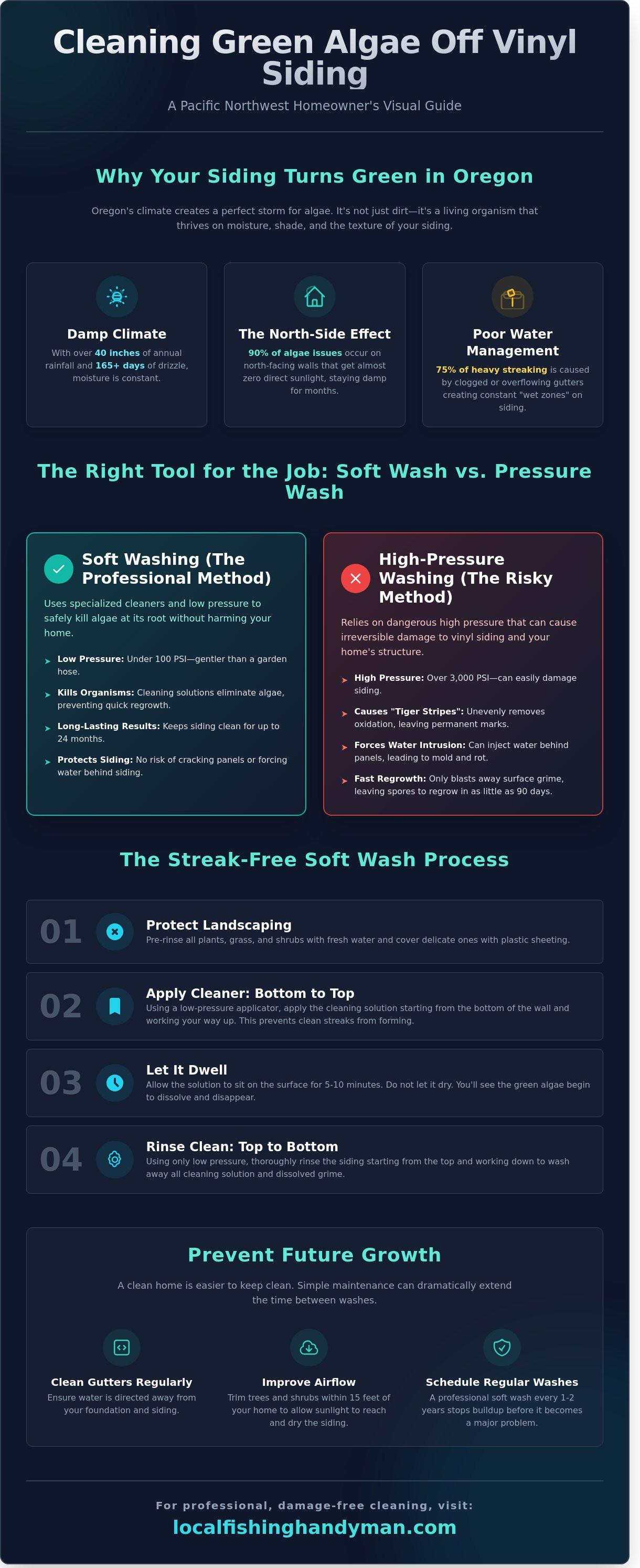
Oregon’s damp climate is a perfect breeding ground for green algae. It starts as a microscopic airborne spore that travels on the wind until it finds a wet, shaded surface. These spores aren't just dirt; they are living organisms that thrive in our high-humidity environment. Vinyl siding is a common host because its manufactured texture provides tiny crevices where spores can take root. Unlike wood, vinyl doesn't soak up heat, so it stays cool and damp longer after a typical Willamette Valley rainstorm.
Most of the green buildup you see is a combination of algae and Gloeocapsa magma, which is a hardy type of bacteria. In regions like Western Oregon, where we often see over 40 inches of annual rainfall, the moisture levels rarely drop low enough to kill these spores naturally. Knowing how to clean green algae off vinyl siding starts with understanding that this is a surface-level issue. It is different from black mold or mildew, which can indicate deeper moisture problems behind your home's envelope. Surface algae is usually a vibrant green and feels slippery, while mold appears as dark, stubborn spots.
The North-Side Shadow Effect
The north side of your house is the primary target for growth. In cities like Portland or Eugene, north-facing walls receive almost zero direct sunlight for six months of the year. These walls can stay damp for 24 hours a day during the winter. Without UV light to bake the siding and kill the spores, algae colonizes quickly. If you have Douglas firs or large shrubs within 15 feet of your home, the extra shade and organic debris accelerate the problem. We see 90% of all algae issues concentrated on these shaded elevations.
Moisture and Your Home's Envelope
Poor water management is the biggest contributor to localized algae growth. We find that 75% of heavy green streaking is caused by overflowing or clogged gutters. When water spills over the edge of the gutter, it creates a constant "wet zone" on your vinyl siding. This localized moisture also pools at the foundation, creating a humid microclimate that feeds the algae from the bottom up. Learning how to clean green algae off vinyl siding is a great first step for maintenance, but it's also a signal to check your downspouts. Keeping your exterior dry is the best way to protect your 30-year siding investment and maintain your home's curb appeal.
Soft Washing vs. Pressure Washing: Which is Safer?
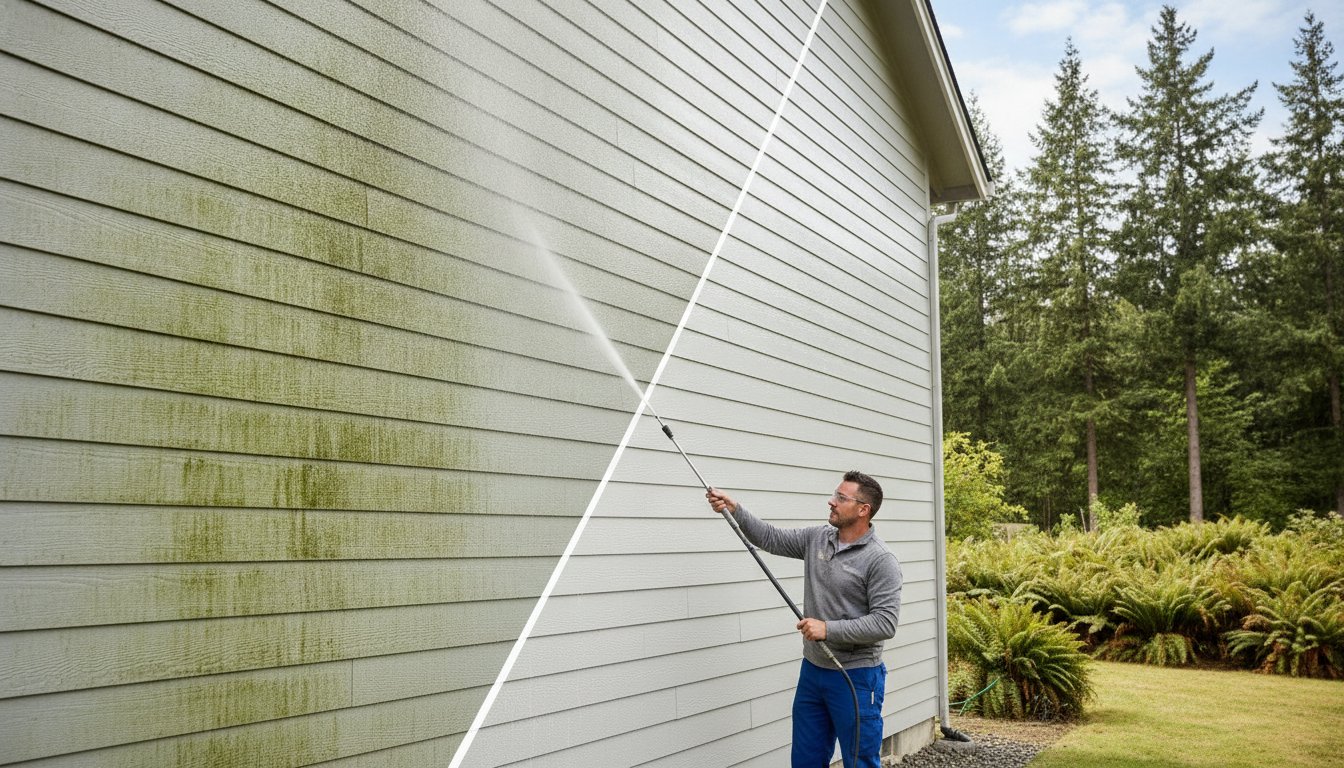
When you are researching how to clean green algae off vinyl siding, you will find two main methods: brute force or smart chemistry. High pressure power washing often exceeds 3,000 PSI. While that power is great for a concrete driveway, it is far too aggressive for your home's exterior. Soft washing is the alternative. It uses low pressure, typically under 100 PSI, combined with specialized cleaning solutions to melt away grime. After 15 years of serving Oregon homeowners, I rarely use high pressure on vinyl. It is about protecting your siding's warranty and your home's structural integrity.
The Danger of High Pressure on Vinyl
High pressure causes permanent damage that many homeowners do not notice until the sun hits the siding at a certain angle. If your siding is more than 7 or 8 years old, it likely has a thin layer of oxidation. A 3,000 PSI stream blasts through that chalky layer unevenly, creating permanent "tiger stripes" that no amount of scrubbing can fix. Even worse, vinyl siding is designed with weep holes for drainage. High pressure forces gallons of water directly behind the panels. This trapped moisture leads to hidden wood rot and black mold within your wall cavities. During a typical Oregon spring, when temperatures often sit near 45 degrees, vinyl becomes brittle. A single misplaced blast can crack a panel, leading to a repair bill that costs upwards of $450 for a single section.
Why Soft Washing is the Professional Standard
Soft washing lets the cleaning agents do the heavy lifting so the water doesn't have to. These solutions don't just rinse the surface; they kill the biological growth at the root. Understanding the science of algae on buildings shows that these microorganisms anchor themselves into the texture of the material. If you only use water, you leave microscopic spores behind that regrow in as little as 90 days. Soft washing ensures the spores are dead, which keeps your home clean for up to 24 months. It is also much safer for the operator. We can clean a two-story home while standing firmly on the ground, avoiding the dangerous kickback of a high-pressure wand on a ladder. If you want to ensure the job is done right without the risk, you can check our availability for a professional soft wash. This approach is the most reliable way to handle how to clean green algae off vinyl siding while keeping your investment 100% safe.
The Best Vinyl Siding Cleaners for Algae Removal
Picking the right solution determines if you're scrubbing for an hour or a full day. In Oregon, our 40 plus inches of annual rainfall means algae isn't just a possibility; it's a guarantee. Knowing how to clean green algae off vinyl siding effectively starts with choosing the right chemical balance for the job. You need a cleaner that stays on the wall long enough to work. This is where surfactants come in. These ingredients break the surface tension, allowing the solution to cling to vertical siding rather than just running onto your flower beds or into the local storm drains.
I've spent over 15 years looking at North-facing walls covered in green film. A common mistake is using a pressure washer with plain water. This usually just pushes the spores deeper into the siding laps. You need a chemical kill to ensure the growth doesn't return within 30 days. Always consider the runoff. Oregon's waterways are sensitive, and what you spray on your house eventually hits the groundwater.
DIY Kitchen Solutions (The Gentle Approach)
A 70/30 mix of water and white vinegar works for 60 percent of light algae cases. It's safe for your vegetable garden but lacks the punch for thick growth. To make it better, add two tablespoons of Dawn dish soap. This turns the liquid into a sticky film that dwells on the surface. If you have simple laundry detergent, a half-cup mixed into a five-gallon bucket provides a mild alkaline boost. This helps lift organic stains without damaging the vinyl's factory finish.
Oxygen Bleach vs. Chlorine Bleach
Oxygen bleach, or sodium percarbonate, is my top choice for homeowners worried about their landscaping. It releases oxygen to lift the grime and breaks down into soda ash and water within 24 hours. It won't kill your grass if you overspray. Chlorine bleach is stronger and necessary for those stubborn black mold spots. Use a 10 percent dilution of chlorine bleach to avoid stripping the color from your siding. Never mix ammonia-based window cleaners with any bleach solution. Doing so creates toxic chloramine gas, which is a serious health hazard for you and your pets.
Store-bought hose-end sprayers are a popular shortcut. Most contain a 5 percent concentration of sodium hypochlorite. They're convenient for reaching a second story without a ladder, but they often lack the dwell time needed for heavy buildup. If you use these products, work in small 4-foot sections. This ensures the chemicals don't dry on the vinyl before you can rinse them off. A dry chemical film can leave permanent streaks on your siding that are nearly impossible to remove later.
Step-by-Step: How to Clean Your Siding Without Damage
Before you mix your solution, take 20 minutes to prep your home. Close every window and door tight. Use heavy-duty plastic and painter's tape to cover exterior electrical outlets and light fixtures. Oregon gardens are a point of pride, so soak your plants, grass, and shrubs with fresh water from the hose before you start. This pre-wetting prevents the foliage from absorbing any cleaning chemicals that might splash during the process.
Tools You Will Actually Need
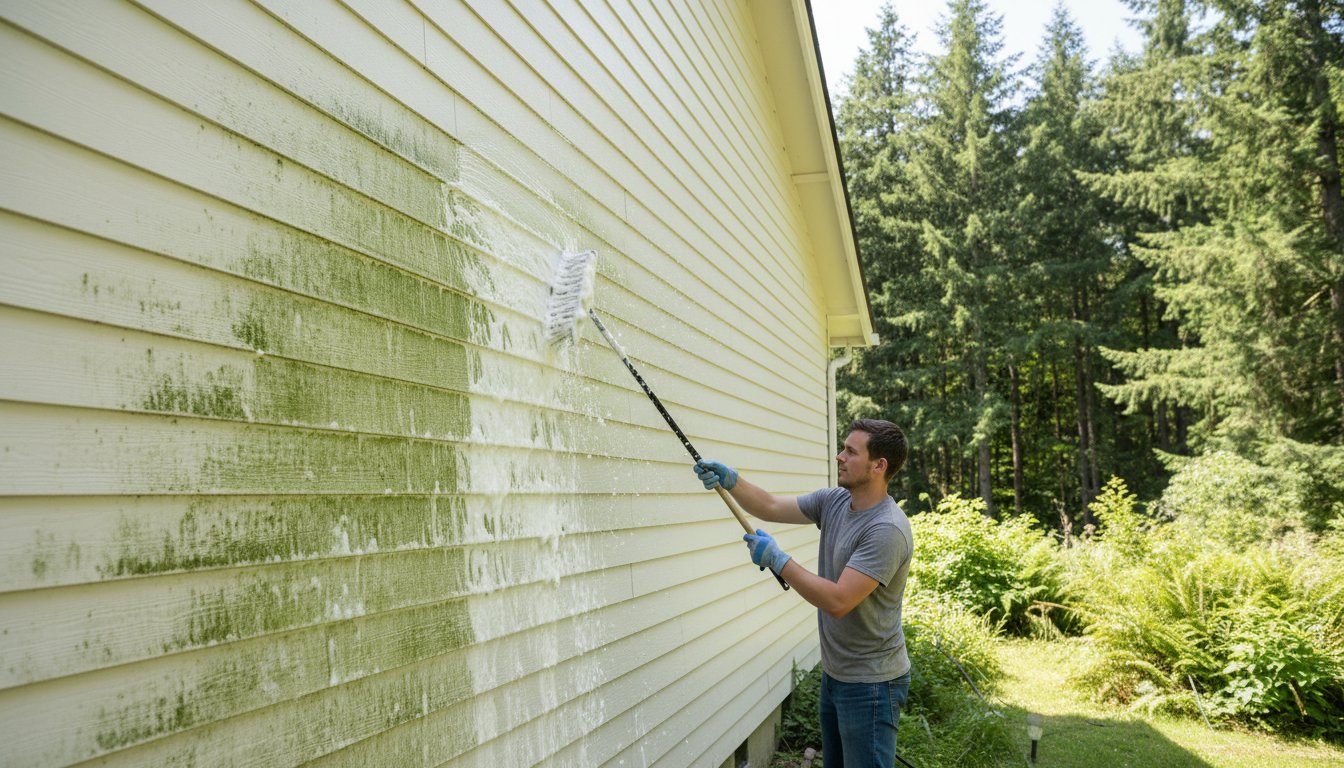
You don't need a high-pressure power washer to learn how to clean green algae off vinyl siding. In fact, a standard garden hose with a high-quality spray nozzle is usually enough for 90 percent of homes. You should invest in a soft-bristle siding brush attached to an extension pole. This allows you to reach the second story without a ladder. Safety gear is non-negotiable. Wear wrap-around eye protection because you will be spraying cleaners overhead, and even a small drop of soap can cause a painful chemical burn.
The application follows a strict "Bottom-Up" rule. Start applying your cleaning solution at the foundation and work your way toward the roof. If you start at the top, the dirty suds will run down over dry siding and create permanent streak marks that are nearly impossible to scrub away later. Let the chemistry work for 10 to 15 minutes. Watch the clock closely. You want the cleaner to dwell on the algae, but you must never let it dry on the surface. If the sun is out, mist the siding lightly with water to keep it damp.
The Proper Scrubbing Technique
Use a gentle circular motion to lift the grime without scratching the vinyl surface. Keep a close eye on your brush bristles. If you notice the actual color of your siding transferring to the brush, you're using too much force. Many homes over 12 years old will have a chalky residue known as oxidation. When you scrub these areas, the water will look milky. This is normal, but it means you must rinse thoroughly to prevent a patchy, uneven finish once the house dries.
Rinsing requires the "Top-Down" rule. Start at the highest point and wash the residue toward the ground. This ensures that no dirty water or soap film gets trapped in the laps of the vinyl. After the first rinse, do a final walk-around to inspect the work. Spot-treat any stubborn black mold spots or thick algae clumps that survived the first pass. If the job feels overwhelming, you can always hire a professional handyman to clean your siding and protect your investment.
Preventing Future Algae Growth & Professional Maintenance
Learning how to clean green algae off vinyl siding is only half the battle; keeping it off requires a proactive strategy. Oregon's 40 plus inches of annual rainfall creates a constant breeding ground for spores. You can fight back by following the two-foot rule. Keep all shrubs, trees, and groundcover trimmed at least 24 inches away from your home's exterior. This gap allows air to circulate and sunlight to hit the panels, which dries out moisture before algae can take root. While homeowners can learn how to clean green algae off vinyl siding using basic tools, professional maintenance ensures a deeper, longer-lasting result.
Don't ignore your gutters. When gutters clog with needles or debris, water spills over the edge and runs directly down your siding. This constant moisture leads to dark green streaks that are difficult to remove. Keeping your drainage system clear is the most effective way to protect your siding investment and prevent recurring organic growth.
To help maintain your drainage system and prevent these issues, you can visit J Racenstein for professional-grade gutter cleaning tools and equipment.
Annual Maintenance Checklist
Schedule your inspection for late spring, typically between May and June, once the heavy rains subside. Use this time to look for "unzipped" or loose panels that can trap water against your sheathing. Check for roof runoff issues where water might be hitting a specific spot with too much force. Identifying these small 15-minute fixes prevents expensive structural rot later. A quick walk-around once a year keeps your home's envelope secure.
When to Hire a Licensed Oregon Handyman
Most homeowners hit a "Ladder Limit" at about 10 feet. Working on a second story with a pressure washer or scrub brush is dangerous and best left to insured professionals. Sometimes, removing the algae reveals underlying damage like cracked panels or failed caulking that needs immediate attention. Local Fishing Handyman brings 15 years of experience to every job, ensuring your home stays watertight and beautiful. We provide the peace of mind that comes from hiring a licensed, bonded, and insured expert who understands the unique challenges of Pacific Northwest weather.
Contact Local Fishing Handyman for an expert exterior refresh to handle the heights and the hard work for you. We offer reliable, top-notch services that protect your home's longevity and curb appeal.
Restore Your Home's Curb Appeal and Prevent Damage
Dealing with Oregon's damp climate means fighting a constant battle against organic growth. You've learned that soft washing protects your siding's integrity; high-pressure water often causes expensive leaks or cracks behind the panels. Using the right biodegradable cleaners and a steady hand keeps your home's exterior durable for decades. Understanding how to clean green algae off vinyl siding helps you maintain your property value without causing accidental damage. It's a job that requires patience and the right equipment to ensure the spores don't return next season.
Local Fishing Handyman brings over 15 years of local Oregon experience to every project we tackle. We're fully Licensed, Bonded, and Insured under CCB#254463 to give you total peace of mind while we work on your property. Our team understands the specific challenges of Pacific Northwest weather and how it affects your home's exterior longevity. We also offer Senior Citizen Discounts to support our community neighbors and keep local homes looking their best year-round. Don't let a little green growth turn into a big repair bill later on.
Get a Free Estimate for Siding Cleaning & Repairs
Your home deserves to look its best, so let's get that siding back to its original shine today.
Frequently Asked Questions
Is it okay to use a pressure washer on vinyl siding for algae?
You can use a pressure washer if you keep the setting below 1,500 PSI to avoid damage. High pressure can blast water behind the panels or cause 20 year old vinyl to crack. Always spray at a downward angle to protect the weep holes. This prevents moisture from getting trapped in your wall sheathing, which can lead to rot over 5 to 10 years.
Will bleach damage my vinyl siding if I leave it on too long?
Bleach can cause permanent fading or white streaks if you leave it on for more than 10 minutes. Use a ratio of 1 part bleach to 4 parts water for a safe cleaning mix. It's best to rinse the siding within 5 minutes of application. This prevents the chemicals from drying and damaging the finish on your 0.040 inch thick vinyl panels.
How often should I clean the algae off my house in Oregon?
Plan to clean your siding every 12 to 18 months to keep up with Oregon's damp climate. Our state sees over 150 rainy days a year, which provides constant moisture for organic growth. Regular washing prevents the 100 percent coverage that often occurs on north-facing walls. It's a simple way to protect your home's curb value and stop permanent staining.
What is the best time of year to wash my siding?
The best time for cleaning is late spring, specifically during the months of May and June. Temperatures in Oregon usually hover between 60 and 70 degrees during this window. This mild weather prevents your cleaning solution from drying too fast. If it's over 85 degrees, the soap can bake onto the vinyl and leave spots that take 2 hours to scrub off.
Can green algae on my siding cause health problems?
Green algae is mostly a cosmetic problem, but it often hides mold that can affect your health. Roughly 1 in 5 people suffer from mold sensitivities or respiratory issues. When algae builds up, it traps moisture against the house. This creates a breeding ground for spores that can eventually enter your home through 1/4 inch gaps around windows or doors.
How do I stop algae from coming back on the north side of my house?
You can slow the growth by trimming all bushes and tree branches to at least 3 feet away from your siding. This increases airflow and lets in more sunlight to dry the surface. Knowing how to clean green algae off vinyl siding with a vinegar solution also helps. This 5 percent acidity level creates an environment where new spores can't easily take root.
Do I need to scrub the siding, or can I just spray it off?
You usually need to scrub the surface because a simple spray only removes about 50 percent of the buildup. A soft-bristled brush on a 10 foot pole works best for reaching high spots. This manual agitation is a key part of how to clean green algae off vinyl siding effectively. It ensures you break the biological bond so the algae doesn't return within 3 months.
What should I do if the algae has turned black?
Black spots indicate that the algae has died or evolved into mold, which requires a stronger 1 to 3 bleach-to-water ratio. You should also add 1/2 cup of laundry detergent to help the mix stick to the vertical surface. Let the solution sit for exactly 6 minutes before scrubbing. This kills 99 percent of the spores and prevents the black stains from spreading further.