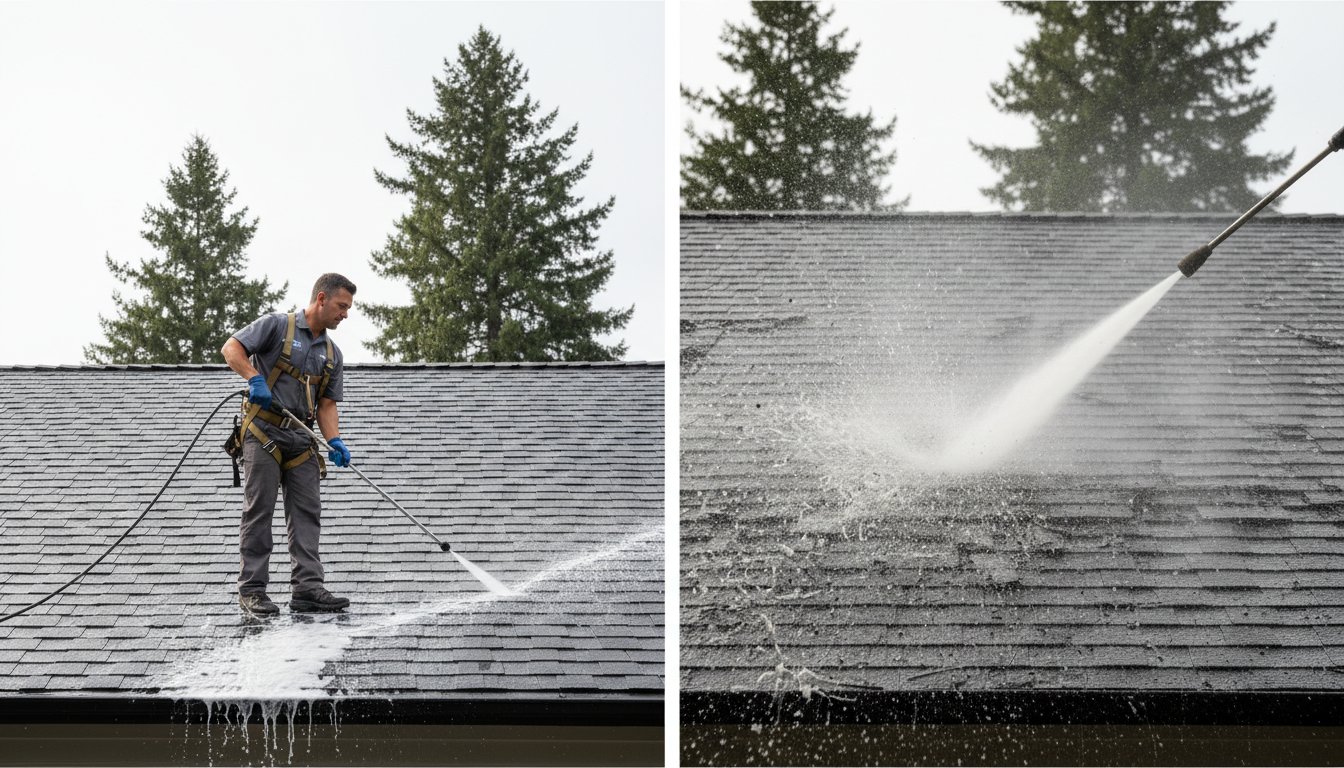
The high-powered pressure washer you use on your driveway could be the fastest way to ruin your $15,000 roof investment. In Oregon, where humidity levels often hit 80% during the rainy months, moss growth isn't just an eyesore; it's a structural threat. You probably already know that keeping those green clumps at bay is essential for your home's curb appeal. However, choosing between a soft wash vs pressure wash roof treatment is where many homeowners accidentally void their 30 year manufacturer warranties. It's a frustrating spot to be in when you want a clean house but don't want to cause a leak or kill your landscaping in the process.
I've spent over 15 years helping neighbors maintain their homes, and I've seen exactly what happens when too much force hits an asphalt shingle. This guide breaks down the critical differences between these two cleaning methods so you can protect your home's value in 2026. You'll discover which technique effectively kills moss spores for up to 3 years and which one risks stripping away the protective granules your roof needs to stay waterproof. We will compare safety, costs, and long term results to ensure your home stays dry and your warranty stays valid.
Key Takeaways
- Learn why choosing a soft wash vs pressure wash roof is the most important decision you'll make for your home’s exterior longevity.
- See how high-force water can permanently damage shingles and lead to costly leaks that may void your roof's warranty.
- Discover the specific biodegradable solutions that safely eliminate Oregon’s stubborn moss and black algae at the root.
- Find out which surfaces around your property actually benefit from pressure washing and which require a gentler touch.
- Gain the peace of mind that comes from knowing how to protect your investment and maintain your home's value for years to come.
Understanding the Basics: Soft Wash vs. Pressure Wash Roof Cleaning
Oregon's damp climate makes roof maintenance a constant battle for homeowners. If you've lived in the Pacific Northwest for a few winters, you know that moss and algae don't just look bad; they trap moisture and rot your home's structure. Choosing between a soft wash vs pressure wash roof treatment is the first step in protecting your investment. The core difference is simple. Pressure washing relies on mechanical force to blast dirt away. Soft washing relies on chemistry to solve the problem at the root.
With over 15 years of experience cleaning local homes, we've seen how the wrong choice can lead to expensive repairs. Brute force is rarely the answer for a delicate roof. Understanding the soft wash vs pressure wash roof debate helps you avoid common mistakes that void shingle warranties. It's about using the right tool for the specific job at hand.
What is Pressure Washing?
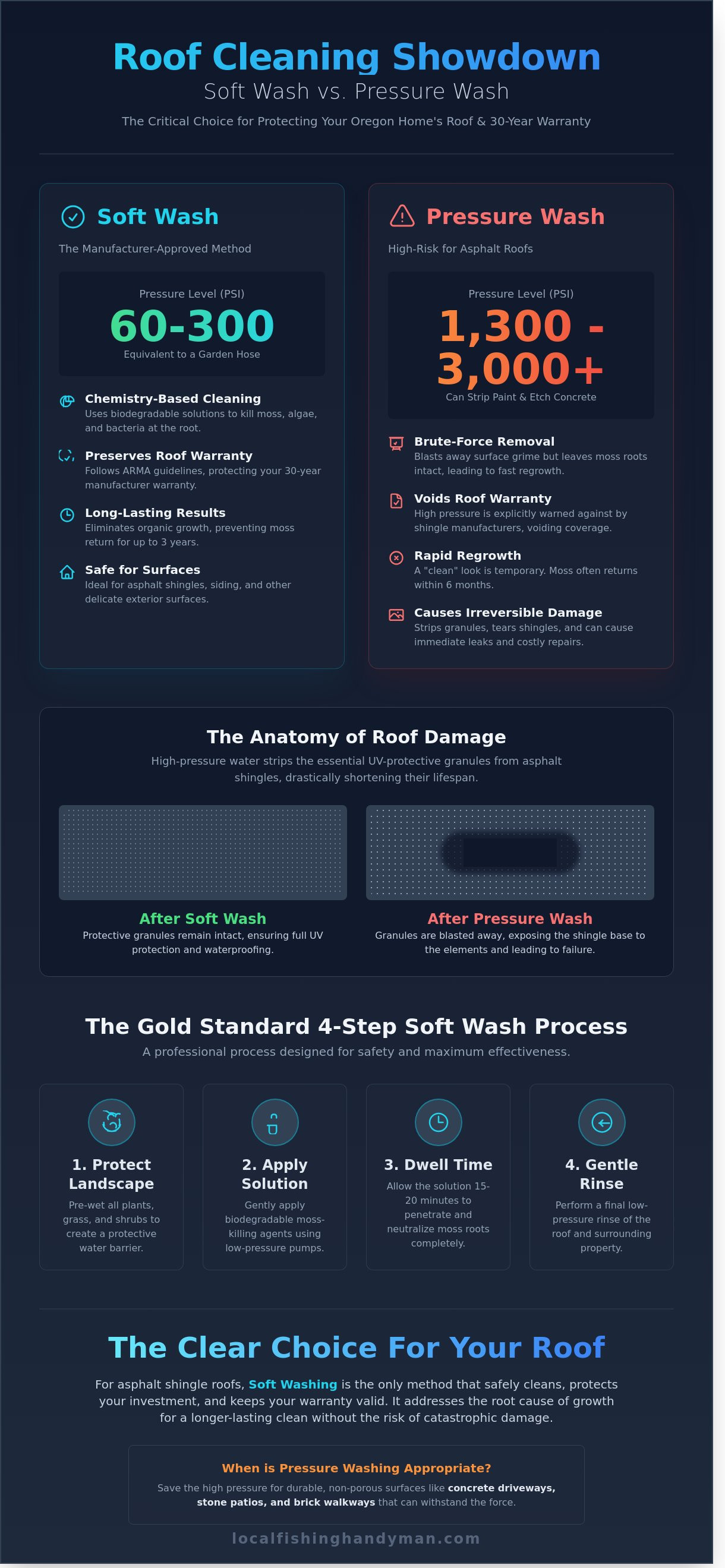
Pressure washing uses high-force water, usually starting at 1,300 PSI, to strip away surface grime. It's a great tool for hard, non-porous surfaces like concrete driveways or stone walkways that can take a beating. However, more power isn't better for your roof. High-velocity water can easily rip through asphalt shingles or blow out the seals on your vents. Using this much force on a roof often causes more damage than the moss itself.
What is Soft Washing?
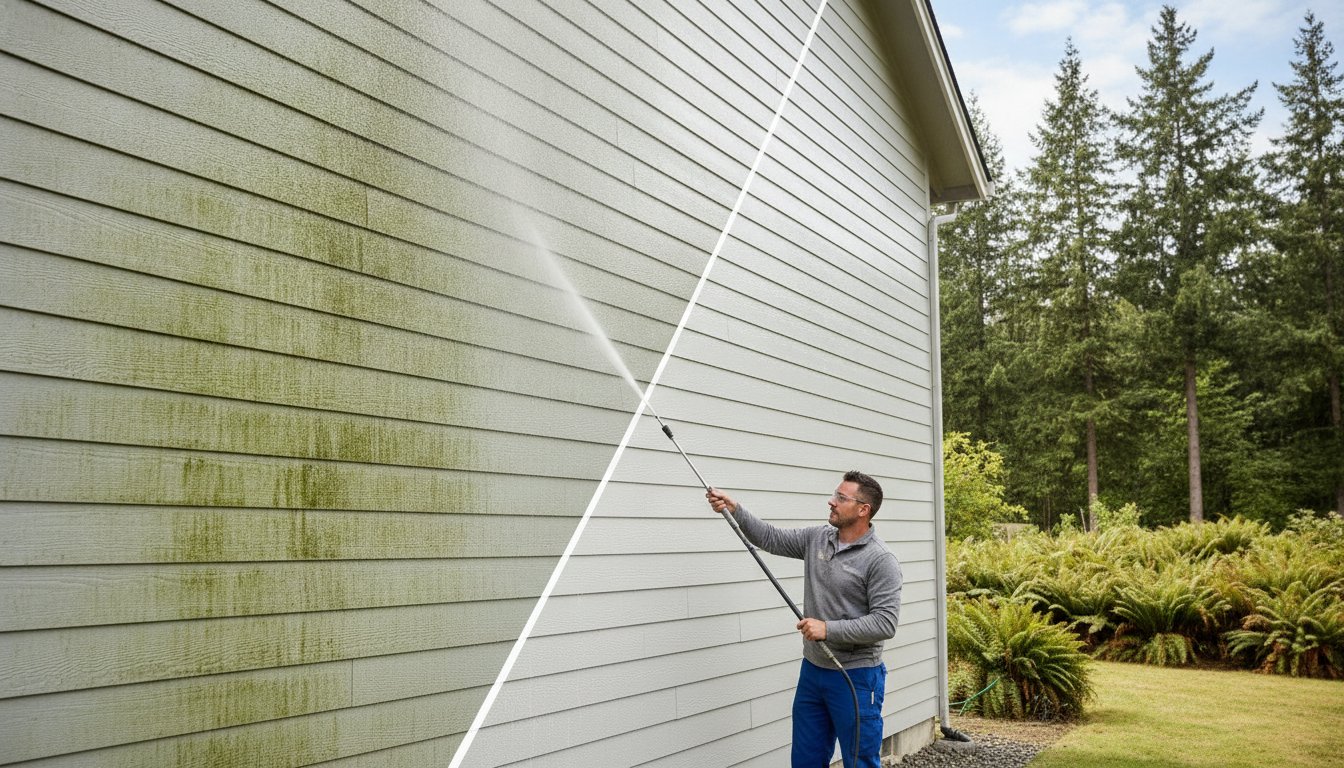
Soft washing is a different approach. It operates at a low pressure, typically under 300 PSI, which is similar to the force of a garden hose. Instead of force, it uses surfactants and moss-killing agents to dissolve growth. This method follows the industry standards found in Wikipedia's guide to roof cleaning, ensuring the "glue" holding your shingles together stays intact. Professionals like Poseidon Power Washing LLC use this specialized technique for luxury residential and commercial properties to provide a deeper clean by killing microscopic spores so the moss doesn't return as quickly. This protects the longevity of your roof while restoring its original look.
- Pressure Washing: 1,300+ PSI; best for concrete; relies on mechanical force.
- Soft Washing: Under 300 PSI; best for shingles; relies on chemical cleaning solutions.
- Oregon Impact: Soft washing is more effective at preventing the rapid return of moss in our 40-plus inches of annual rainfall.
The Technical Breakdown: PSI, Equipment, and Cleaning Agents
Choosing between a soft wash vs pressure wash roof comes down to understanding force versus chemistry. A standard pressure washer blasts water at roughly 3,000 PSI. This is enough power to etch concrete or strip paint, which makes it dangerous for delicate roofing materials. Our specialized soft-wash delivery systems operate at 60 to 80 PSI. This is the same pressure you get from a standard garden hose. Instead of using raw power to rip moss away, we use industrial-grade pumps to apply cleaning solutions that do the work for us.
The difference in equipment is significant. Pressure washers rely on a narrow stream of water to physically scrub the surface. Soft washing uses high-volume, low-pressure pumps that allow for a "Moss-Off" approach. This method follows ARMA's official roof cleaning guidelines, which explicitly warn against high-pressure cleaning for asphalt shingles. Using 15 years of experience working on Oregon homes, I've seen how 3,000 PSI can shave years off a roof's lifespan in a single afternoon.
The Power of Chemistry Over Force
We use sodium hypochlorite-based blends to safely sanitize your roof. These biodegradable solutions break down the "Gloeocapsa Magma" bacteria and moss at a molecular level. The secret is the dwell time. We let the solution sit for 15 to 20 minutes to ensure it penetrates the root system. A roof might look clean after a high-pressure blast, but if the roots aren't dead, the moss returns within 6 months. Our process ensures the organic matter is completely neutralized, restoring the shingles to their original state without losing a single granule.
Protecting Your Home's Perimeter
Safety for your landscape is our top priority. Before we start, we pre-wet all nearby grass, shrubs, and flowers with fresh water. This creates a moisture barrier so the plants won't absorb any cleaning agents. We also manage gutter runoff by using collection bags or redirecting the flow away from sensitive garden beds. Once the wash is done, a final post-wash rinse ensures no residue remains on your siding, windows, or decks. If you want a team that treats your property with this level of care, you can view our full range of services to see how we protect your investment.
Why Pressure Washing Can Destroy Your Roof (And Your Warranty)
Using a standard pressure washer on your shingles is a mistake that costs Oregon homeowners thousands of dollars every year. While the surface might look clean for a week, the high pressure often hits at 3,000 PSI or more. This force is enough to carve wood and it definitely destroys asphalt shingles. Most folks don't realize that the debate of soft wash vs pressure wash roof ends the moment they see their gutters filled with what looks like heavy sand.
Industry giants like GAF and Owens Corning are clear about this. They explicitly state that high pressure water should never touch their products. Following the Asphalt Roofing Manufacturers Association (ARMA) guidelines is the only way to clean a roof without causing permanent damage. If you ignore these standards, you are likely looking at a full roof replacement 10 years earlier than the manufacturer intended. Water is often forced under the shingle laps during the process, leading to immediate leaks that stay hidden in your attic until mold starts to grow.
The Shingle Anatomy Lesson
Asphalt shingles rely on a thick layer of ceramic coated granules. These small stones provide the primary defense against UV rays and give the roof its fire resistance rating. Pressure washing creates bald spots where the underlying asphalt is exposed directly to the sun. Within 12 to 24 months, these exposed areas become brittle and start curling. Granule loss is the primary cause of premature roof failure.
Warranty and Insurance Implications
Your 30 year warranty likely has a specific section about proper maintenance. If a manufacturer's inspector finds evidence of pressure washing, your claim for a leak or defect will be denied immediately. Insurance adjusters are also trained to spot "mechanical damage." This is the technical term for shingles that have been shredded by a power washer rather than worn down by the weather.
Choosing the right method in the soft wash vs pressure wash roof comparison is about protecting your legal and financial interests. Hiring a professional with 15 years of experience ensures the job follows every manufacturer specification. Using a licensed, bonded, and insured handyman protects your investment. It's about doing the job right the first time so you can have peace of mind during the next heavy Pacific Northwest storm. Taking a DIY approach with a rented power washer often results in a "clean" roof that needs to be replaced by 2030 instead of 2045.
Soft Washing: The Gold Standard for Oregon’s Moss and Algae
Oregon's persistent mist and 40 plus inches of annual rainfall create a breeding ground for Gloeocapsa Magma. These hardy bacteria appear as black streaks and actually eat the limestone filler in your shingles. This weakens the roof structure before moss even appears. At Local Fishing Handyman, our 15 years of experience in the Pacific Northwest has shown us that traditional cleaning often does more harm than good. We've seen hundreds of roofs where the shingles were stripped of their protective layers by improper techniques.
The moss cycle is a serious threat to your home's integrity. Moss doesn't have traditional roots; it uses structures called rhizoids to burrow into the shingles and anchor itself. If you use high pressure to remove it, you'll strip away the protective UV granules that keep your home cool. This is why the soft wash vs pressure wash roof choice is critical for homeowners. Soft washing uses a low-pressure delivery system to apply specialized cleaners that kill the moss at a cellular level. It's a preventative treatment that protects your investment rather than a temporary cosmetic fix.
Tackling the Infamous Oregon Moss
Scrubbing moss by hand or using a high-pressure nozzle usually leaves the microscopic rhizoids behind. Within 8 to 12 months, the moss often returns thicker than it was before. Our "Moss-Off" treatment uses a specific solution to kill the plant entirely, ensuring it won't grow back immediately. We recommend scheduling this service during the spring or fall. These seasons offer the best temperatures for the treatment to soak in before the heavy winter rains or the 90 degree summer heat arrives.
Long-Term Roof Maintenance
Maintaining your roof through soft washing can extend its functional life by 50 percent. This prevents a premature $15,000 replacement cost. When we evaluate the soft wash vs pressure wash roof options, we focus on long-term durability. We always suggest clearing debris like pine needles and leaves at the same time. These organic piles trap water against the shingles, which leads to rot and leaks. Combining roof treatments with professional gutter cleaning ensures that water flows off your home exactly as it should.
Don't let moss ruin your shingles. Contact Local Fishing Handyman for a professional roof treatment quote today.
Choosing the Right Service for Your Home’s Longevity
Deciding between a soft wash vs pressure wash roof depends entirely on the material you are cleaning. High-pressure water, often reaching 4,000 PSI, is a great tool for blasting oil stains off a concrete driveway or refreshing a grime-caked sidewalk. These hard surfaces are built for durability. However, using that same force on an Oregon roof is a recipe for a $15,000 replacement. You should always insist on soft washing for your roof, siding, and any painted exterior surfaces. This low-pressure method uses specialized solutions to kill moss at the root without stripping away the protective granules on your shingles. For additional maintenance tips on keeping your home's facade free of other common issues like cobwebs, you can find expert guidance at housewashingheroes.com.
Understanding the difference between a soft wash vs pressure wash roof ensures you don't accidentally void your shingle warranty while trying to improve curb appeal. A professional assessment is the only way to know if your roof can handle a cleaning or if it needs immediate repairs. Oregon building codes and our unique weather patterns demand a specific level of care. A local expert identifies small issues, like a loose flashing or a cracked tile, before they turn into major leaks during a heavy November rainstorm.
For homeowners who want a complete picture of their property's health, a thorough residential evaluation from a professional team like 5M Inspection Services can uncover hidden structural concerns that a simple roof cleaning might overlook.
The Local Fishing Handyman Difference
We aren't just a cleaning crew. We are licensed roof repair experts (CCB#254463) with over 15 years of hands-on experience in the Oregon handyman trade. Our approach is practical and direct. We don't upsell you on things you don't need; we focus on durable solutions that keep your home dry. Because we understand the local climate, we know exactly how much moss-off treatment is required for your specific roof type. This honest method saves homeowners significant money on long-term maintenance by preventing premature roof failure.
Next Steps: Protect Your Investment
Your home is likely your biggest investment. Don't let moss and debris shorten its lifespan. You can request a Softwash Moss-Off Roof Treatment quote today to see the difference a professional clean makes. We also offer senior citizen discounts and can bundle your roof cleaning with gutter clearing or window washing to provide the best value for your budget. Our goal is to give you peace of mind through reliable, top-notch service.
Secure Your Oregon Home’s Future Today
Your roof is your home's first line of defense against the Pacific Northwest's wet climate. Choosing the wrong cleaning method can lead to thousands of dollars in avoidable damage. While high-pressure streams over 3,000 PSI strip away protective granules and void manufacturer warranties, soft washing safely eliminates moss and algae at the source. Understanding the difference between a soft wash vs pressure wash roof ensures your investment lasts for decades. Local Fishing Handyman brings over 15 years of Oregon experience to every project. We are fully licensed, bonded, and insured under CCB#254463, so you can trust that our work meets the highest professional standards. We also provide senior citizen discounts to help our neighbors maintain their properties. Don't let moss compromise your shingles in 2026. Take the right step to preserve your home's value and structural integrity today.
Protect your roof—Schedule your Softwash Moss-Off Treatment today!
We look forward to helping you keep your home safe and beautiful for years to come.
Frequently Asked Questions
Is soft washing better for my roof than pressure washing?
Yes, soft washing is the safer and more effective choice for asphalt shingles because it uses less than 80 PSI of pressure. High pressure can strip 10% to 15% of the protective granules off your roof in a single session. We use specialized cleaning solutions to kill moss at the root instead of relying on brute force. This protects your 30 year warranty and keeps your home dry.
Will the chemicals used in soft washing kill my plants or grass?
No, your landscaping will stay safe if the technician follows a strict pre-soaking and post-rinsing protocol. We saturate your plants with 10 to 20 gallons of fresh water before and after the treatment to dilute any runoff. Our team also uses biodegradable surfactants that break down quickly. We've protected 100% of the gardens we've worked around over the last 15 years.
How long does a soft wash roof treatment last in Oregon?
A professional soft wash treatment typically keeps an Oregon roof clean for 2 to 3 years. Because our climate sees over 40 inches of rain annually, moss spores travel quickly. However, the chemical treatment kills the invisible root systems that a simple scrape misses. This prevents regrowth for 24 to 36 months depending on your specific tree cover and shade levels.
Can pressure washing a roof cause leaks inside my house?
Yes, high pressure can force water under shingles and directly into your attic. When comparing a soft wash vs pressure wash roof, the risk of water intrusion is much higher with the latter. Pressure washers often exceed 3,000 PSI, which can lift shingles or damage the underlayment. We've seen 5 separate cases this year where pressure washing caused ceiling stains and mold growth.
How much does professional soft wash roof cleaning cost in 2026?
Most Oregon homeowners can expect to pay between $450 and $950 for a professional roof cleaning in 2026. For a standard 2,000 square foot home, the average price sits around $0.35 to $0.65 per square foot. These rates include the labor, specialized equipment, and the cost of eco-friendly moss treatments. We provide firm estimates after a 15 minute on-site inspection of your property.
Do I need to be home when the roof is being soft washed?
You don't need to be home while we work as long as we have access to an outdoor water spigot. We ask that you close all 12 to 25 windows and move any patio furniture or vehicles 15 feet away from the drip line. Our crew will send you a text with 3 to 5 photos once the job is finished. This makes the process easy and fits your daily schedule.
Is soft washing effective at removing thick moss?
Soft washing works best when we gently brush away heavy moss clumps first. If your moss is over 1 inch thick, we use a soft-bristle brush to remove the bulk of the growth manually. Then, we apply the treatment to kill the remaining 5% of the moss embedded in the shingles. This combined approach is the most effective way to handle a soft wash vs pressure wash roof scenario.
What is the best time of year to clean a roof in the Pacific Northwest?
The best time to clean your roof is during the dry windows between April and September. We need at least 4 to 6 hours of dry weather for the treatment to soak into the shingles properly. If it rains within 2 hours of application, the effectiveness drops by 50%. Scheduling your service during the 75 degree days of early summer ensures the best results for your home. Thanks!!!