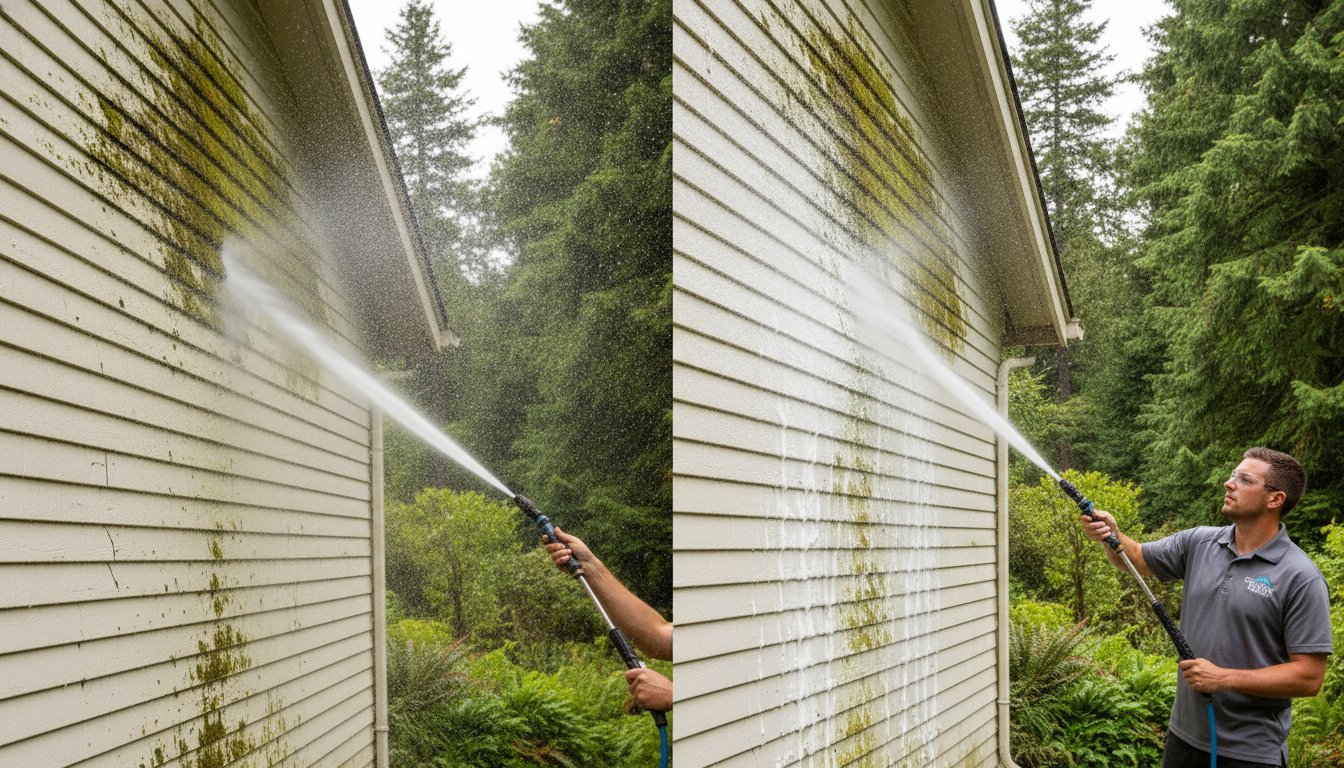
Could that high-powered blast of water actually be the fastest way to destroy your Oregon home's value? Many homeowners think more power always leads to a better clean, but that aggressive approach often results in cracked siding or ruined roof shingles. When you are staring down a thick layer of moss after another long rainy season, you need to know is soft washing better than pressure washing for your specific surfaces.
It's completely normal to feel frustrated by the relentless moss and algae growth we face here in the Pacific Northwest. You want your home to look its best, but you don't want to accidentally void your roof warranty or cause expensive leaks in the process. This guide will show you exactly how to remove grime effectively without risking structural damage. We will look at the science behind soft washing, explain which surfaces still require high pressure, and cover the local environmental standards you need to follow to keep your property safe and clean.
Key Takeaways
- Learn the difference between mechanical force and solution-based cleaning to choose the right method for every exterior surface.
- Determine exactly when is soft washing better than pressure washing to protect your roof and siding from expensive physical damage.
- Identify the hidden dangers of high pressure, from attic water intrusion to permanent etching on wood decks and fences.
- Discover how biodegradable treatments safely eliminate stubborn Oregon moss while protecting your landscaping and pets.
- Understand why verifying CCB licensing and insurance is a critical step in hiring a reliable local professional for your home.
Soft Wash vs. Pressure Washing: Defining the Two Methods
Oregon homeowners often ask, is soft washing better than pressure washing when they notice green slime on their siding or moss clumps on the roof. The answer depends entirely on the surface you are trying to clean. Pressure washing is a mechanical process that uses sheer force to blast away surface debris. In contrast, soft washing is a chemical treatment that uses specialized solutions to neutralize organic growth at its source rather than relying on mechanical force.
Our local climate creates a unique set of challenges for property maintenance. The consistent rainfall and cool temperatures in the Pacific Northwest provide the perfect environment for moss, algae, and lichen to thrive. These organisms don't just sit on the surface; they root into your building materials. While a high-pressure blast might make things look clean for a few weeks, it often leaves the roots behind, leading to rapid regrowth. Understanding the technical differences between these two methods is the first step in protecting your home investment.
The Mechanics of Pressure Washing
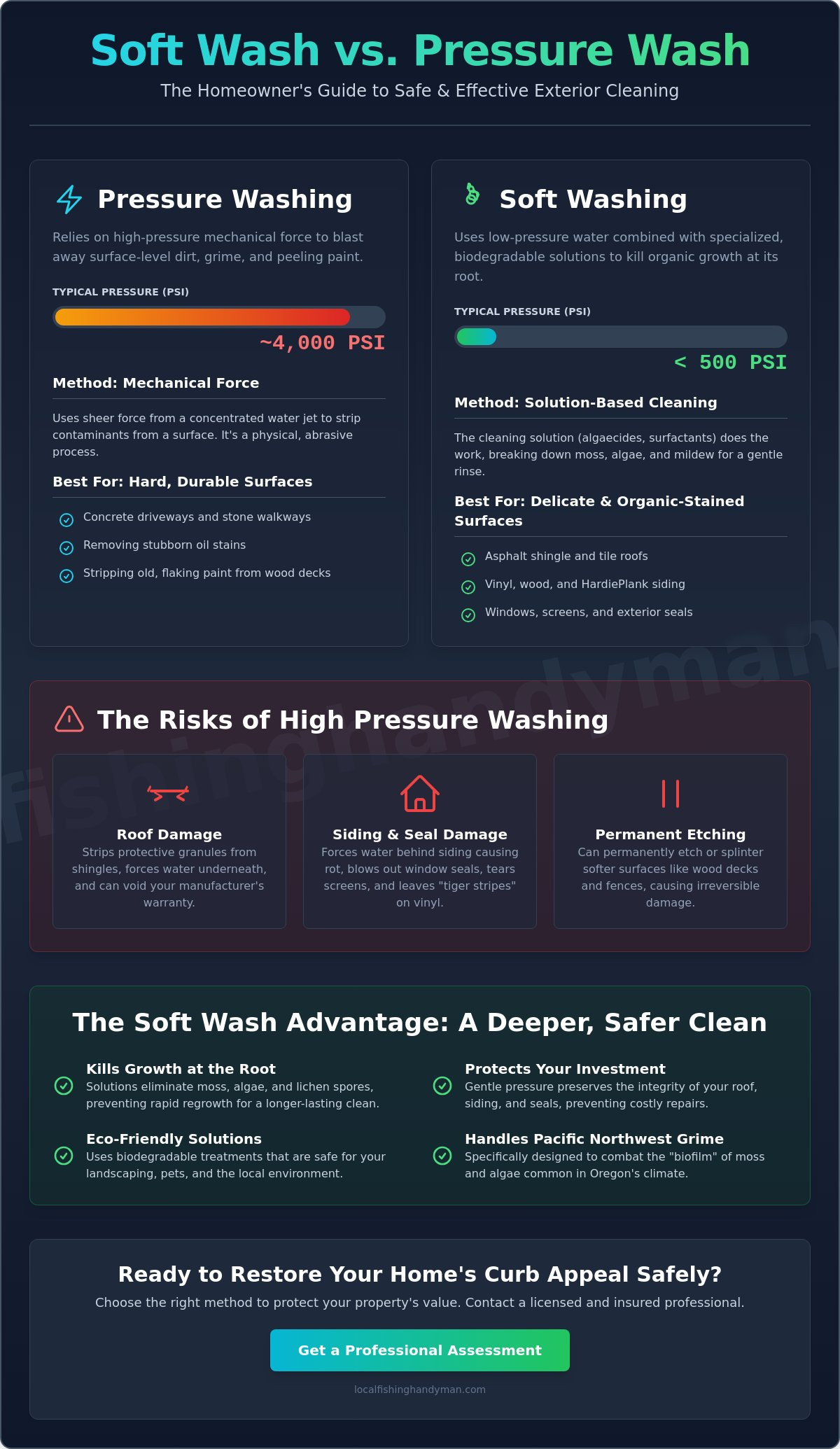
Pressure washing relies on high-pressure water streams, often reaching up to 4,000 PSI, to strip away dirt and grime. This method typically involves gas-powered pumps and interchangeable nozzles that concentrate the water flow into a narrow, powerful beam. It is the go-to choice for hard, durable surfaces like concrete driveways or stone walkways. The mechanical force is excellent for removing stubborn oil stains or prepping a deck for a fresh coat of stain by stripping away old, flaking paint. However, that same power can be destructive if used on the wrong material.
The Science Behind Soft Washing
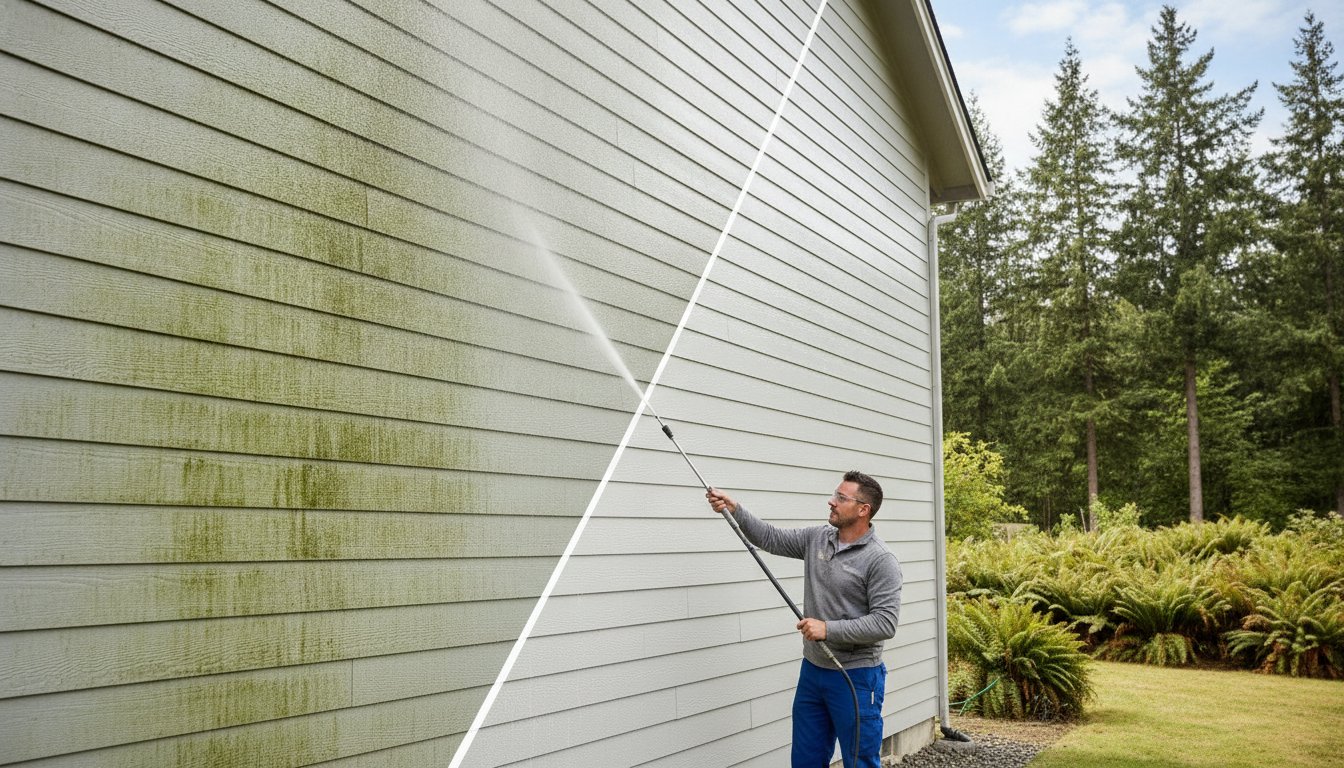
The Soft washing method takes a more surgical approach to exterior cleaning. Instead of raw power, it uses a combination of surfactants and algaecides to break down biological matter. We focus on a "Moss-Off" philosophy, which means we aim to kill the spores so the growth doesn't return immediately after the first rain. The equipment used for this process operates at a much lower pressure, typically under 500 PSI.
This gentle flow is comparable to a heavy rain shower. It allows the cleaning solution to soak into the nooks and crannies where moss hides without the risk of damaging delicate seals or forcing water behind your siding panels. By treating the root cause of the staining, you get a deeper clean that lasts longer than traditional powerwashing. It is a methodical way to handle the organic "biofilm" that plagues so many homes in our region.
Surface Breakdown: When to Blast and When to Spray
Choosing the right tool for the job is the mark of a seasoned craftsman. While a pressure washer is a versatile piece of equipment, using it on the wrong surface can lead to thousands of dollars in avoidable repairs. When deciding is soft washing better than pressure washing, you have to look at the material you are cleaning. Some surfaces need the raw power of a high-pressure stream, while others require a gentle, chemical-based touch to stay intact.
Roofing Materials and the Danger of High PSI
Your roof is your home's first line of defense against Oregon rain, but it is also one of the most delicate surfaces. Asphalt shingles are coated with ceramic granules that protect the underlying bitumen from UV rays. High-pressure washing acts like a sandblaster, stripping these granules away and significantly shortening the life of your roof. Even worse, the force of the water can lift shingles, driving moisture into the attic and causing immediate leaks.
The Asphalt Roofing Manufacturers Association (ARMA) is very clear on this topic. They specifically recommend soft washing as the only safe method for removing moss and algae. Using high pressure on shingles often voids your manufacturer's warranty. A low-pressure treatment kills the moss at the root without compromising the structural integrity of the roof. If you've noticed loose panels or moisture issues while inspecting your exterior, our siding repairs and roof maintenance services can help restore your home’s protective envelope.
Siding, Windows, and Exterior Seals
Vinyl, wood, and HardiePlank siding are designed to shed water that falls vertically. They are not built to withstand a 3,000 PSI blast coming from a horizontal or upward angle. High pressure can easily blow out window seals, tear through window screens, or force water behind siding panels where it gets trapped and causes rot. On vinyl siding, aggressive pressure often removes the "oxidation" layer unevenly, leaving behind permanent, ugly streaks known as tiger stripes.
Soft washing is the superior choice here because the cleaning solution does the heavy lifting. It reaches into the small overlaps and crevices where moss and mold hide, areas that a pressure washer might miss unless you get dangerously close. It provides a uniform clean that preserves the finish of your siding and keeps your home's insulation dry.
However, pressure washing still has its place. For concrete driveways, stone walkways, and brick patios, the mechanical force is exactly what you need. These hardscapes can handle the pressure required to lift deeply embedded oil stains and thick mud. For wood decks and fences, we prefer a middle-ground approach. High pressure often "furs" or scars the wood grain, creating a rough texture that traps more dirt later. A light soft wash followed by a low-pressure rinse keeps the wood smooth and ready for a fresh coat of stain.
The Risks of High Pressure: Why 'Better' Often Means Safer
Many homeowners assume that a more powerful machine always delivers a deeper clean. In reality, that extra power often causes permanent scars on your property. When you are weighing if is soft washing better than pressure washing, the conversation usually shifts from "how clean" to "how safe." High pressure is a blunt tool. It can easily cross the line from cleaning to destroying in a matter of seconds if the operator lacks experience.
Our damp climate makes surface materials softer over time. Wood fibers on decks and fences become saturated, and concrete can become brittle from constant freeze-thaw cycles. Using a high-PSI blast on these materials doesn't just remove the moss; it often removes the surface of the material itself. This leads to a cycle of damage that requires expensive repairs or premature replacement.
Permanent Damage to Hardscapes
If an operator isn't careful, a pressure wand leaves "zebra stripes" across a driveway or patio. These are permanent etchings where the top "cream" layer of the concrete was blasted away by an uneven stream. These marks aren't just an eyesore; they are structural. Once that smooth top layer is gone, the aggregate underneath is exposed to the elements. This makes the concrete more porous and prone to cracking during winter.
Brick and stone face similar risks. High pressure can pit the surface or blast away the mortar between joints. These mistakes are often impossible to fix without replacing the entire section of masonry. It's a high price to pay for a afternoon of DIY cleaning.
Secondary Issues: Mold and Rot
There is also the danger of what you can't see. High-pressure streams are powerful enough to force water into attic vents or behind siding panels. In our damp Oregon environment, that trapped moisture doesn't evaporate. Instead, it sits in the dark wall cavities and feeds hidden mold growth. This can lead to air quality issues inside the home and eventual wood rot in the framing.
On wooden surfaces like decks or fences, high pressure "furs" the wood. This means the water pressure has literally shredded the wood fibers, leaving a fuzzy, rough texture. This damaged wood absorbs moisture like a sponge, which accelerates rot and makes the surface much harder to stain or paint later. A gentle touch prevents these long-term structural headaches.
Safety should also be a top priority. A pressure wand has significant kickback. If you're standing on a ladder trying to reach a high gable, that recoil can easily knock you off balance. It is a major fall risk that simply doesn't exist with the low-pressure application used in soft washing. Professional soft washing is an investment in property longevity, not just aesthetics.
Evaluating Eco-Friendly Soft Wash Solutions
Many Oregonians take great pride in their gardens. It's natural to feel uneasy when you hear that a cleaning method relies on a chemical solution. However, when you look at whether is soft washing better than pressure washing, the environmental impact is a major factor. Professional-grade soft washing uses biodegradable solutions designed to break down quickly into harmless components.
Unlike standard store-bought bleach, professional mixes contain advanced surfactants. These agents act like a glue. They help the solution cling to your siding or roof. This increased 'dwell time' means we can use a much lower concentration of active ingredients to achieve the same results. It also prevents the solution from running off into your flower beds or lawn. Using these specialized soaps is a much more surgical approach than simply blasting a surface with raw water power.
Protecting Your Oregon Landscape
We follow a methodical process to keep your plants safe. Before we turn on the pump, we thoroughly pre-wet all surrounding vegetation. This fills the plant's cells with fresh water. It creates a natural barrier that prevents them from absorbing the cleaning mix. After the house or roof is treated, we perform a final post-rinse and apply a plant neutralizer. This step ensures that any overspray is completely deactivated. It leaves your soil healthy and your garden intact.
Dilution is a science in this industry. A seasoned craftsman knows how to adjust the mix based on the severity of the moss growth and the specific surface material. This precision protects the local flora and fauna while still delivering a professional-level clean. It's about being a good neighbor to the environment while maintaining your home's exterior.
Effectiveness Against PNW Moss
Our local moss is incredibly resilient. It doesn't have true roots. Instead, it uses tiny anchors called rhizoids to grip onto porous surfaces like shingles and siding. High-pressure water often just shears off the top of the moss. This leaves the anchors behind to regrow almost immediately. This is another reason why soft washing is often the superior choice for our damp climate.
The specialized solutions penetrate deep into the rhizoids. They kill the moss at its biological source. This treatment doesn't just clean the surface; it sanitizes it. Surfaces that have been professionally soft washed often stay clear of organic growth for much longer than those that were simply blasted with water. If you want to stop the regrowth cycle on your home, our Softwash Moss-Off Roof Treatment provides the deep, safe clean your property needs.
Choosing a Professional Exterior Handyman in Oregon
Hiring a contractor in Oregon requires more than just a quick search. You should always verify a company's status with the Construction Contractors Board. Our registration is CCB#254463. This ensures the provider meets state standards for safety and professional conduct. It also protects you through the CCB's dispute resolution process if any issues arise during your project.
Being bonded and insured is a critical financial safety net. If a worker is injured on your property or causes accidental damage, an uninsured contractor could leave you liable for the costs. A reliable local craftsman will always provide proof of coverage. We maintain these standards to give you peace of mind while we work on your home.
The Local Fishing Handyman LLC Difference
We take a practical approach to home maintenance that focuses on long-term durability. We've seen how the Pacific Northwest rain can quickly degrade a property if it isn't cared for correctly. Our specialized Softwash Moss-Off Roof Treatment is designed to stop growth without the destructive force of high pressure. Because we have years of regional experience, we often spot minor roof leaks or failing siding while we are on the job. This proactive approach helps you avoid major repairs down the road.
Getting the Most Value from Your Service
You can distinguish a professional from a "splash and dash" operator by the questions they answer. A true expert will explain why is soft washing better than pressure washing for your specific roof or siding material. Before the work begins, ask about their plant protection methods and their plan for handling runoff. These details separate a temporary clean from a professional-grade treatment.
Ready to protect your home from the elements? Get a Softwash Roof Treatment Quote from Local Fishing Handyman LLC and experience the quality of a seasoned local professional.
Protect Your Oregon Home Investment Today
Maintaining an Oregon home requires a balanced approach to exterior cleaning. You now understand that high pressure is a powerful tool for concrete, but soft washing is the only safe way to treat delicate roofing and siding. By choosing a solution-based method, you kill moss at the root and avoid the physical damage that often leads to leaks and rot.
Determining is soft washing better than pressure washing for your specific property is about more than just a clean look; it's about structural integrity. We bring years of practical handyman expertise to every job, ensuring your home stays in top shape through every rainy season. As a licensed, bonded, and insured contractor (CCB#254463), we prioritize safety and long-term results over quick fixes.
Our specialized Softwash Moss-Off Roof Treatment is designed to protect your shingles while restoring your curb appeal. Don't wait for the next storm to test your roof's limits. Get Your Free Softwash & Roof Maintenance Estimate and let us help you maintain a beautiful, durable home. We look forward to serving you soon!
Frequently Asked Questions
Is soft washing more expensive than pressure washing?
Soft washing typically has a higher upfront cost because it requires specialized biodegradable solutions and professional grade application systems. While pressure washing relies on raw water power, the chemical treatments used in soft washing are more expensive to source and apply. However, homeowners often find it more cost effective over time. Because it kills organic growth at the root, you won't need to clean your surfaces as frequently as you would with a high pressure blast.
Will soft washing chemicals kill my grass or garden?
Your garden will stay safe if the process is handled by a professional. We use a methodical pre-wet and post-rinse technique that saturates your plants with fresh water before we begin. This prevents the foliage from absorbing the cleaning solution. We also apply a neutralizer after the treatment to ensure no active residue remains in the soil. These steps are standard for any experienced craftsman who cares about your property's landscaping.
How long does a soft wash roof treatment last in Oregon?
A professional soft wash treatment usually keeps an Oregon roof clean for two to five years. The exact duration depends on your home's environment, such as the amount of shade and the proximity of overhanging trees. Since the treatment kills moss spores and algae at the source, it lasts significantly longer than traditional pressure washing. Regular gutter maintenance and removing debris from your roof can help extend the life of the treatment even further.
Can I soft wash my own house with a rental machine?
Most rental machines are designed for high pressure tasks, not the low pressure application required for soft washing. Achieving the correct chemical dilution is a precise science that requires specialized pumps and tanks. If you mix the solutions incorrectly, you risk damaging your siding or harming your plants. Hiring a professional ensures the job is done with the right equipment and knowledge of local environmental regulations, which saves you from potential repair costs later.
Is soft washing safe for all types of roofing materials?
Yes, soft washing is the safest method for almost all roofing materials, including asphalt shingles, metal panels, and clay tiles. It is the only method recommended by the Asphalt Roofing Manufacturers Association because it doesn't strip away protective granules. When homeowners ask is soft washing better than pressure washing for their roof, the answer is always yes. It protects the structural integrity of the materials while effectively removing stubborn organic growth without causing leaks.
Does soft washing remove black streaks on my roof?
Those black streaks are actually a type of hardy algae called Gloeocapsa Magma, and soft washing is the most effective way to remove them. High pressure might temporarily hide the streaks, but the algae will quickly return if the spores aren't neutralized. The algaecides in a soft wash mix break down the biological bond between the algae and your shingles. This leaves your roof looking like new without the risk of damaging the surface or voiding your warranty.
Why is pressure washing bad for my cedar siding?
Pressure washing is destructive to cedar because the high PSI stream shreds the delicate wood fibers. This creates a fuzzy texture that traps moisture and dirt, which accelerates the rotting process. Once the wood is scarred, it becomes much harder to paint or stain effectively in the future. Soft washing uses gentle solutions to lift graying and mold, preserving the natural beauty and structural strength of the cedar without the risk of mechanical damage.
What should I do to prepare my home for a soft wash service?
You can prepare for a soft wash service by ensuring all windows and doors are tightly closed. It's also helpful to move patio furniture, potted plants, and pet toys away from the perimeter of the house. If you have outdoor electronics or delicate ornaments, covering them or moving them inside is a good precaution. We take care of the heavy lifting regarding plant protection, but clearing the workspace helps us complete the job efficiently and safely.