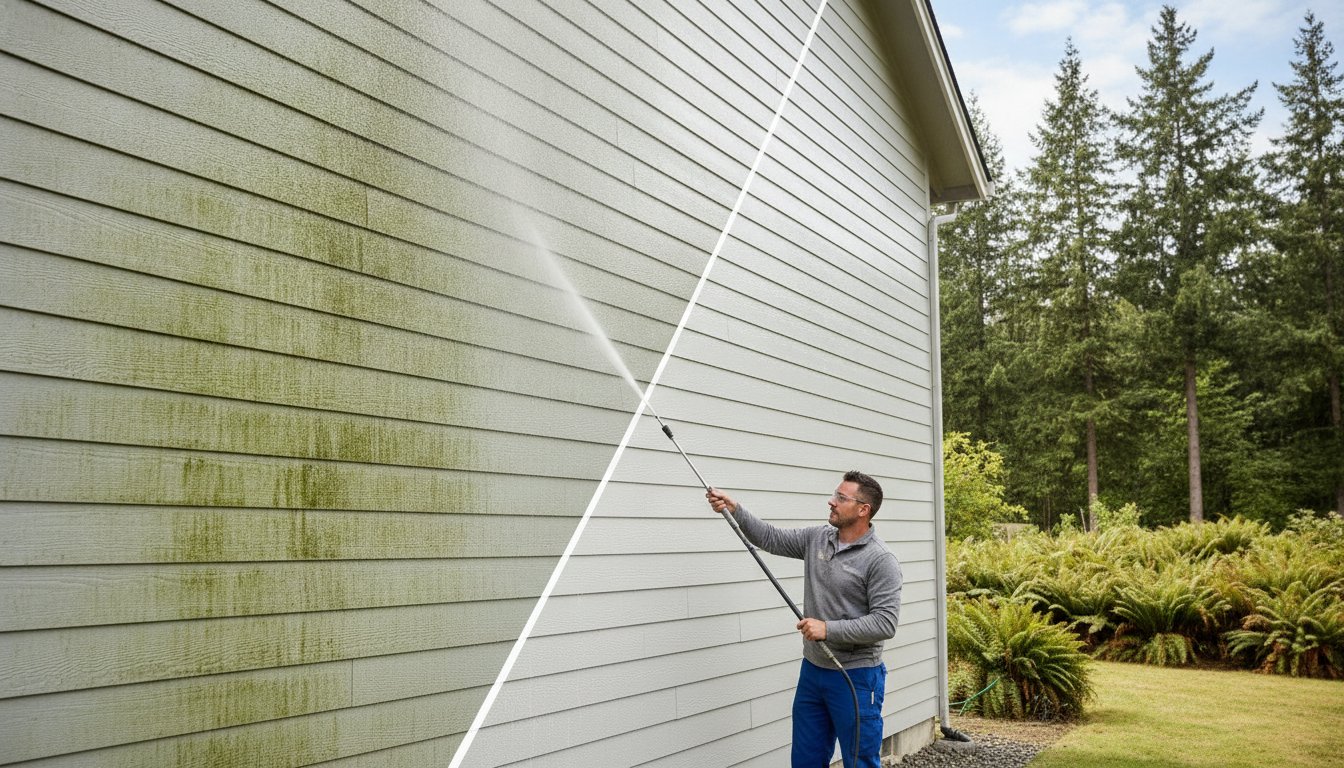
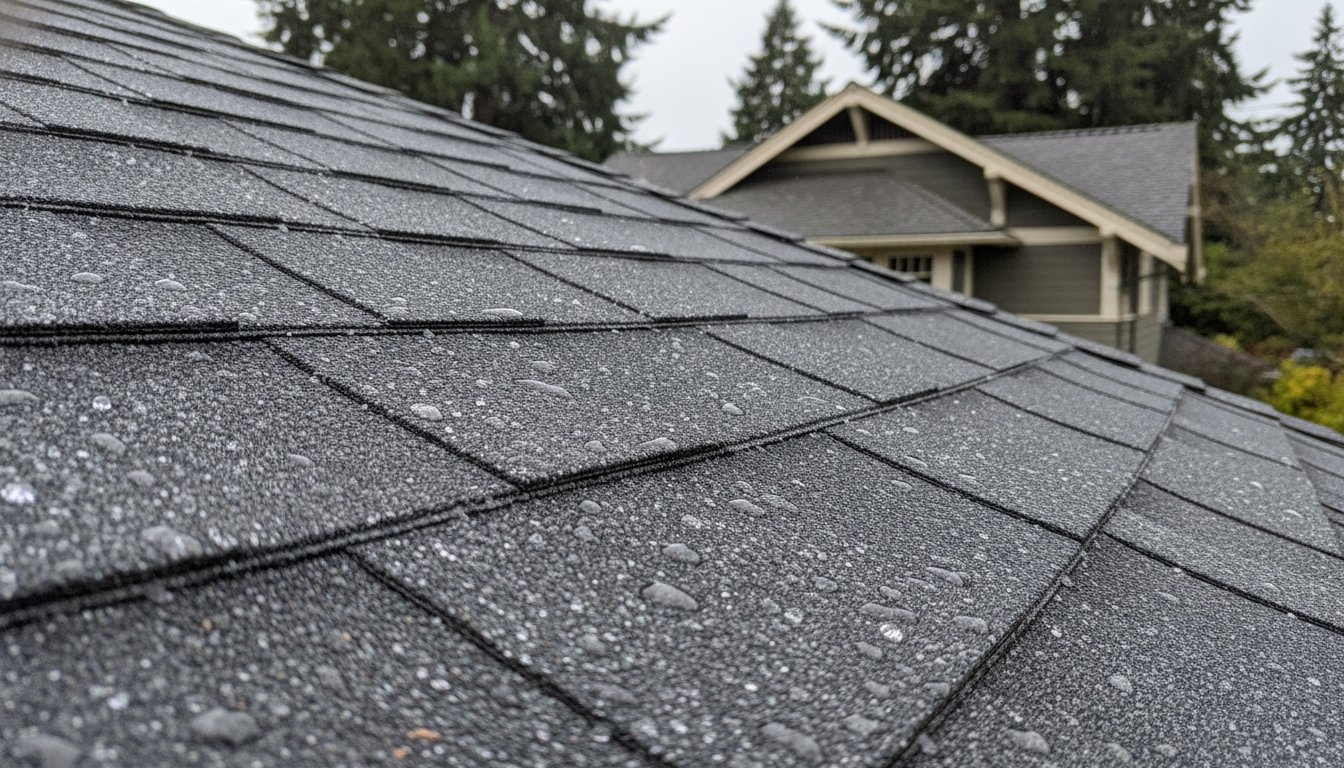
You might think a growing patch of green moss or a persistent drip means it's time to spend over $20,000 on a full tear-off. In the Pacific Northwest, the jump to a total replacement is often premature and unnecessary. It's frustrating to watch the rain soak into your shingles while worrying about rot; it's even worse when you're facing aggressive sales tactics for residential roof repair Portland contractors often push. You want a dry home and a reliable professional who understands Oregon Construction Contractors Board (CCB) requirements without the corporate pressure.
This guide will show you how to stop leaks instantly and extend your roof's life by five to ten years. We'll walk through identifying hidden damage, treating moss safely, and understanding the local rules that affect your wallet. You'll also learn about the new City of Portland permit fee schedule taking effect July 10, 2026, so you can make informed decisions and keep your home protected for the long haul. Practical maintenance today prevents a massive construction bill tomorrow.
In This Guide:
- The Portland Effect: Learn how 43 inches of annual rainfall and local humidity impact your asphalt shingles and encourage moss growth.
- Early Detection: How to spot shingle granule loss and subtle leaks before they turn into expensive interior water damage.
- Softwash Science: Why cleaning your roof with chemistry is more effective and safer for your shingles than high-pressure washing.
- Decision Framework: A clear guide to help you choose between a full replacement and a targeted residential roof repair Portland homeowners use to extend roof life.
- Licensed Protection: Why hiring a local professional who is licensed, bonded, and insured (CCB#254463) is the only way to ensure your home meets Oregon standards.
Why Portland Homes Require a Unique Approach to Roof Repair
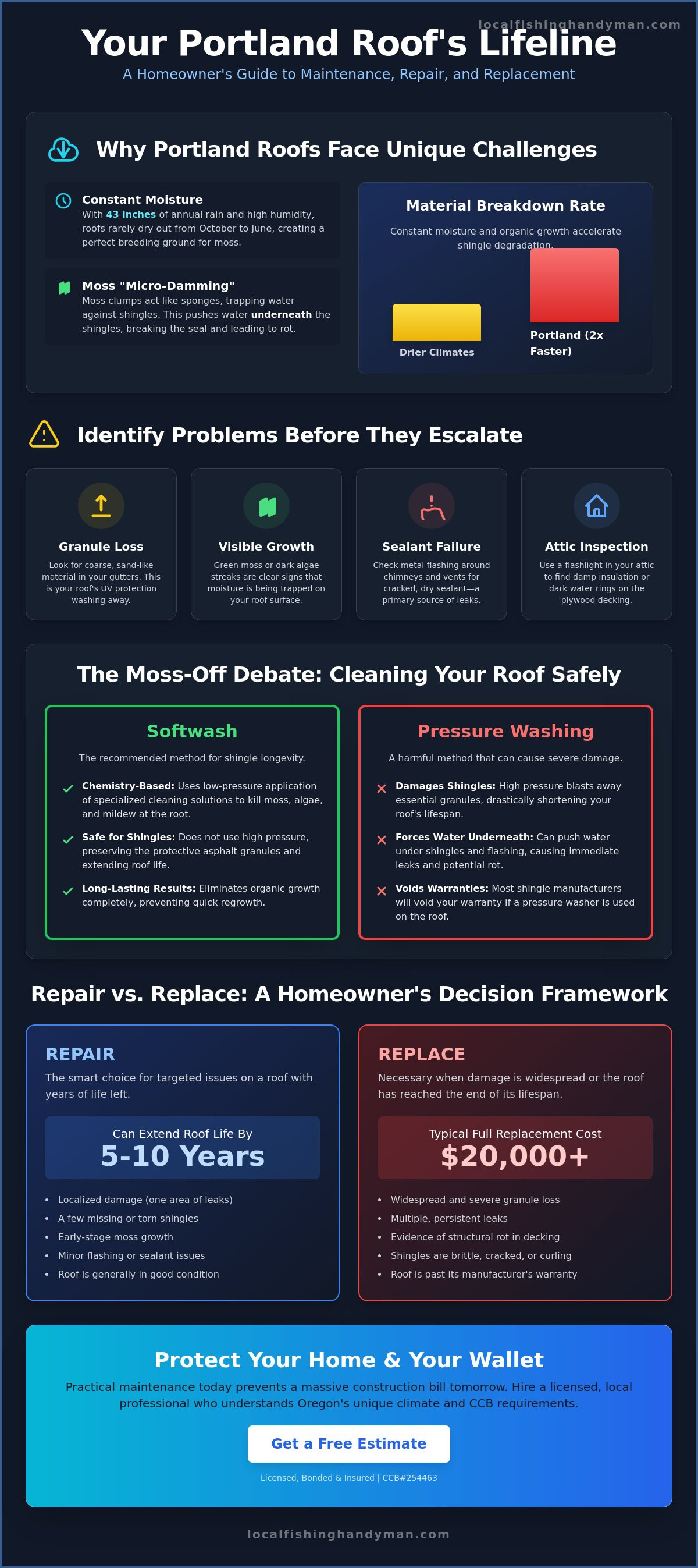
You don't need a degree in meteorology to know Portland is wet. Our 43 inches of annual rain is only half the story. The real problem is how that moisture sticks around. High humidity levels mean your roof rarely gets a chance to dry out completely between October and June. This creates a perfect environment for moss and algae to thrive. It's a constant battle for homeowners in the Willamette Valley.
Once moss takes hold, it starts "micro-damming." These clumps of moss trap water against your shingles. Instead of the rain running off into your gutters, it gets pushed up and under the shingles. This is why residential roof repair Portland specialists focus so much on organic growth. When you add in local wind gusts that hit 60 mph, those compromised shingles don't stand a chance. They lift, they tear, and they let the rain inside. The humidity also prevents asphalt from cooling and contracting naturally, which can lead to premature aging of the material.
The Role of Moss in Structural Roof Damage
Moss acts like a heavy, wet sponge sitting on your house. It stays saturated for days after a storm. It uses tiny anchors called rhizoids to grip your roof. These rhizoids physically lift the edges of your shingles and break the water seal. Once that seal is gone, the water moves into the plywood decking. If you let it go too long, you'll find rot in your rafters. Different roof cleaning methods can stop this process before it requires a full tear-off. Regular maintenance is the only way to keep these "sponges" from eating your home.
Common Roof Materials in the Pacific Northwest
Asphalt shingles are the standard here. Brands like Malarkey are popular because they're built for our climate. They're affordable and reliable if you keep them clean. Cedar shakes offer a classic look, but they're prone to rot if moss isn't managed. Composite roofing is a tough, long-term option, but even it can't escape the Portland humidity. You need to know what's on your roof to care for it correctly. Portland roofs fail faster without annual moss mitigation because the constant moisture and organic growth accelerate material breakdown at double the rate of drier climates.
- Asphalt Shingles: Durable and cost-effective but prone to granule loss.
- Cedar Shakes: High aesthetic value but require frequent oiling and cleaning.
- Composite: Extremely long-lasting but can still harbor algae in shaded areas.
Identifying Common Residential Roof Issues in Oregon
Catching a roof problem early saves you thousands of dollars. Most homeowners wait for a ceiling puddle to appear, but the damage usually starts months earlier. You should walk your property line after a heavy storm. Look for shingles sitting in the yard or dark streaks on your siding. These are the first signs that you might need residential roof repair Portland services to prevent structural rot. Early detection is the best tool you have to avoid a full tear-off.
Check your gutters for what looks like coarse sand. These are asphalt granules. They act as a shield to protect your shingles from UV rays. When they wash away, the shingle becomes brittle and cracks under the sun. If your downspout splash block looks like a mini beach, your roof is losing its protective layer. You should also grab a flashlight and head into the attic. Look for damp insulation or dark rings around the plywood. These stains often show up near roof penetrations like vents, chimneys, and skylights. If the wood feels soft or looks black, moisture is already moving through the system.
A thorough seasonal roof maintenance checklist helps you track these subtle changes over time. It's much easier to fix a small leak in August than a major failure in the middle of a December downpour. Staying ahead of the weather is the key to longevity in the Pacific Northwest.
Flashing and Sealant Failures
Metal flashing around chimneys is the primary source of leaks in older Portland bungalows. The sealants used to bridge the gap between metal and brick eventually dry out and crack. Oregon's freeze-thaw cycles cause these materials to expand and contract at different rates; this movement eventually pulls the sealant away from the surface. You should also look at "step flashing" where your roof meets a dormer or a wall. If the metal is rusted or the shingles are lifting there, water is likely getting behind your siding and into your wall cavities.
Gutter Backups and Roof Edge Rot
Clogged gutters do more than just overflow onto your flower beds. They force water to pool against the very edge of your roof. This trapped water eventually seeps under the first row of shingles. This is a major cause of fascia board rot and soffit damage that many homeowners miss. A proper drip edge is critical for your home. It's a metal strip that directs water away from the wood and directly into the gutter. Without a functional drip edge, the constant rain will rot your eaves from the inside out.
Softwash vs. Pressure Washing: The Moss-Off Debate
When you see thick green clumps on your shingles, your first instinct might be to grab a pressure washer. It's a common mistake in the Pacific Northwest. You want that moss gone fast, but high-pressure water is the quickest way to destroy your roof. In fact, most residential roof repair Portland professionals will tell you that a single afternoon of pressure washing can age an asphalt roof by ten years. It's a brute-force approach that does more harm than good.
Softwashing is the professional alternative. Instead of using high-pressure water to blast moss away, we use a targeted chemical solution to kill it at the root. This method is much safer for your home. You can learn more about general maintenance in , which highlights why gentle care is better for longevity. Softwashing treats the roof like a delicate surface rather than a driveway. It's about working smarter, not harder.
The Dangers of High-Pressure Water
Pressure washers are designed to strip paint and clean concrete. When you use that kind of force on asphalt shingles, you blast away the protective UV granules. As we discussed earlier, these granules are your roof's only defense against sun damage. Once they're gone, the shingles become brittle and crack. High-pressure streams also force water into places it was never meant to go. It can push moisture under the shingle laps and directly into your attic vents. Most importantly, many shingle manufacturers will void your warranty immediately if they find evidence of pressure washing. It's a risk that simply isn't worth the reward.
Benefits of the Softwash Moss-Off Roof Treatment
Our Softwash Moss-Off Roof Treatment focuses on long-term health. We use biodegradable solutions that are tough on moss but safe for your siding and landscaping. We don't need to walk all over your roof with heavy equipment. Most of the work is done from a ladder or the ground using low-pressure sprayers. This treatment doesn't just remove the visible green; it kills the microscopic spores that cause regrowth. This means your roof stays cleaner for much longer than it would with a simple rinse. It continues to work for months, preventing new spores from taking hold during our long, wet winters.
- Safety: No high-pressure water means no damage to shingle seals.
- Effectiveness: Kills moss, lichen, and algae at the source.
- Longevity: Keeps the roof clean for 12 to 24 months on average.
Choosing softwashing over doing nothing or using a pressure washer is a high-ROI decision. A full roof replacement in Portland was estimated to cost between $10,000 and $22,000 in 2025. A regular softwash treatment costs a tiny fraction of that and can push that massive replacement bill five to ten years into the future. It's the most practical way to handle residential roof repair Portland homeowners can invest in.
Repair vs. Replace: A Homeowner’s Decision Framework
Deciding between a patch job and a total overhaul is often the most stressful part of owning a home in Oregon. You don't want to waste money on a temporary fix, but you also don't want to spend $20,000 if you don't have to. A simple way to decide is the 20-year rule. Most asphalt shingles in our climate have a theoretical lifespan of 20 to 30 years. If your roof is less than 15 years old and has a single leak, a targeted residential roof repair Portland homeowners trust is almost always the better investment.
You can calculate the "Cost per Year" to make the choice easier. Take the price of a repair and divide it by the number of years it adds to the roof's life. If a $600 repair buys you five more years, that is only $120 per year. Compare that to a full replacement that might cost $15,000 and last 20 years; that's $750 per year. Repairs are usually the winner until the leaks become "systemic." A localized leak happens in one spot, like around a vent. A systemic issue means the shingles are failing everywhere, and no amount of patching will stop the next drip.
It's also vital to remember Portland's specific building codes. The city mandates a full tear-off for all reroofing projects. Overlays, where new shingles are placed over old ones, are not permitted. This makes replacement more expensive because of labor and debris disposal rules. If you're unsure where your roof stands, you can request an honest roof assessment to see if a repair is still viable.
When a Targeted Repair is the Right Choice
Small jobs are where a local craftsman shines. If a recent windstorm blew off a few shingles or a tree branch poked a hole in your ridge cap, you don't need a new roof. These are isolated issues. Another common fix is replacing a "pipe boot." These rubber seals around plumbing vents usually dry out and crack long before the shingles fail. A quick, professional repair can stop the leak immediately and protect your attic for years. A licensed handyman is often the most efficient choice for these tasks because they focus on precision rather than selling you a massive construction project.
When to Bite the Bullet on a New Roof
Sometimes, the damage is too widespread to ignore. If you look at your roof and see shingles curling at the edges or "bald spots" where all the granules have washed away, the material has reached the end of its life. Significant structural sagging or soft spots in the plywood decking are also major red flags. In these cases, continuing to pay for small repairs is like pouring water into a leaky bucket. Replacing the roof before it causes major interior rot or mold growth will actually save you money in the long run. If you see widespread cracking across multiple slopes, it's time to plan for a replacement.
Why a Licensed Handyman is Your Best Bet for Portland Repairs
You don't always need a massive construction crew and a fleet of trucks to fix a leak. Many large roofing companies in the area won't even take on small jobs; if they do, they often use it as an opportunity to sell you a $20,000 replacement. A local handyman takes a different approach. We focus on the specific residential roof repair Portland homes actually need to stay dry. Our goal is to fix the problem at hand and keep your current roof functional for as long as possible.
Working with a neighborly, community-focused service means you get an honest assessment. We don't have corporate quotas or aggressive sales targets. If your roof only needs a few new shingles and a fresh bead of sealant around a vent, that's exactly what we'll tell you. This no-nonsense approach builds trust and ensures you aren't paying for work that doesn't need to happen. We treat your home with the same care we'd give our own.
Efficiency is another major advantage. While we're on the ladder for a roof repair, we can easily handle other pressing maintenance tasks. This bundling saves you time and money. Common combinations include:
- Gutter Cleaning: Ensuring water flows away from your foundation.
- Siding Repairs: Fixing cracks or rot caused by the same rain hitting your roof.
- Touch-up Painting: Protecting exposed wood after a repair.
Professionalism and Accountability
Oregon law is very clear about who can perform construction work. Anyone performing residential roof repair Portland projects for compensation must be licensed by the Oregon Construction Contractors Board (CCB). CCB#254463 isn't just a random number on our trucks; it's your financial safety net. Being licensed, bonded, and insured means you are protected if something goes wrong. It proves we've passed the state's rigorous training and exams. Local Fishing Handyman LLC ensures long-term durability by applying seasoned craftsmanship and regulatory standards to every project we touch.
Comprehensive Exterior Maintenance
The Pacific Northwest rain doesn't just target your shingles. It beats down on your siding, decks, and fences too. Having a single point of contact for all these exterior repairs makes life much simpler. We understand how these systems work together to protect your property. Instead of calling four different contractors, you can rely on one trustworthy craftsman to keep your entire home's exterior in top shape. It's about providing a complete solution for the unique challenges of the Willamette Valley climate.
Get a Free Estimate for Your Portland Roof Repair
Protect Your Portland Home for Years to Come
Managing a roof in the Willamette Valley is a marathon, not a sprint. You've learned that catching small leaks early and choosing softwashing over high-pressure blasting can save you thousands in replacement costs. By staying proactive with your maintenance, you can push that massive construction bill years into the future while keeping your attic dry and your rafters rot-free. It's about being smart with your home's most important defense.
Local Fishing Handyman LLC is here to help you stay ahead of the next storm. We are fully licensed, bonded, and insured (CCB#254463), and we're deeply experienced in Portland's unique climate challenges. Whether you need our specialized Softwash Moss-Off Roof Treatment or a specific residential roof repair Portland homeowners trust, we provide straightforward results without the high-pressure sales pitch. Our focus is on honest, high-quality work that protects your assets for the long haul.
Don't wait for the next atmospheric river to test your shingles. Take action today to ensure your home remains a safe, dry sanctuary for your family. Request Your Roof Inspection and Repair Quote Today and let's get your exterior back in top shape. We look forward to helping you!
Frequently Asked Questions
How much does a typical roof repair cost in Portland?
Cost depends on the specific nature of the damage and the materials required for the fix. Factors such as the height of the home, the steepness of the roof, and the accessibility of the leak area all play a role. Because Portland has specific rules for debris disposal and material standards, it's important to get a detailed quote that accounts for these local requirements rather than relying on general estimates.
Can a handyman legally repair my roof in Oregon?
Yes, provided they hold a valid license from the Oregon Construction Contractors Board (CCB). Anyone performing residential roof repair Portland services for pay must be licensed, bonded, and insured to protect the homeowner. While a handyman exemption exists for very small projects under $1,000, hiring a fully registered professional ensures that the work meets the Oregon Residential Specialty Code and provides financial security for your home.
How long does a softwash moss treatment last?
A professional softwash treatment generally lasts between 12 and 24 months before moss begins to reappear. This timeline varies based on how much shade your roof receives and the number of overhanging trees nearby. Unlike pressure washing, which only removes the visible growth, softwashing kills the microscopic spores. This deeper clean prevents the moss from returning as quickly during the wet winter months.
Is it okay to walk on my roof to clean the gutters?
It is best to avoid walking on your shingles to prevent unnecessary wear and tear. Foot traffic can easily rub off the protective granules that shield your roof from UV damage. This is particularly true on older roofs where the shingles may be brittle. We recommend cleaning gutters from a ladder or using specialized tools that allow you to work from the ground to maintain your roof's integrity.
What is the best time of year for roof repairs in Portland?
The dry months between July and September are ideal for scheduled maintenance and major repairs. Dry conditions allow for better adhesion of sealants and easier identification of structural issues. However, residential roof repair Portland professionals work through the rainy season to address urgent leaks. We use specialized materials designed to bond in wet conditions, ensuring your home stays protected even during the peak of winter.
Will softwashing my roof kill my plants or grass?
No, your landscaping will stay safe when the treatment is applied by an experienced professional. We use biodegradable cleaning agents and follow a strict protocol to protect your greenery. This involves saturating your plants with fresh water before we start and rinsing them again once the job is finished. These simple steps prevent the cleaning solution from affecting your flowers, shrubs, or lawn.
How do I know if my roof leak is an emergency?
A leak becomes an emergency when water is actively entering the interior of your home or affecting your electrical system. Look for bulging drywall, dripping ceiling fixtures, or water running down interior walls. These situations require immediate attention to prevent mold and structural failure. If you can see water coming inside, it has already bypassed your shingles and underlayment, making it a priority repair.
Does a roof repair come with a warranty?
You should always confirm the specifics of a workmanship policy with your contractor before the work begins. Most material warranties from manufacturers only apply to new installations, not repairs. A trustworthy local provider will typically offer a clear window of time where they guarantee the specific area they repaired will remain watertight. Always get these details in writing to ensure your investment is protected.
More Articles
Fence Picket Repair in Gresham: Fast, Reliable Fixes for Your Privacy Fence
Deck Plank Replacement in Hillsboro: A Practical Repair Guide for 2026