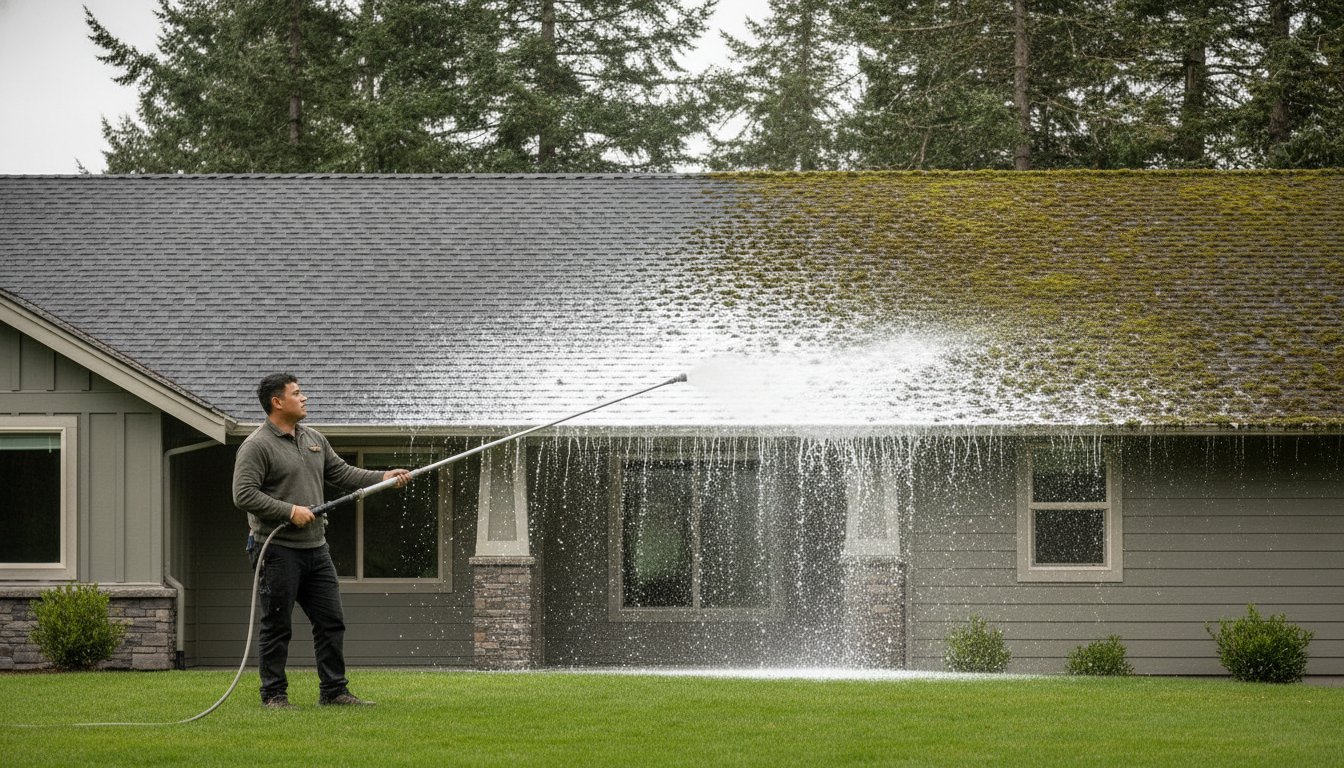
The fastest way to shorten the lifespan of your roof is to let someone stomp across your shingles with heavy equipment. While you want those ugly black streaks and green moss gone, the fear of cracked tiles or a dangerous ladder fall is enough to make any homeowner hesitate. You're right to be concerned about the risks of traditional methods. That's why roof cleaning without walking on it has become the preferred choice for homeowners in 2026 who value both safety and long-term durability.
We agree that your roof is your home's first line of defense, and it deserves better than high-pressure blasting or unnecessary foot traffic. This guide will show you exactly how professional softwash techniques eliminate organic growth from the safety of the ground. You'll discover how to protect your shingles while achieving a spotless finish that lasts. We will look at the technology behind ground-based treatments, the benefits of avoiding mechanical stress, and how to find a reliable professional who follows modern safety standards to handle the job correctly.
Key Takeaways
- Learn why foot traffic on asphalt shingles leads to permanent damage by dislodging protective granules and causing hairline fractures.
- Discover how softwash technology uses specialized cleaning solutions to kill moss at the root rather than relying on damaging high pressure.
- Understand the differences between kinetic force and chemical action to ensure your roof stays clean for a longer period.
- Find out if your home is a prime candidate for roof cleaning without walking on it based on your specific roof pitch and height.
- Identify why Oregon's unique climate requires a specialized "Moss-Off" treatment to prevent rapid regrowth and protect your investment.
The Hidden Risks of Walking on Your Roof During Cleaning
Many homeowners assume that a contractor must climb onto the roof to get it clean. This approach is outdated and often dangerous for your property. When a person walks across asphalt shingles, they cause immediate mechanical stress that the material isn't designed to handle. This is particularly true for older roofs where the components have become brittle over time. Choosing a strategy for roof cleaning without walking on it is not just about convenience; it's about preserving the structural integrity of your home. It treats your roof as a protective system rather than a sidewalk.
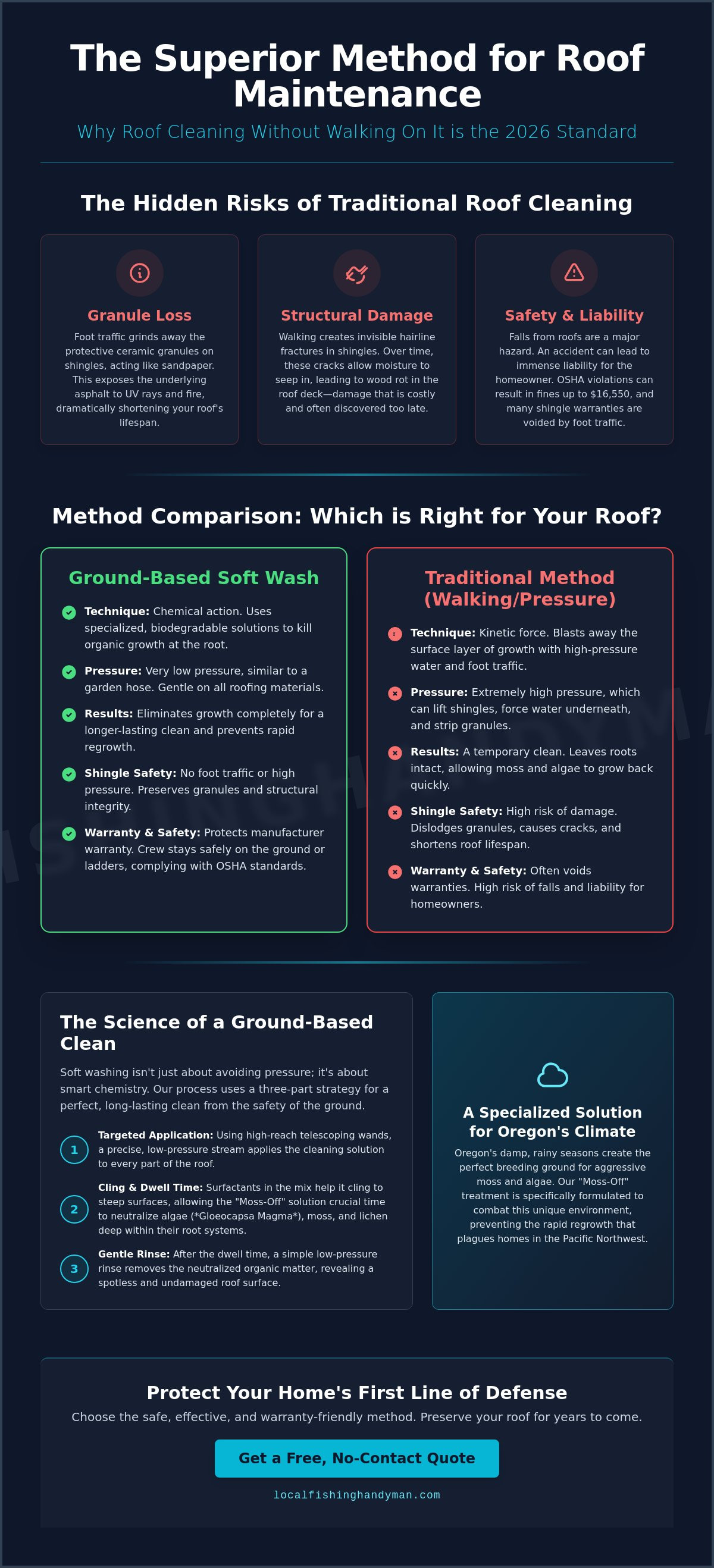
On older roofs, the damage from foot traffic isn't always visible from the ground. Walking can create hairline fractures in the shingle substrate. These tiny cracks allow moisture to seep through during Oregon's long rainy season, eventually leading to rot in the wooden decking below. By the time you notice a leak inside your attic, the damage is already done. Staying off the shingles prevents these microscopic breaks from ever forming.
Granule Loss and Shingle Lifespan
Asphalt shingles are coated with small ceramic granules that serve two vital purposes: fire resistance and UV protection. These granules reflect the sun's rays and keep the underlying asphalt from drying out and cracking. When someone walks on your roof, their boots act like sandpaper, grinding these protective stones away. This process leaves the asphalt exposed to the elements. Granule shedding is a primary cause of premature roof failure. Once those granules are gone, the shingles curl and fail much faster than they should. Traditional roof cleaning methods that involve heavy foot traffic often strip away years of life in a single afternoon.
The Safety and Liability Factor for Oregon Homeowners
Oregon homes often feature steep pitches designed to shed heavy rain and snow. These heights present significant risks for anyone attempting to clean them. According to OSHA regulations for 2026, fall protection is required for residential work at heights of six feet or more. If a contractor falls while walking your roof, you could face massive liability concerns. OSHA penalties for serious violations can reach up to $16,550 per occurrence, and those costs often trickle down through insurance complications.
Hiring a licensed, bonded, and insured contractor like Local Fishing Handyman LLC removes this insurance anxiety. We focus on results-oriented service that keeps our feet on the ground or safely on ladders. This approach also protects your manufacturer warranty. Many newer shingle installations include clauses that void coverage if the roof is subjected to high-pressure washing or excessive foot traffic. By prioritizing roof cleaning without walking on it, we ensure your warranty remains intact and your home stays protected for the long haul.
How Softwash Technology Works from the Ground
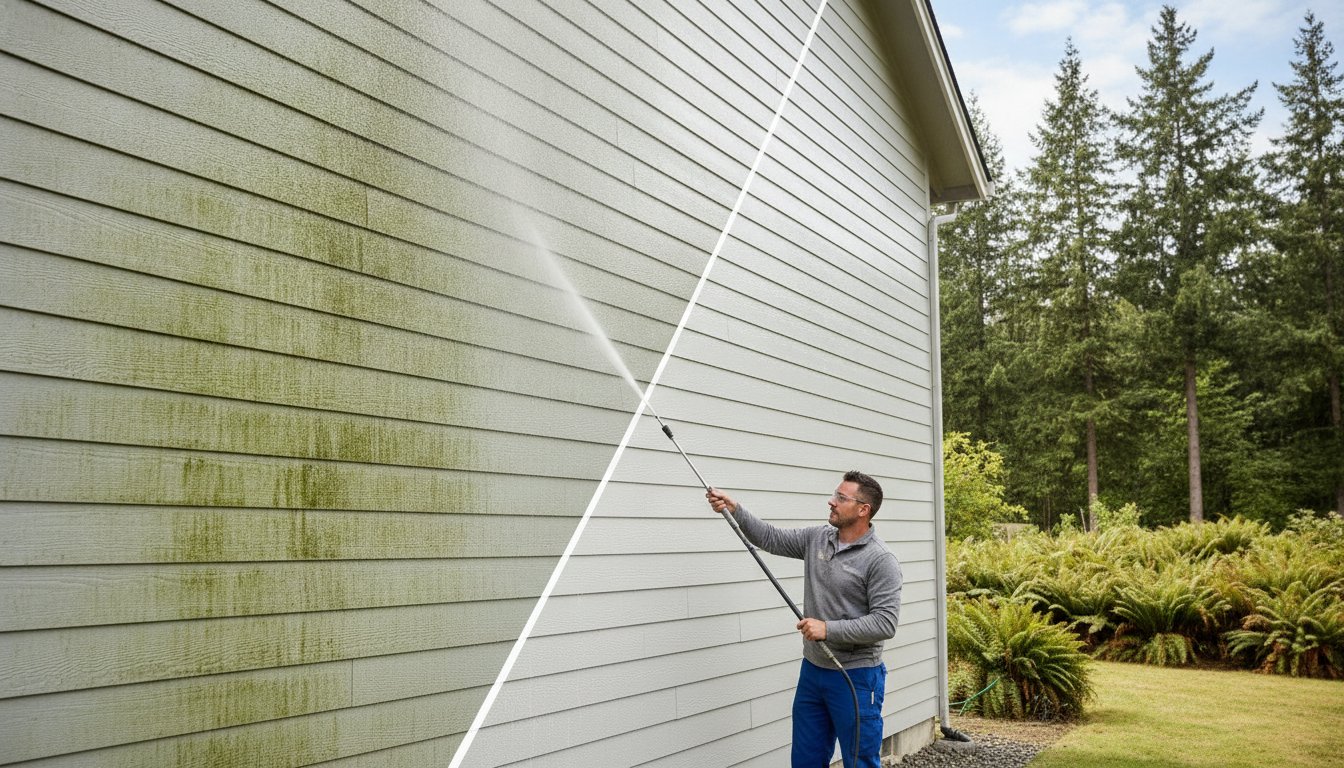
Soft washing is a low-pressure delivery system that replaces brute force with specialized chemistry. Instead of using a high-pressure stream to blast away debris, this method uses a gentle spray to apply biodegradable cleaning solutions. This is the foundation of roof cleaning without walking on it. Professionals use high-reach telescoping wands to apply these treatments from the ground or from the top of a ladder. This equipment allows for precision application on every shingle without the need to step foot on the roof deck.
To ensure the solution stays where it's needed, we use surfactants. These are thickening agents that allow the cleaning mix to cling to steep slopes rather than running off into your gutters immediately. This cling time is vital for effectiveness. By keeping the treatment on the shingles, we can treat the entire surface uniformly. This process adheres to strict OSHA fall protection requirements by keeping technicians in safe positions. It's a methodical way to handle maintenance without compromising the safety of the crew or the property.
The Chemistry of "Moss-Off" Treatment
The black streaks you see on Oregon roofs are often Gloeocapsa Magma, a hardy type of algae that feeds on the limestone filler in asphalt shingles. Our "Moss-Off" approach targets this biology directly. The solution neutralizes the algae and breaks down the root systems of moss and lichen. We use biodegradable solutions that are safe for the surrounding environment. Once applied, the solution requires a specific "dwell time" to work. This period allows the chemistry to penetrate deep into the moss spores, ensuring they are completely neutralized before the final rinse.
Equipment: Beyond the Pressure Washer
A standard pressure washer often operates at 3000 PSI or higher, which can easily strip the protective granules off your shingles. In contrast, a professional softwash pump operates at under 100 PSI. This is roughly the same pressure as a strong garden hose. Specialized nozzles are used to create a wide, rain-like application pattern. This ensures the shingles aren't lifted or damaged by the water's force. Professional ground-based equipment can reach peaks up to 30 feet high, making it possible to treat most residential homes safely. If you want to see how this gentle approach can transform your home, consider our Softwash Moss-Off Roof Treatment for your next maintenance project.
Comparing Ground-Based Soft Washing vs. Traditional Pressure Washing
Traditional pressure washing relies on kinetic force to blast dirt away. It's like using a sledgehammer when you need a scalpel. Soft washing uses chemical action to neutralize organic growth at the source. This difference is why roof cleaning without walking on it is more effective for long-term maintenance. While a pressure washer might offer an immediate change, it often leaves the underlying biological problem untouched. Soft washing is also more water-efficient. We use less water because the specialized solution does the heavy lifting. We don't need high-volume streams to get a professional result.
The aesthetic results differ between these two methods as well. Pressure washing gives an instant "clean" look, but it's often superficial and misses the microscopic spores. Soft washing results can be gradual. As the rain falls over the following weeks, it naturally washes away the dead organic matter that our treatment has neutralized. This leaves you with a roof that looks better over time and stays healthier for much longer. You get a deep clean that addresses the biological roots of the problem rather than just the surface dirt.
Why Pressure is the Enemy of Asphalt Shingles
High-pressure streams are dangerous for modern roof systems. When water is forced at high speeds, it can drive moisture underneath the shingles. This often leads to hidden leaks and mold growth in your attic space. Another major risk is "staple pop." The force of the water can actually loosen the fasteners holding your shingles in place. Once a staple is compromised, the shingle becomes a target for wind uplift and future storm damage. PSI (Pounds per Square Inch) is the wrong metric for roof health because higher pressure almost always leads to higher damage. You want a low-pressure application that respects the delicate nature of the asphalt and granules.
The Long-Term Results of Biological Treatment
If you physically scrape moss or use high pressure, the spores remain behind. These microscopic seeds are tucked deep in the crevices and pores of your shingles. Moss returns much faster after physical removal because the "roots" are still alive and ready to grow. Our Softwash Moss-Off Roof Treatment provides a residual effect. The solution stays in the shingles to prevent new spores from colonizing the surface. It's a preventative measure as much as a cleaning one.
In Oregon's damp climate, this biological approach is essential for property preservation. Most homeowners find that a professional softwash maintenance interval of 2 to 3 years is sufficient to keep growth at bay. This proactive care keeps the roof clean without the need for aggressive scraping or dangerous foot traffic. It's a methodical way to ensure your home's protection lasts as long as the manufacturer intended. You save money over time by avoiding frequent cleanings and preventing premature shingle replacement—a principle also embraced by regional specialists in shingle restoration, such as those providing roof repair Hamilton Ontario to extend shingle longevity.
Is Your Roof a Candidate for Ground-Based Cleaning?
Not every home requires the same strategy, but most residential properties are perfect candidates for a no-walk approach. Determining if your home is a fit for roof cleaning without walking on it depends on a few physical factors like height, pitch, and the type of material used. Professional telescoping wands can typically reach peaks up to 30 feet high. This covers the majority of one and two-story homes in our area. If your roof has an extremely steep pitch that makes standing impossible, ground-based soft washing is actually the only safe way to ensure a thorough clean without risking a fall.
Most asphalt shingles, metal panels, and clay tiles handle softwash treatments exceptionally well. Metal and tile roofs are notoriously slippery, even when dry. Walking on them often leads to dents or cracked tiles that are expensive to replace. By staying on the ground or using a steady ladder, we eliminate these mechanical risks entirely. Environmental factors also play a role in our planning. We monitor wind speeds to prevent the cleaning solution from drifting and consider the proximity of sensitive landscaping to ensure everything stays protected.
Evaluating Moss Density and Debris
The severity of growth on your shingles determines the specific treatment plan. Light algae staining (those black streaks) is easily neutralized from the ground. However, if you have heavy moss "clumps" that have grown for years, the process changes slightly. In these cases, the chemical needs help reaching the root system. We might perform a gentle "pre-brushing" from the safety of a ladder to thin out the thickest patches before applying the solution. Oregon rain cycles then act as a natural rinse, slowly washing away the dead moss over several weeks. It is also vital to pair this with Gutter Cleaning to ensure the falling debris doesn't clog your drainage system.
Protecting Your Property During the Process
A professional approach prioritizes your entire property, not just the shingles. Before we begin, we use a technique called "pre-wetting." We soak your siding and nearby plants with fresh water so the cleaning solution cannot soak into them. This prevents chemical spotting on your landscaping. We also use runoff diversion methods to protect local Oregon watersheds from concentrated cleaning agents. A seasoned craftsman understands that speed is less important than safety and property protection. If your home is ready for a safer maintenance experience, you can request a quote for our Softwash Moss-Off Roof Treatment to get started correctly.
Professional Softwash Moss-Off Treatment in Oregon
Oregon homeowners deal with a unique set of environmental challenges. Our damp winters and mild summers create the perfect breeding ground for moss, lichen, and algae. Dealing with these issues requires a local understanding of how biological growth interacts with different roofing materials. Local Fishing Handyman LLC provides a specialized Softwash Moss-Off Roof Treatment designed specifically for our regional climate. We focus on roof cleaning without walking on it to ensure your home stays protected while we restore its curb appeal.
Choosing a contractor is about more than just finding the lowest price. It is about reliability and accountability. We are a licensed, bonded, and insured handyman service (CCB#254463). This registration provides you with peace of mind that the work is performed according to professional standards. We don't take shortcuts. We use methodical techniques that prioritize the long-term durability of your shingles over a quick, temporary fix. You can count on us to show up on time and complete the task with the proficiency you expect from a seasoned craftsman.
The Local Fishing Handyman Difference
Our approach is neighborly and direct. We treat your home with the same care we would give our own. This means providing a no-nonsense, results-oriented service that gets the job done correctly the first time. We understand that home maintenance is often a multi-step process. That's why we offer bundled services to save you time and hassle. While we are performing your roof treatment, we can also handle Gutter Cleaning or perform minor Roof Leak Repairs. Addressing these issues simultaneously prevents small problems from turning into expensive structural repairs later on.
Scheduling Your Roof Health Checkup
Timing is everything for a successful biological treatment. In Oregon, the best times for soft washing are typically during the drier windows of spring, late summer, or early fall. This allows the cleaning solution the necessary dwell time to neutralize spores before heavy rains return. When you contact us, we provide a clear, per-project estimate based on your roof's specific size and pitch. We'll walk you through the process so you know exactly what to expect from the moment we arrive at your property.
Don't wait until moss clumps begin to lift your shingles or cause internal moisture issues. Proactive maintenance is the most cost-effective way to extend the life of your roof and protect your investment. Protect your roof today with a professional softwash treatment and enjoy the security of a clean, damage-free home.
Secure the Longevity of Your Oregon Home
Protecting your roof doesn't have to mean risking your shingles or your safety. By choosing roof cleaning without walking on it, you eliminate the mechanical stress that leads to granule loss and premature leaks. Our specialized "Moss-Off" Softwash System targets the biological roots of the problem, ensuring a deep clean that lasts far longer than traditional pressure washing. It's a practical, no-nonsense approach to property maintenance that respects the structural integrity of your home.
We take pride in serving the Oregon region with reliable, professional expertise. As a licensed, bonded, and insured provider (CCB#254463), we prioritize your peace of mind and the protection of your assets. Whether you're dealing with stubborn black streaks or heavy moss growth, we have the tools and experience to handle the job correctly from the safety of the ground. Don't let moss compromise your home's first line of defense when a safer solution is just a phone call away.
Request Your Free Softwash Moss-Off Estimate today and see why local homeowners trust us for their exterior maintenance needs. Let's get your roof back to its best condition safely.
Frequently Asked Questions
Can you really clean a roof without walking on it?
Yes, professional soft washing equipment is specifically designed to reach high peaks from the ground or a ladder. We use telescoping wands and low pressure pumps that can reach up to 30 feet high. This method makes roof cleaning without walking on it the safest option for your shingles. It eliminates the risk of cracked tiles or dislodged granules caused by foot traffic.
Will the cleaning chemicals kill my plants or grass?
No, we take several precautions to ensure your landscaping remains safe. We use a pre-wetting technique where we soak your plants and siding with fresh water before and during the application. This keeps the biodegradable cleaning solution from being absorbed by your greenery. We also perform a final rinse of the entire area to ensure your property stays healthy and clean.
How long does it take for the moss to disappear after a soft wash?
You will notice an immediate change in color, but the physical debris takes time to clear. Algae and black streaks usually vanish instantly. Thick moss clumps will turn white or brown once they are neutralized. Because we don't use aggressive scraping, it takes several weeks of Oregon rain cycles to naturally wash the dead organic matter off your shingles.
Is soft washing more expensive than pressure washing?
The initial cost is often comparable, but soft washing offers much better long term value. Pressure washing relies on brute force that can damage your roof and lead to expensive repairs. Soft washing kills the biological spores at the root, so the results last significantly longer. You won't need to schedule cleanings as often, which saves you money on maintenance over time.
Do I need to be home while the roof is being cleaned from the ground?
No, you do not need to be present for the service to be completed. Since we work entirely from the exterior, we can treat your roof while you are at work or running errands. We just ask that you keep your windows closed and move any vehicles or patio furniture away from the drip line. We will provide a full update once the project is finished.
What happens to the dead moss after the treatment?
The dead moss eventually detaches from the shingles and washes into your gutters. Once the treatment kills the root system, the moss loses its grip on the roof surface. Natural wind and rain will clear the debris over the following weeks. We recommend our professional gutter cleaning service to ensure these falling clumps don't cause any drainage clogs in your downspouts.
Is Local Fishing Handyman LLC licensed for roof work in Oregon?
Yes, we are a fully registered contractor with the Oregon Construction Contractors Board. We operate under CCB#254463 and maintain all required licenses, bonds, and insurance. This registration ensures that our services meet professional standards and provides you with essential protection. We are committed to performing high quality maintenance for homeowners throughout the Oregon region without taking shortcuts.
How often should I have my roof treated for moss in the PNW?
Most homes in the Pacific Northwest require a treatment every 2 to 3 years to stay ahead of growth. If your home has heavy tree coverage or significant shade, you might need more frequent attention. Regular maintenance makes roof cleaning without walking on it more effective. It prevents moss from establishing the deep root systems that can lead to shingle lift and structural rot.