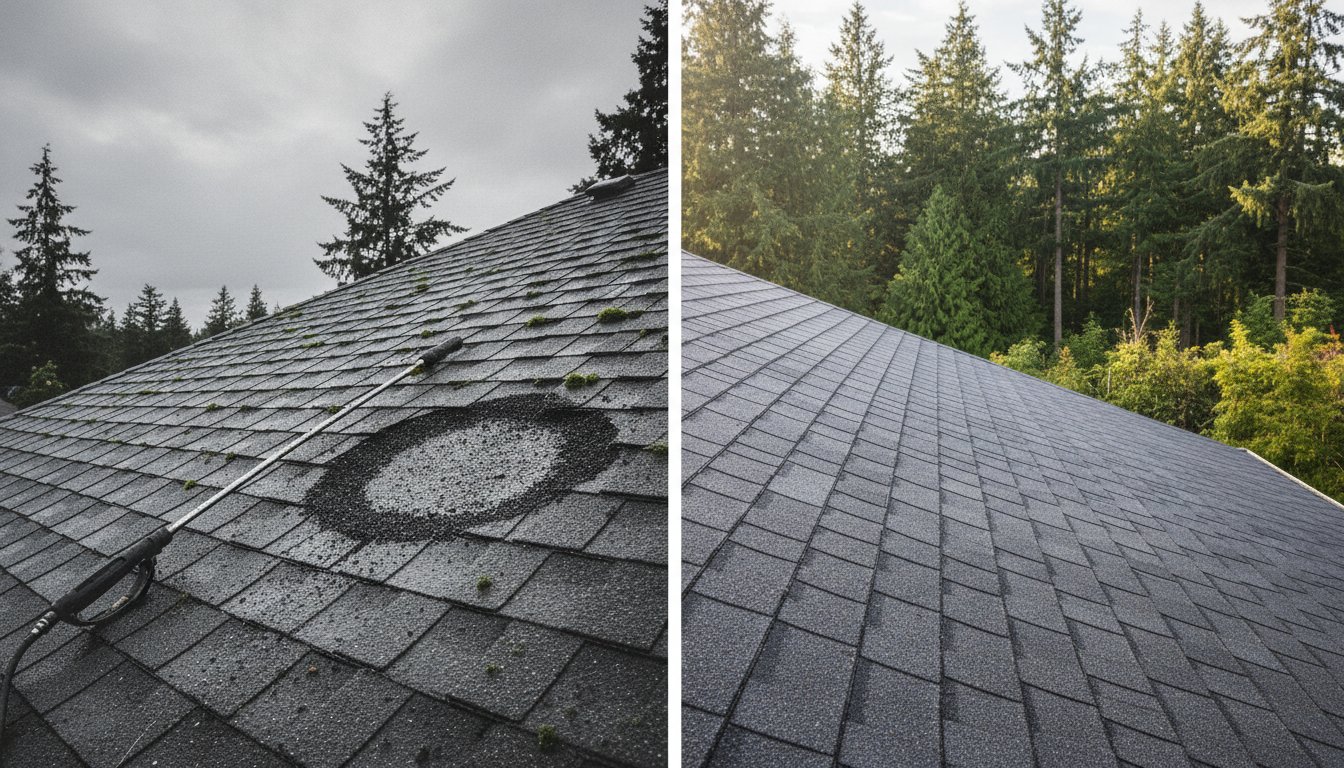
Last Saturday, a homeowner in Salem climbed his ladder to save a few dollars on moss removal, only to become one of the 160,000 Americans treated for ladder-related injuries annually according to Consumer Product Safety Commission data. You likely look at the thick green moss spreading across your shingles and feel the urge to grab a pressure washer and get to work. It's a common feeling because we take pride in our Oregon homes and want them to last. We all want to avoid expensive repairs, especially when the Pacific Northwest rain never seems to quit.
But the real dangers of DIY roof cleaning go much deeper than a simple fall. Using the wrong pressure or harsh chemicals can strip away protective granules, void your manufacturer warranty, and even kill your landscaping. This guide explains why tackling this job yourself in 2026 is a risk that rarely pays off. You'll discover how to achieve a clean, moss-free roof that lasts for decades without risking a trip to the emergency room or a massive insurance headache. I've spent over 15 years protecting local homes, and I want to make sure yours stays in top-notch shape.
We will walk through the hidden costs of home-grade equipment, the chemicals that actually work, and the specific methods that keep your home value high and your shingles safe. To see the difference that professional-grade tools make, you can check out J Racenstein for a look at the equipment used by industry specialists.
Key Takeaways
- Understand why Oregon's moss and algae create invisible, ice-like hazards that make roof work far more dangerous for homeowners than it appears.
- Learn the true dangers of DIY roof cleaning, including how high-pressure washing can permanently strip shingle granules and void your manufacturer’s warranty.
- Identify the chemical risks of "quick-fix" bleach mixtures that can eat away at your home’s siding, window seals, and expensive gutter systems.
- Compare the hidden expenses of equipment rentals and supplies against the long-term value and peace of mind provided by a professional softwash service.
- Discover the benefits of our "Softwash Moss-Off" system, designed to protect your investment using over 15 years of local Pacific Northwest expertise.
Physical Safety: Why Your Roof is More Dangerous Than It Looks
Your home's roof isn't just a protective cover; it's a high-risk work zone. For many Oregon homeowners, the dangers of DIY roof cleaning start the moment they set foot on the first ladder rung. In my 15 years of experience, I've seen how quickly a simple chore turns into a life-changing accident. The Pacific Northwest climate feeds the growth of thick moss and slick algae. These organisms turn shingles into a surface as slippery as a frozen lake. When you combine moisture with these biological layers, traction disappears instantly.
Understanding different roof cleaning methods is vital before you try it yourself. Professional crews use soft washing and specialized treatments to avoid walking on the most dangerous areas. Homeowners often try to scrub moss while standing on a 4/12 pitch, thinking it's flat enough to be safe. It isn't. Data from the Consumer Product Safety Commission shows that more than 164,000 people go to the emergency room every year for ladder-related injuries. A fall from just 10 feet can cause permanent spinal damage or traumatic brain injuries. These aren't just numbers; they represent months of physical therapy and lost wages.
The Gravity of the Situation: Fall Risks in the PNW
Oregon roofs face unique challenges. Constant rain means the wood beneath your shingles might be softer than you realize. Even a low-pitch roof provides a false sense of security. You feel confident until your foot hits a patch of "invisible" black algae. This substance is like grease. If you lose your footing on a 15-degree slope, gravity takes over in less than half a second. You don't have time to grab a gutter or a shingle. You just fall. The dangers of DIY roof cleaning are compounded by the fact that most homeowners don't have the muscle memory to recover from a slip on a wet slope.
Ladder Safety Myths vs. Reality
Most folks don't set their ladders at the correct 75-degree angle. They lean them too steep or too shallow. This leads to the ladder sliding out or tipping sideways when you reach for that last bit of moss. Professional teams use OSHA-approved anchor points and full-body harnesses. We don't rely on luck or a steady hand. Without a harness, you're one slip away from a long recovery. Consider these points before you climb:
- Most residential ladders aren't rated for the weight of a person plus heavy cleaning equipment.
- Overreaching to scrub a corner is the leading cause of ladder tipping.
- Professional anchor points provide a safety net that a standard ladder simply cannot offer.
Protecting your home shouldn't involve risking your life. It's my job to handle these heights so you don't have to.
Shingle Destruction: How DIY Methods Shorten Your Roof’s Lifespan
Many Oregon homeowners think a weekend with a rented pressure washer is a smart way to save money. It isn't. High-PSI equipment is the fastest way to ruin asphalt shingles. One of the biggest dangers of DIY roof cleaning is the permanent damage caused by sheer force. Most residential pressure washers blast water at 3,000 PSI or higher. This is enough power to carve wood and strip paint, so it easily shreds the delicate surface of your roof.
High-PSI water doesn't just remove moss; it forces its way under the shingles. This lifts the tabs and breaks the factory seal. Once that seal is broken, your roof is vulnerable to wind uplift and interior leaks. I've spent over 15 years fixing roofs where a homeowner tried to "deep clean" and ended up creating dozens of entry points for water. Beyond the damage to the home, the risk of a fall is a serious reality that requires professional training and Physical Safety: Why Your Roof is More Dangerous than most people realize. My team and I often get calls to repair "clean" roofs that are now leaking into the attic because of aggressive DIY tactics.
The Silent Killer: Granule Stripping
Granules are the ceramic-coated sand particles on top of your shingles. They aren't just there for color. These granules protect the underlying asphalt from UV rays and provide a critical layer of fire resistance. When you use a pressure washer or a stiff brush, you strip these away. A single aggressive DIY cleaning session can age a roof by 10 years in one afternoon. You can see the damage in your gutters; if they are filled with colored sand, your shingles are losing their protection. These "bald" shingles become brittle, crack in the sun, and fail long before they should. If you want to protect your investment, you have to keep those granules intact.
Voiding Your Warranty Without Knowing It
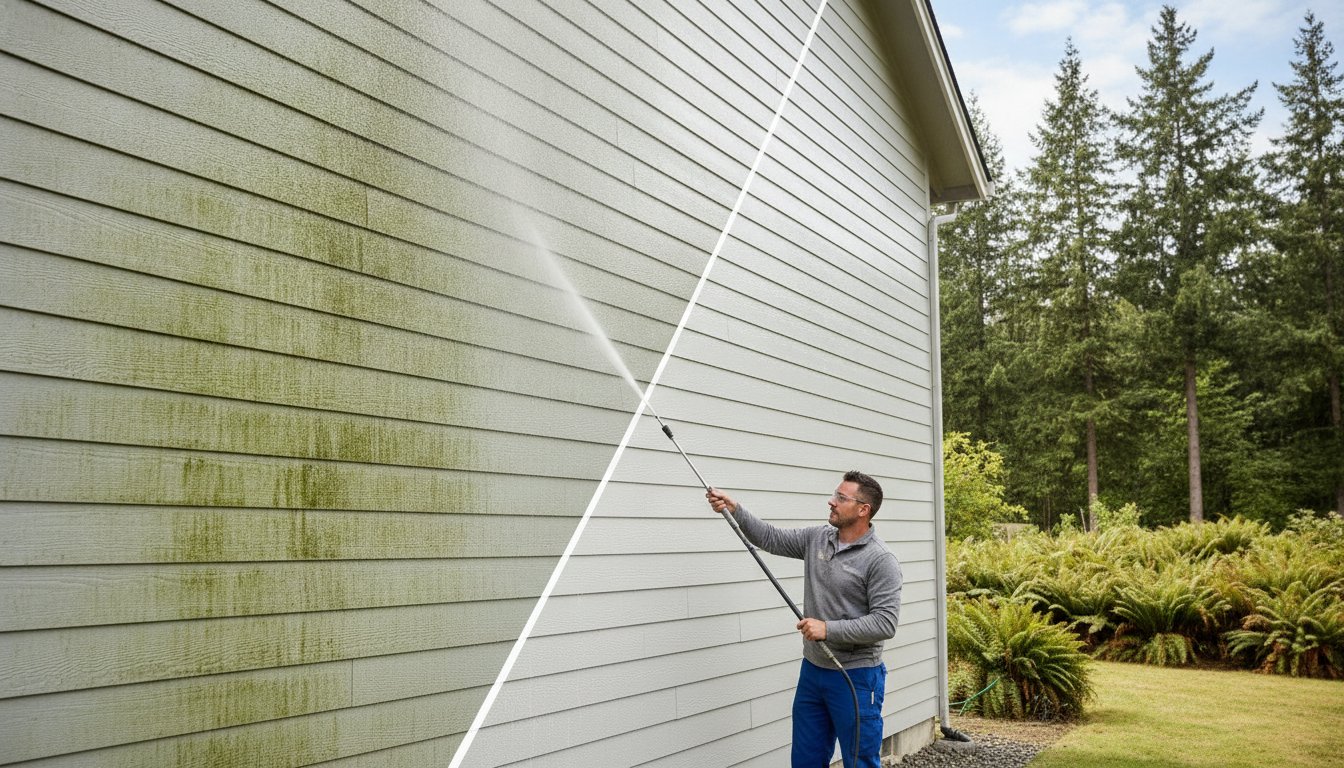
Most people don't read the fine print on their 30 year shingle warranty. At least 85% of major manufacturers like GAF and Owens Corning have specific clauses that void the warranty if the roof is pressure washed. They know the damage it causes. Insurance adjusters in 2026 are also getting stricter. When they see the specific circular scar patterns left by a pressure washer nozzle during a claim inspection, they may deny coverage for future leaks. Manufacturer Approved Cleaning is strictly defined as low-pressure soft washing. This method uses specialized solutions to kill moss and algae without the destructive force of high-pressure water.
The Chemical Dilemma: Why Store-Bought Cleaners Often Fail
Many homeowners believe a simple trip to the hardware store for a gallon of bleach will solve their moss problems. They mix it in a garden sprayer and hope for the best. One of the major dangers of DIY roof cleaning is that these homemade mixtures are often unstable and poorly balanced. Bleach is a caustic salt; it doesn't just sit on the moss. It runs down into your gutters and splashes onto your vinyl siding. High concentrations of sodium hypochlorite can cause window seals to dry out and fail within 24 months. If you don't know the exact ratios, you're likely causing more harm than good to your home's exterior components.
There is a massive difference between simply cleaning a roof and actually eradicating the problem. Moss is a living organism with a root-like system called rhizoids. Store-bought cleaners might turn the moss white on the surface, but they frequently leave the microscopic spores deep within the shingle granules. This results in the green growth returning in as little as 6 months. I've spent over 15 years seeing how DIY chemical applications fail to address the root cause, leading to a cycle of repeated, damaging cleanings.
Bleach vs. Professional Softwash Solutions
Harsh chemicals can shorten your roof’s lifespan by stripping away the protective oils in asphalt shingles. This leads to premature cracking and granule loss. On a hot day in Oregon, DIY mixtures often suffer from the "flash-off" effect. This happens when the water evaporates in less than 60 seconds, leaving behind a concentrated, abrasive salt residue. This residue does nothing to kill moss but does everything to damage your shingles. My Softwash Moss-Off treatment uses a balanced surfactant blend. This keeps the solution active for the full 15-minute dwell time required to kill the moss at a cellular level without drying out the roofing material.
Protecting Your Oregon Landscape
Oregon properties often feature expensive Japanese Maples or delicate hydrangeas that are highly sensitive to pH changes. A single gallon of un-managed runoff can cause a chemical burn that kills a 10-year-old ornamental tree in less than a week. Understanding the dangers of DIY roof cleaning means looking at the ground, not just the roof. Professionals use a specific protocol to keep your yard safe:
- Pre-wetting: Saturating all plants with fresh water to prevent chemical absorption.
- Neutralizing Agents: Applying specialized buffers to the soil to stabilize pH levels after the cleaning.
- Runoff Management: Using diversion tools to ensure chemicals don't enter groundwater or pet areas.
I take pride in ensuring that your pets and landscaping remain exactly as I found them. Without the proper neutralizing agents and equipment, a DIY project can quickly turn into a multi-thousand dollar landscaping replacement bill. It's about doing the job right and protecting your entire investment.
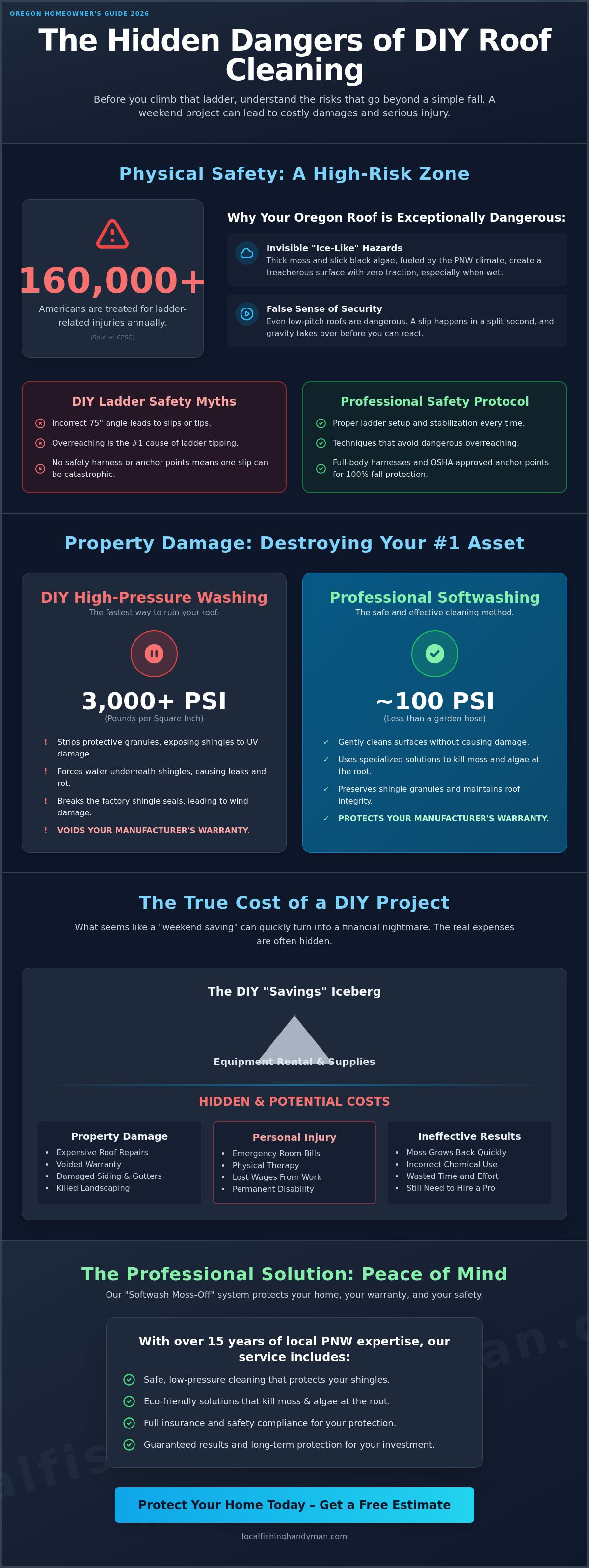
Counting the Real Cost: DIY Savings vs. Professional Value
Many Oregon homeowners look at a mossy roof and see a weekend project that might save them a few hundred dollars. They see the $200 price tag for basic chemicals and a rental pressure washer and compare it to a professional estimate. This comparison is often a trap. You aren't just paying for a clean surface; you're paying to avoid the significant dangers of DIY roof cleaning that can lead to permanent structural damage. When you factor in the actual expenses and the high probability of a mistake, the "savings" usually disappear before the first shingle is even dry.
The False Economy of DIY
A typical DIY attempt starts with a trip to the hardware store. Between renting equipment, buying specialized moss-off treatments, and purchasing safety gear, you'll likely spend $200 or more. You also have to consider your time. Most homeowners spend at least 16 hours, or two full weekends, hauling ladders and scrubbing shingles. If you use too much pressure and strip the protective granules off your roof, you've turned a small maintenance task into a $10,000 premature roof replacement.
- Professional cleaning can extend the life of your roof by 5 to 10 years.
- We offer a senior citizen discount to ensure our older neighbors get the help they need without the physical risk.
- Expert care maintains your home equity by preventing rot that starts under the moss.
Why "Licensed, Bonded, and Insured" Matters for Your Wallet
Financial risk goes beyond the shingles themselves. If an uninsured worker or a well-meaning neighbor falls while helping you, the medical bills could fall directly on your shoulders. Emergency room visits for ladder falls in Oregon can easily exceed $50,000. The Oregon Construction Contractors Board (CCB) protects you by requiring professionals to carry the right coverage. CCB#254463 ensures professional accountability by providing a verified record of our commitment to Oregon's safety and quality standards.
Hiring a pro means you don't have to worry about lawsuits or insurance denials. It's about more than just moss removal; it's about your peace of mind. You get to reclaim your weekend and stay safely on the ground while someone with 15 years of experience handles the heavy lifting. Don't gamble with your biggest investment just to save a few bucks on a Saturday afternoon. It's much cheaper to do the job right the first time.
Ready to protect your home and your weekend? Contact Local Fishing Handyman to get a professional roof cleaning quote today.
The Softwash Alternative: How Local Fishing Handyman Protects Your Home
You don't have to risk your neck or your shingles to get a clean home. Local Fishing Handyman has spent over 15 years perfecting roof care specifically for the Pacific Northwest climate. We understand that Oregon rain brings thick, stubborn moss, and we know how to eliminate it without compromising your home's structure. Our team provides a reliable, no-nonsense service that gives homeowners peace of mind and a roof that actually lasts.
Our Proven Softwash Process
- Root-Level Treatment: Our solution kills moss spores, preventing regrowth for much longer than water alone.
- Gentle Application: We use pressure levels similar to a garden hose, protecting the integrity of your shingles.
- Leak Prevention: Every cleaning includes a visual inspection of flashings and seals to catch small issues before they become expensive repairs.
Our process keeps your roof clean 2 to 3 times longer than standard high-pressure washing. We don't just move the mess around; we solve the biological problem of moss growth. This methodical approach ensures your roof stays durable through another decade of Oregon winters.
More Than Just a Cleaning Service
We believe in a comprehensive approach to home maintenance. When we're on your roof, we aren't just looking at the shingles. We provide a full exterior checkup. Our team can handle gutter cleaning, siding washes, and even deck repairs during the same visit. This saves you the hassle of hiring multiple contractors and ensures your entire property's curb appeal is restored at once. It's a practical way to protect your biggest investment without the dangers of DIY roof cleaning hanging over your head.
As a local Oregon business, we take pride in being neighborly and dependable. We are fully licensed, bonded, and insured, which is a level of protection you won't get from a DIY ladder climb. We also offer a senior citizen discount to help our community members keep their homes safe and beautiful. Our goal is to provide a top-notch service that leaves your home looking like new. If you want a roof that stands up to the elements without the risk of damage, we're ready to help.
Ready to protect your home? Contact Local Fishing Handyman for a Free Roof Assessment
Give Your Roof the Professional Treatment It Deserves
Your roof serves as the primary shield against Oregon's average of 150 rainy days each year. While it's tempting to grab a ladder and try to scrub away the moss yourself, the dangers of DIY roof cleaning include serious fall risks and the high likelihood of stripping away protective shingle granules. A single afternoon of well-intentioned cleaning can lead to thousands of dollars in premature replacement costs. Local Fishing Handyman brings over 15 years of Oregon home maintenance experience to every job, ensuring your roof stays intact and your gutters stay clear.
We use a gentle softwash alternative that kills moss at the root without the harsh impact of a pressure washer. As a Licensed, Bonded, and Insured contractor (CCB#254463), we prioritize safety and quality workmanship above all else. We're proud to offer senior citizen discounts to our local community members looking for reliable service. Let us handle the heights so you can stay safe on the ground.
Get your free, no-obligation roof treatment estimate today!
It's time to give your home the expert care it needs to stand strong against the elements.
Frequently Asked Questions
Is it okay to pressure wash my roof if I use a low setting?
No, you shouldn't use a pressure washer on asphalt shingles even at a low setting. Even at 500 PSI, high-pressure water strips away the protective granules that shield your shingles from UV rays. The Asphalt Roofing Manufacturers Association (ARMA) warns that this type of cleaning can lead to premature shingle failure and leaks. It's much safer to use a soft wash system that relies on specialized cleaners instead of sheer force.
Will professional roof cleaning chemicals kill my plants or grass?
Professional cleaners protect your landscaping by using biodegradable solutions and a thorough rinsing process. We soak your plants and grass with fresh water before, during, and after the application to ensure the chemicals don't soak into the leaves or soil. This technique keeps 100% of your shrubs and flowers safe while the moss-off treatment does its job on the roof. Our priority is leaving your property in better shape than we found it.
How much does it cost to have a roof professionally soft washed in Oregon?
Roof cleaning costs depend on the size of your home and the severity of the moss growth. According to data from HomeAdvisor, the national average for professional roof cleaning typically ranges from $300 to $600. In the Pacific Northwest, prices often fall on the higher end of that range because our heavy moisture leads to thicker moss layers that require more time and product to treat safely.
Can moss growth actually cause my roof to leak?
Yes, moss acts like a sponge and holds constant moisture against your roofing materials. This trapped water causes the edges of your shingles to lift and curl over time. Once the shingles are compromised, water seeps into the wood decking underneath. This leads to wood rot and internal leaks that can cost thousands of dollars to repair if the moss isn't addressed quickly.
How often should I have my roof professionally cleaned in the PNW?
You should have your roof inspected and cleaned every 2 to 3 years to stay ahead of the growth. Oregon receives an average of 40 inches of rain annually, which creates the perfect environment for moss and algae to thrive. Regular maintenance helps you avoid the dangers of DIY roof cleaning by letting experts handle the slippery heights before the moss causes permanent damage to your home's structure.
Does cleaning my roof myself really void my shingles warranty?
Yes, many major manufacturers like GAF and Owens Corning specify that using unapproved cleaning methods or high-pressure water will void your warranty. One of the biggest dangers of DIY roof cleaning is losing your 30-year or lifetime financial protection. If you don't follow the manufacturer's specific maintenance guidelines, you'll be responsible for the full cost of a replacement if the shingles fail early.
What is the difference between a handyman and a roofing contractor for cleaning?
A professional service provider carries the specific insurance and licensing required for roof work. In Oregon, the Construction Contractors Board (CCB) ensures that licensed professionals are bonded and insured to protect the homeowner. A specialized handyman with 15 years of experience has the right safety gear and knowledge to do the job correctly. Hiring someone without these credentials leaves you 100% liable for any accidents or property damage.
Is it safe to walk on my roof if it is dry?
It's never entirely safe for an untrained person to walk on a roof, regardless of the weather. OSHA data shows that falls from heights account for 33% of all construction-related deaths. Slopes steeper than a 4:12 pitch require specialized fall protection gear and training. Even on a dry day, loose granules or brittle shingles can cause you to slip and fall, leading to serious injury or death.